During WWII, the not-yet-vanquished German army occupied the north of France, including the port of Cherbourg, which they heavily fortified against seaborne assault. As the only deep water port in the region, it was particularly desirable, so American troops encircled the city in June of 1944 in the Battle of Cherbourg, and handed the Germans their asses five days later, when they surrendered. The fighting left the city in a compromised state. However, in only a month, cargo ships known as Liberty Ships began to arrive, and it became the busiest port in the entire world, with twice the traffic of New York, until the war ended. It has since merged with an adjacent city to become Cherbourg-Octeville.* In this image, we see American soldiers in Cherbourg who appear to have stumbled upon some German wine stores. I’ll drink to that.
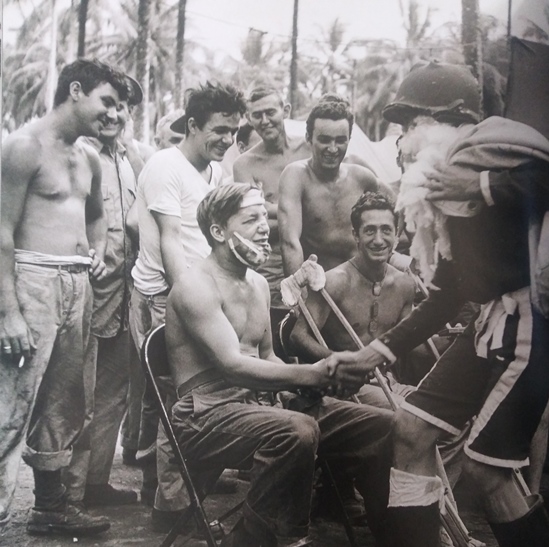
Christmas Day didn’t feel very wintry to these WWII soldiers in the South Pacific. Santa braved the 90 degrees to dispense Red Cross gifts to Army and Marine hospitals and bring some holiday cheer to those missing their families back home.
Back when this photo was taken in the summer of 1947, Penasse, Minnesota was the most northerly post office in the US. Nowadays, it’s Barrow, Alaska. I’m pretty sure we’re done acquiring new states, so Barrow will probably retain the title.
The man who looks like The Skipper from “Gilligan’s Island” is actually Captain Young, a veteran skipper of the mailboat Resolute (not the S.S. Minnow), which had just arrived on the 50-acre island from Warroad, just shy of Canada. The poor-postured woman with her pelvis tucked beneath her is postmistress Mrs. Fran Cole. The two men beside her, one of which appears to be leering menacingly, are Chippewa Indian fishing guides for summer visitors.
by Russell Lee for the Farm Security Administration
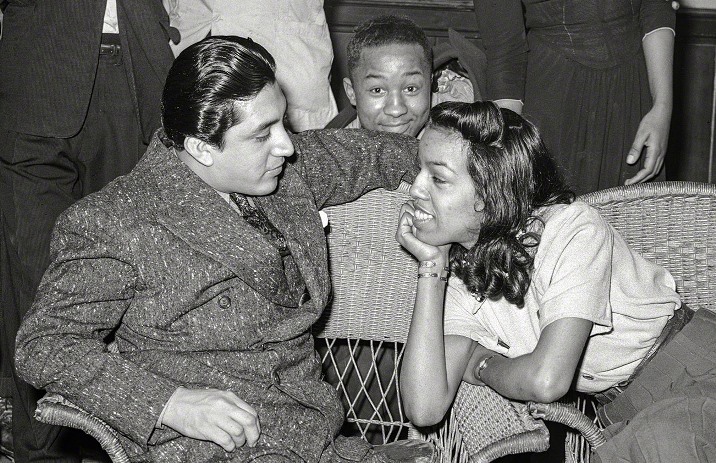
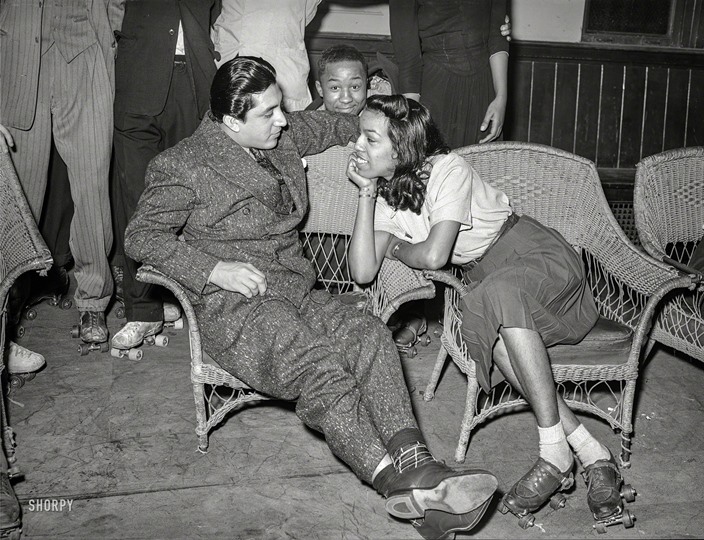
This rollerskate-clad lady doesn’t seem too shy with the slick-haired fellow at a rink in Southside, Chicago, Illinois in April 1941. Looks like there’s a good chance they’ll “find us a new recipe,” in the words of Ol’ Hank. Not sure what to do with that onlooking third wheel, though…
Three doctors–two young, one old–all engaged in a demo of “a new method of using penicillin” because learning never ends. And that class of ’06 meant 1906, of course.
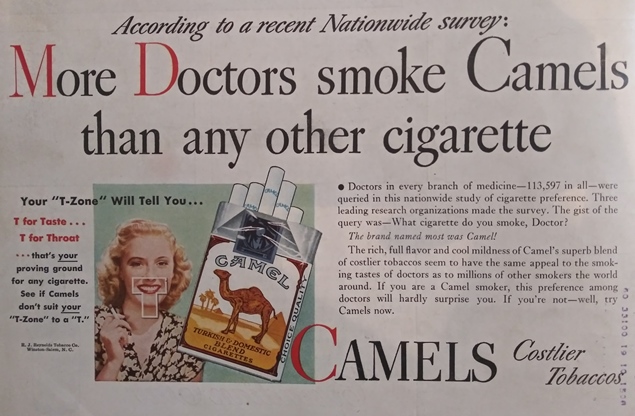
And what we hadn’t learned by the fall of 1946 was that Camel’s catchy T-zone slogan was not exactly accurate. But even if we had known the dangers of tobacco, how successful would it have been to ask veterans fresh off WWII to quit their habit?
Not very.
My whole life, cigarettes have been bad for you, and the T-Zone meant the zone of oily skin on your face, the one in the shape of a T.
A skincare T zone is really only a couple inches higher than Camel’s. And both of them are uppercase T’s. Otherwise, they would have looked more like the crucifix zone.
pinterest
In 2019, we’re more concerned with different zones, like being friendzoned or saving the ozone layer. Where I live, the weatherman is always warning us of Ozone Action Days.
Those are the days we shouldn’t go outside for more than a few minutes, and not without a hat and long sleeves and SPF 100. And try to limit it to early morning! That’s why neighbors mow at 8am now. That’s why the neighborhood pools sit vacant every summer, and you never see kids playing outside at all. They’ll melt in seconds. In fact, summer is the worst time of year in Austin, and yet Californians move here daily. That’s why every highway is in a construction zone. That’s the T-zone for Texas, where all the pollutants and congestion sits. It never ends.
But the more, the merrier, right? With over 100 folks moving here a day, year after year, decade after decade, there are new people to meet and greet. Now all that’s left is to decide on a buffer zone.
When we studied WWII in middle school, I remember trying to wrap my head around the murder of six million Jews. It was a number I couldn’t fathom. I currently can’t imagine having a million dollars, and I can’t process that there are over a million people in my hometown now. It’s still too big of a number for me. So when we think about the estimated 26 million Soviet citizens who died during WWII (according to the Washington Post), it’s mindboggling. Can you process that number? There are only 25 million people in all of Australia right now. Less than 26 million in all of North Korea. Can you imagine just annihilating that many folks?
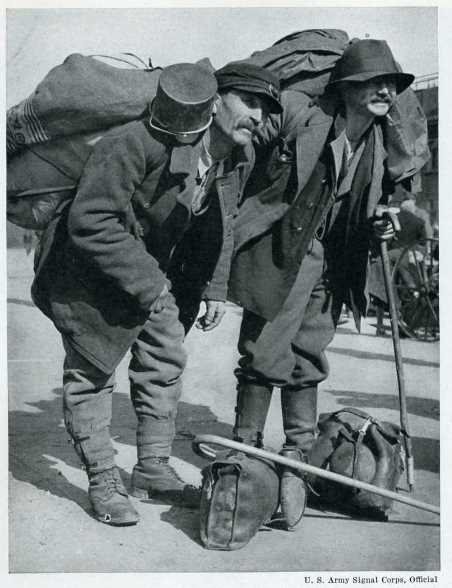
And the men above were spared. Survivors of forced labor camps with nothing to their names. What a hard road that must have been to travel.
Per a January article about Soviet slavery in Russia Beyond:
“They crammed us into wagons, as many as they could, so we couldn’t move our legs,” recalled Antonina Serdyukova, who was captured in Ukraine. “For a month, traveled that way.” Describing her life at a plant near Dresden, she said, “We ate once a day, a bowl of soup, with carrot and swede.”
For the Ostarbeiter (“workers from the east”), forced to live thousands of kilometers from home, fate was like the lottery. Metallurgical plants, mines and farms needed workers, and where they ended up depended on who paid the most.
“When we arrived, there was a transfer point, I would call it a slave market,” said Fedor Panchenko from Ukraine. “In an hour, they sold the whole group of people to different hands.” Among a group of 200 people, Panchenko found himself in a factory, at the ironworks in Silesia (now Poland). For those who came home, life was also hard: German captivity was a stigma. “Fellow citizens despised us,” calmly recalls Panchenko. “I couldn’t apply for a decent job and spent 37 years working at a factory, and if there was any kind of breakage, they would say to me each time: “Oh, no surprise, you worked for Hitler.” Others kept silent about their experience in Germany for decades – they didn’t want the stigma to impact their careers or families.
Hunters chop a frozen caribou and devour it uncooked. Indians called these northern tribes Eskimos, “Eaters of raw flesh.”
So go the words of this 1947 National Geographic article. Seems pretty cut and dry to me. But evidently we’re not supposed to say “Eskimo” anymore; Eskimo is considered offensive, especially in Canada, being widely thought to stem from a Cree pejorative meaning “eaters of raw meat,” which is precisely, accurately what they are doing in that very image. So I don’t know how that is offensive. But in this day and age, isn’t everything?
Demeaning any group for their race or heritage is clearly wrong, but good luck staying abreast of all the latest victim classes and subsequent acceptable language. It shouldn’t be too hard to avoid the E word if you live in a non-igloo location. Is it okay to say “igloo”? Will the judge allow it?
Calling an eater of raw flesh the word for “eater of raw flesh” seems fine to me, but a sliver of my race pie is European (read: privileged) so what do I know? And I’m in the South, and them is up in the Nawth. So what do I know from Eskimos?
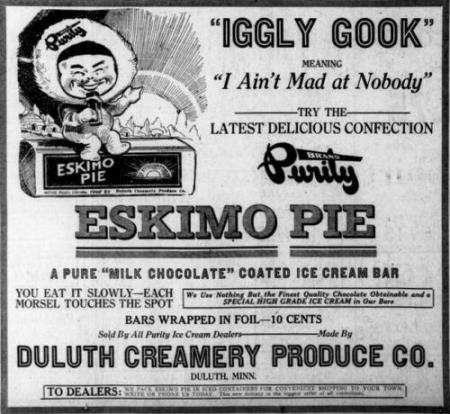
But this next ad from 1958? All I see is a cutie patootie selling me delicious chocolate, which I imagine is waaaay better than frozen caribou. Is there a word for “middle-aged eater of chocolate”? I’ll take it!
There isn’t any hate behind this ad that I can see. But some folks will go looking for it, scavenging for it, desperately trying to find malicious intention. Cute kids sell ads. Always have, always will.
In 2016, then-President Obama signed legislation that replaced Eskimo with “Alaska Native” in federal laws because Non-Inuit people had assigned the term. Isn’t that what all language does? It assigns terms? I guess I just don’t get it there. Does that make people feel like they’re taking their power back if they get to change the language?
So what about Eskimo kisses? Is that okay to say? Is it okay to do?
Is a Native American eskimo-kissing a white male offensive? (If I am to assume she is even Native American based on looks). The boy-child Peter Pan is culturally appropriating a Native American headdress, and that is in the “no-no” column these days. No race is ever allowed to wear anything that another race has ever worn; that is theft, plain and simple. But what if you’re many races, like many of us? A dozen different results from Ancestry.com? Can you “appropriate” the customs of any of your ancestors and don the gay apparel of your forefathers? Or should I say foremothers? Well, that gets tricky. But let’s be honest: even though she is literally pushing him back, he is metaphorically pushing her down both by being white and male. And immortal.
















 I Don't Get It