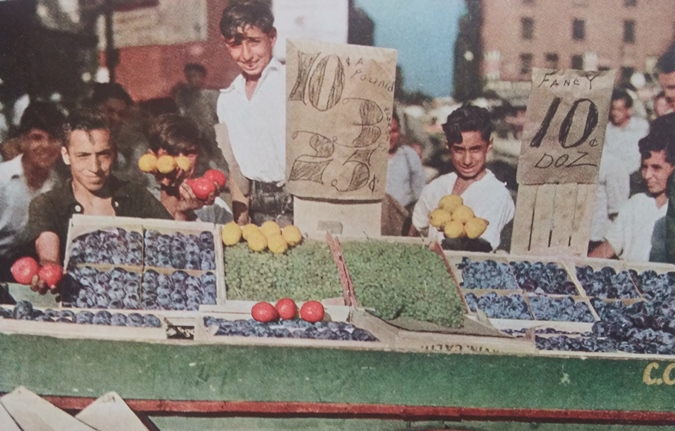
Italian teens peddle their wares for coins on the Boston streets near Quincy Market and Feneuil Hall, which opened in 1743. 1743? You Northeasterners will be much more familiar with structures that old, but for a Texan, 1743 meant my state was still Mexico. How interesting it would be to imagine your great-great-great grandparents walking the same Boston streets centuries before you, keeping the city fed during the Depression, and feeling pride in work.
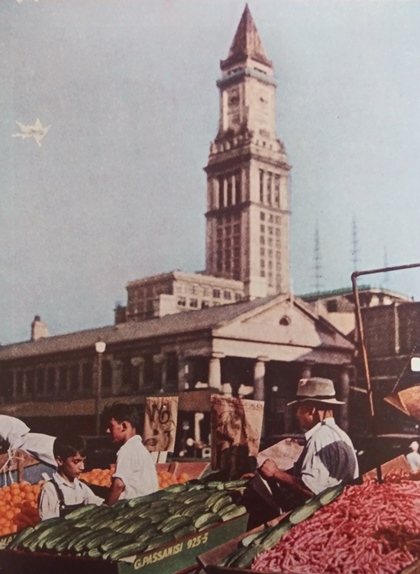
Below, we see plump green cucumbers being sold by pushcart vendor Signor Passanisil, as the Customhouse Tower rises in the background.
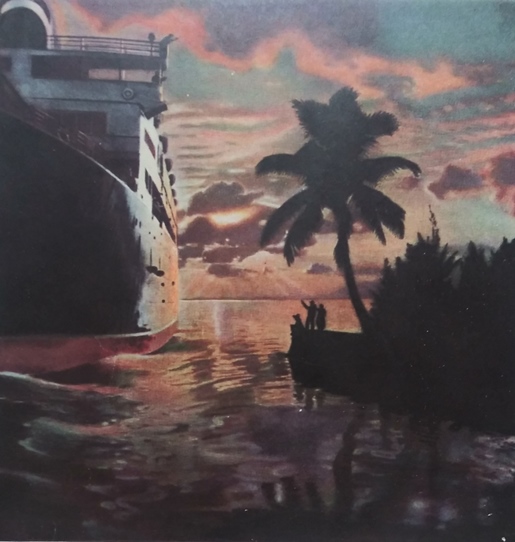
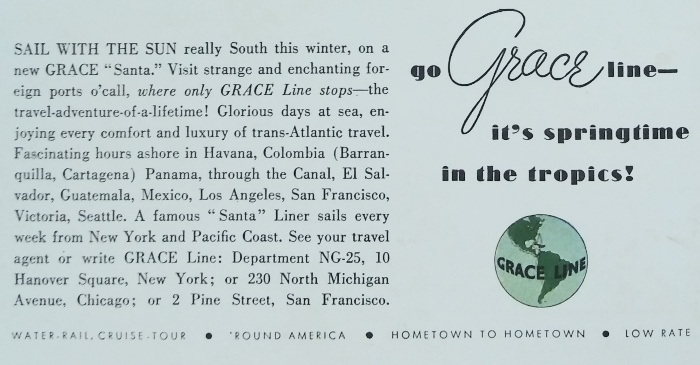
If you want to ride “really South” on Santa, you have a choice.
Even 30 years later, the Santa ships were going strong. If you’ve got time to kill, here’s cruise line footage, probably the closest I’ll ever get to taking a cruise.
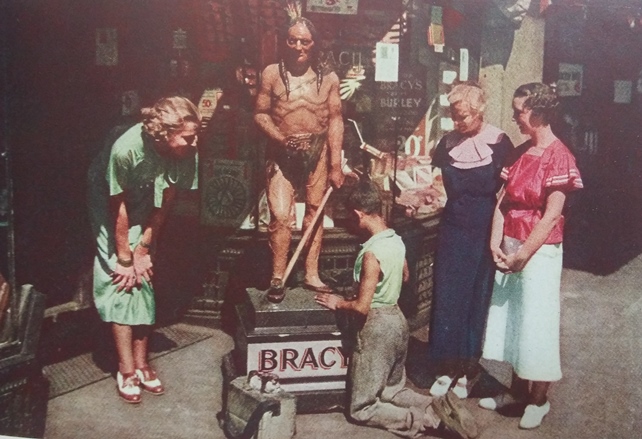
Okay, so it’s 1932 on Milk Street in Boston, a street that has been there for over 300 years. These three bobbed-hair women marvel at the carving prowess of Carl Larsen, who fashioned this wooden Indian out of live oak. Why an androgynous youth is bowing before the altar is another issue altogether. But this is no ordinary Indian offering cigars to outdoor patrons; this is Samoset the Abenaki extrovert, best known for waltzing up to Plymouth Colony on March 16, 1621, greeting, “Whassup, Pilgrims!” and then inquiring if they had any ale on hand. Why was this odd? Well, he was the first American Indian to make contact with said Pilgrims, having learned some English from Maine fishermen. And despite what news stations would have reported, had they existed, everyone got along peaceably, and Samoset even spent the night. A week later, he returned with his buddy Squanto, who spoke better English, and more fellowship ensued, presumably with beer. This particular wooden Indian was denied the pleasure of ale, although he did get a periodic dose of boiled linseed oil poured down a hole in his head, to keep his wood from cracking.
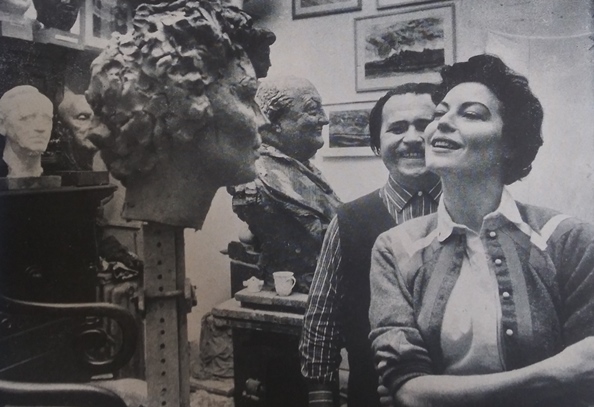
Among all the assessment was another “ass,” Bulgarian artist Assen Peikov, who was contracted to sculpt the actress’s face for a scene in her upcoming movie, The Barefoot Contessa (not to be confused with the Food Network chef). Wonder who got to keep the bust when the movie ended?
Actually, it wasn’t Revlon; it was Cutex, a name we associate today strictly with nails, not lips. But back in the day, they offered coordinated colors for style from head to toe! Step off, Satan! I’m fabulous!
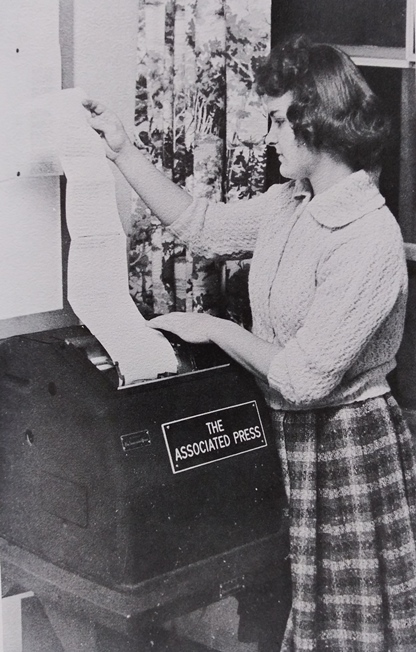
Networks don’t care about accuracy. They want ratings. Unity doesn’t get viewers. So why not flat-out tell lies, “change the narrative,” incite violence and unrest, and frighten folks with the scariest topics we can find. Corona! Lockdown! Second wave! Riots! Wildfires! Floods! Division! Your neighbor hates you and always has! The economy is sinking! What about your 401K? And all this followed by that incessant Boy Scout rape commercial that lasts about four minutes. Wouldn’t it be nice to watch a Good News network? Journalists, tell us something positive!
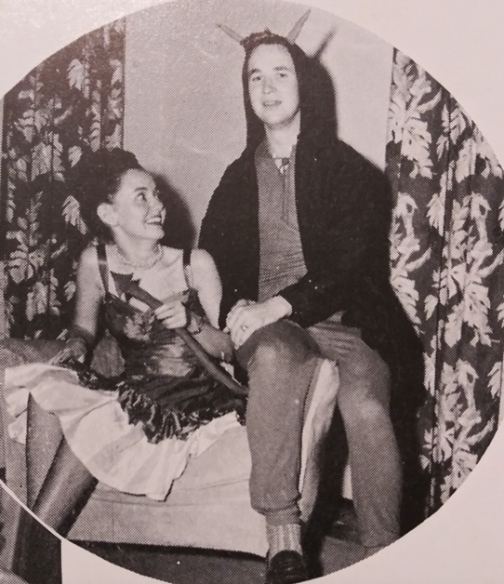
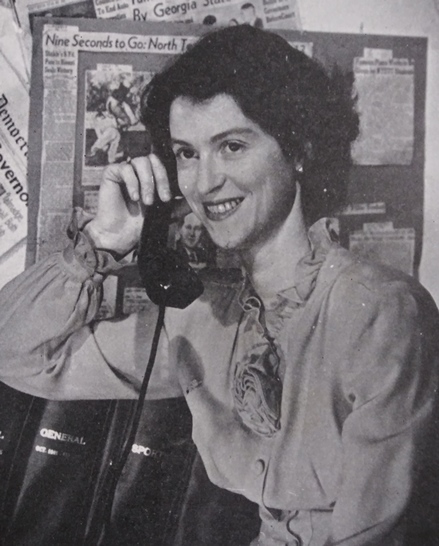
1948 Ventana
Let’s call the editor and give her a piece of what for.
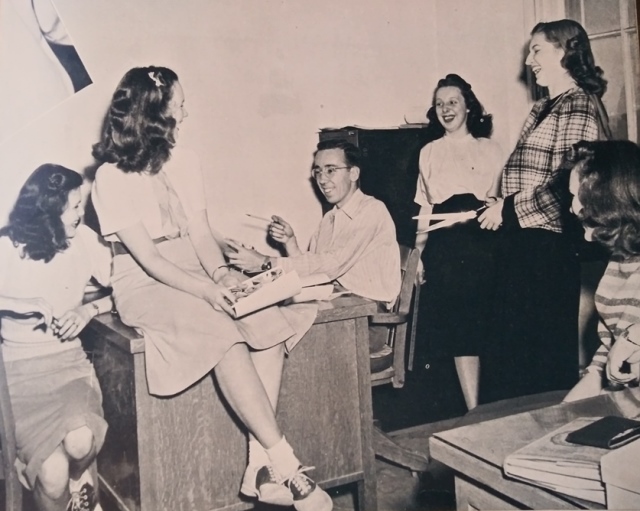
1947 Yucca
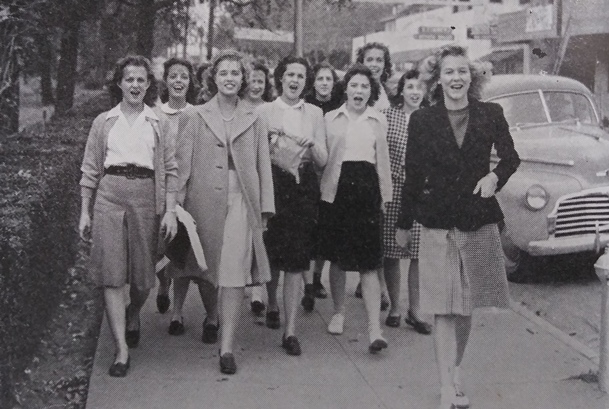
What’s that? A march for hope and joy? People lining the streets with smiles on their faces? What’s that? We have more in common with each other than what separates us?
Sure, 2020 sucks. No doubt about it. And it does seem to be getting worse–and getting better and getting worse. But, hey, you and I are still alive to blog. Most of us probably even had the virus by now. But, wait! You’ll have everlasting side effects that destroy your health! Maybe, but life is a crapshoot. Any day we wake up is a gift. No guarantees.
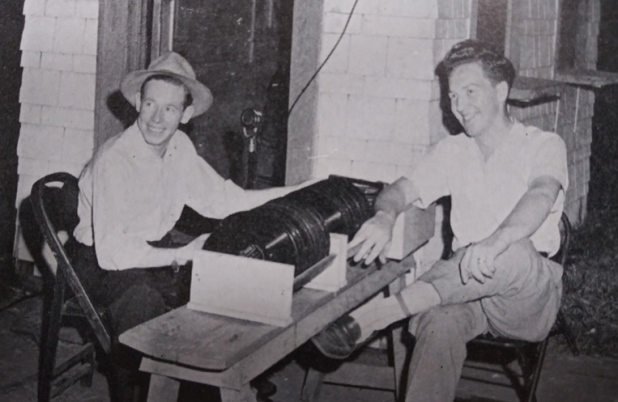
At least we can still spin some vinyl.
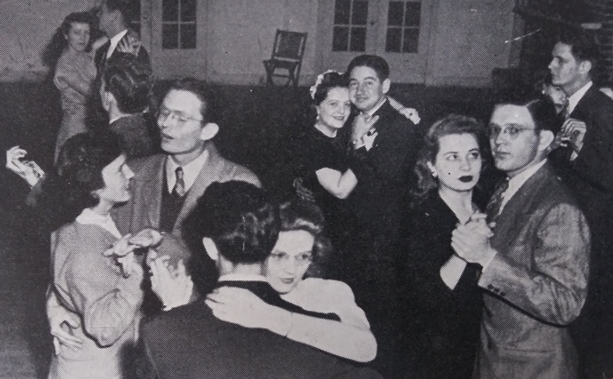
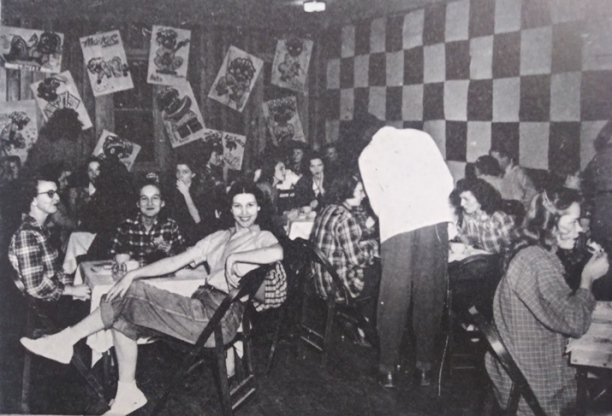
We can still dance, if only with one partner, or even by ourselves.
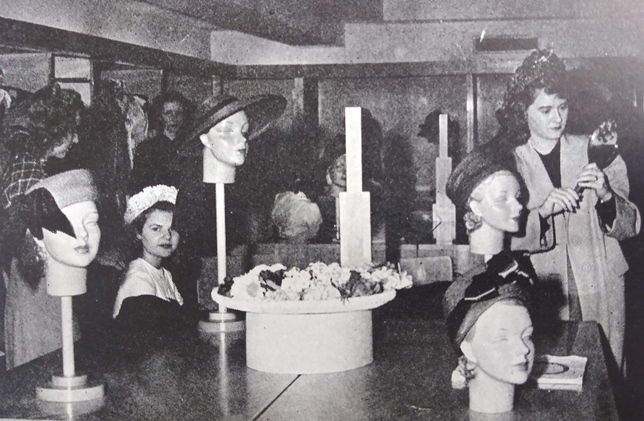
We can still buy hats–or even masks that reflect our political, religious, or social ideologies–if that floats your boat.
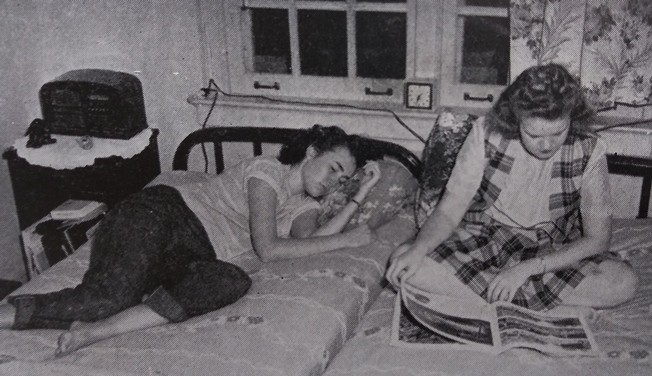
We can nap and read periodicals.
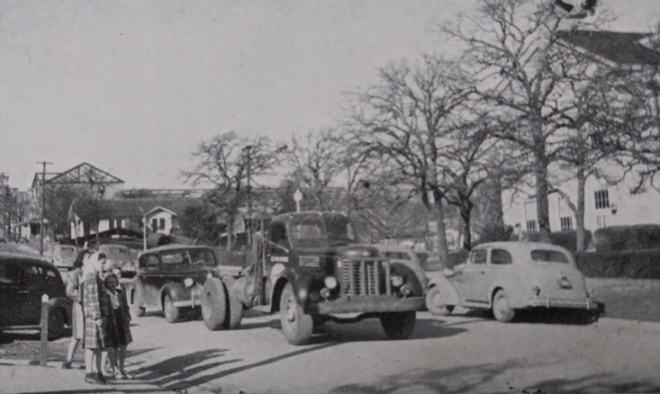
We can still drive.
And most of us can still eat out.
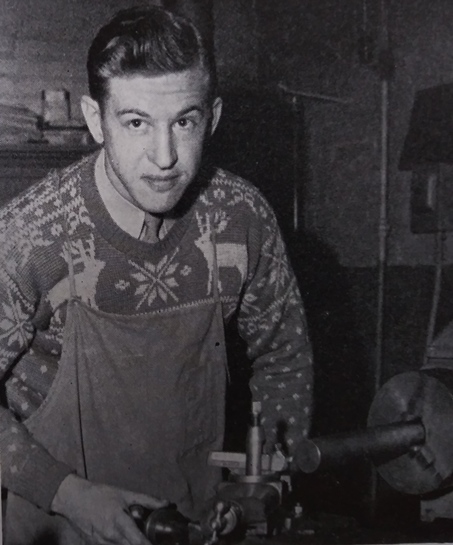
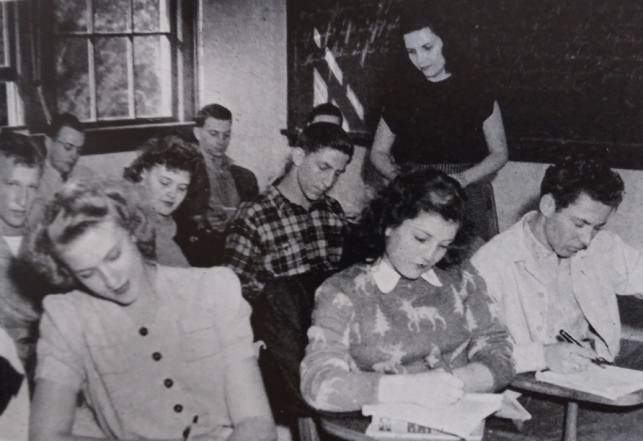
And guess what? When the holiday season starts in one month, we can start wearing festive Christmas sweaters again.
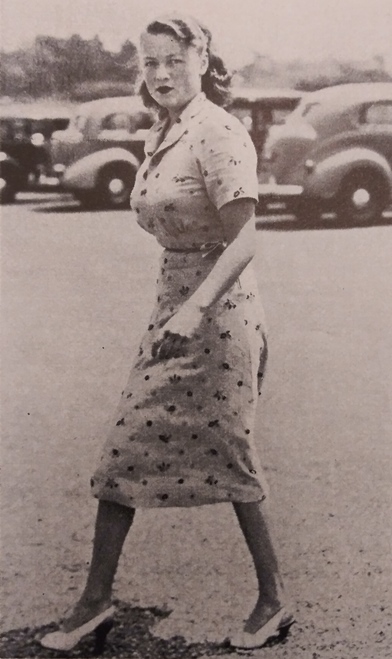
Miss Lesley E. Bogert strides with purpose through a parking lot of curvaceous vehicles, off to cavort among fellow Newport socialites of the 1930s. Her father, Beverley Bogert, was a prominent New York banker.
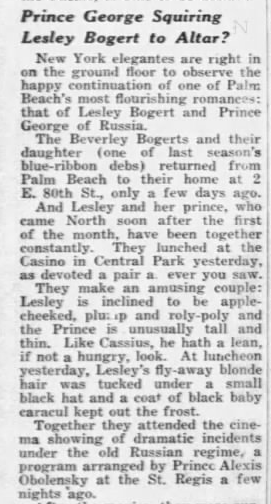
This article from the April 14, 1935 Daily News gives the deets on her relationship with Russia’s Prince George. Note how she is described as “apple-cheeked, plump and roly-poly,” which seems inconsistent with the image above.
By the way, “caracul” is an Asian sheep with a dark curled fleece when young. You know, like most of us wear.












 I Don't Get It