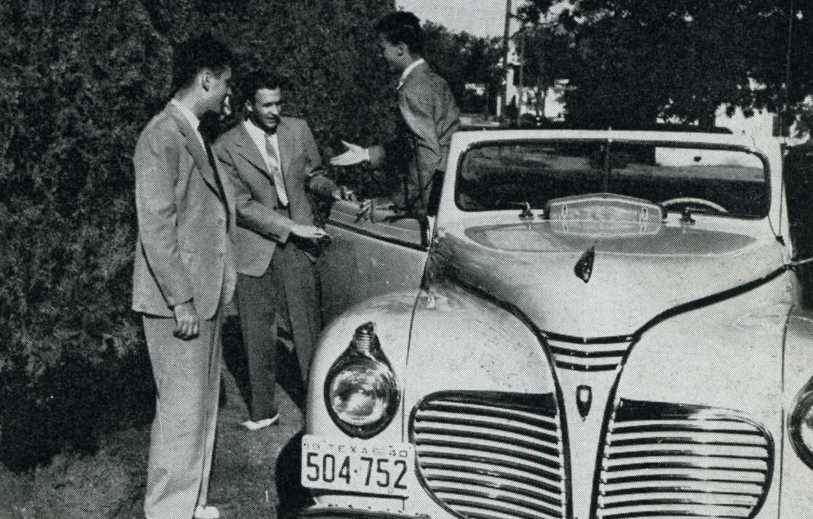
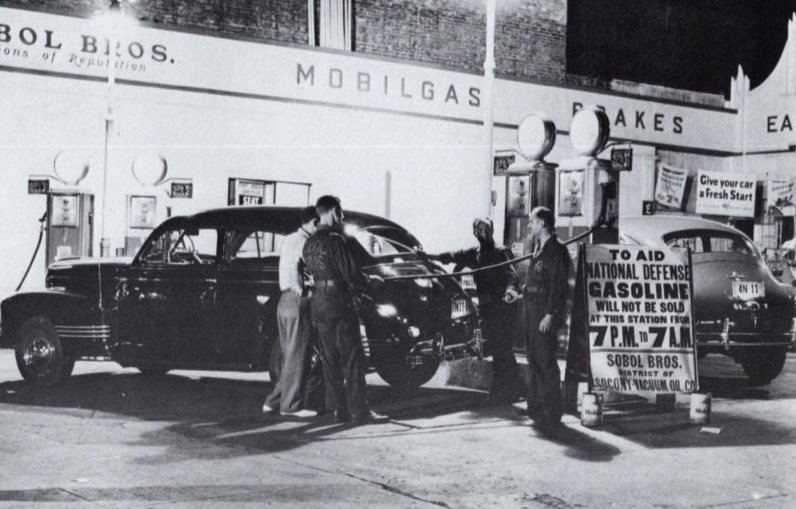
Technically Still Just Two Scoops

photo by B. Anthony Stewart

This kid’s got the right idea, and I don’t mean the pantaloons. Two is better than one.

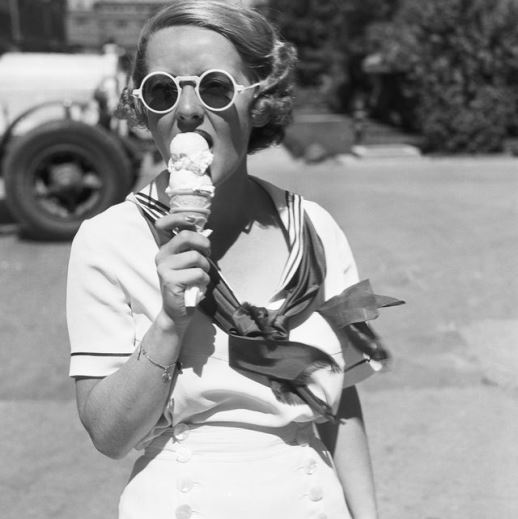
Bette Davis didn’t turn down two scoops, either.

Getty Images

Robert Plant went for three wee scoops. Perhaps they were accessories for his blouse.

https://johnrieber.com

Forrest Gump didn’t limit himself to one scoop because he knew it helps a body heal.

giphy.com

Marilyn played a balancing game. This can only lead to tragedy and mayhem.

Everett Collection

Wait. I spoke too soon. THIS can only lead to tragedy and mayhem.

https://www.reddit.com

Sample My Wares

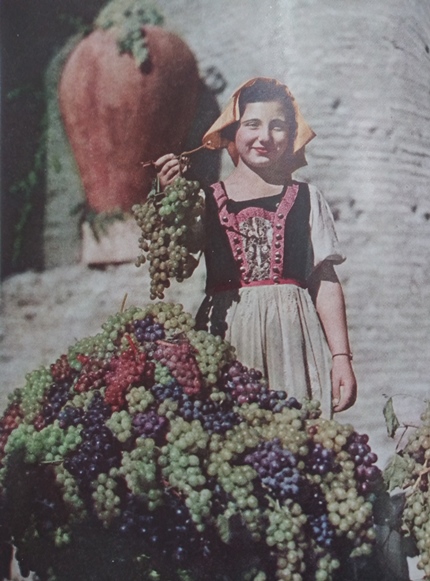
National Geographic Society, Finlay Photography by Bernard F. Rogers, Jr.

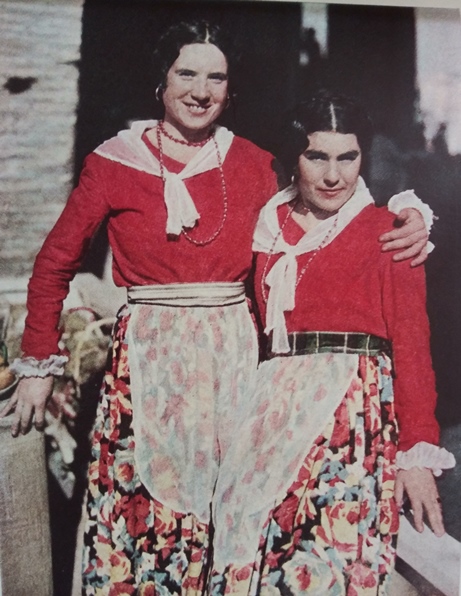
While this pretty maiden humbly offers two bunches of grapes on sticks during a Roman Grape Festival, her old-fashioned costume betrays her. She is no country bumpkin. As the article states, her wristwatch shows that she is a modern woman, and chances were high that she was actually an extra from a nearby movie studio.

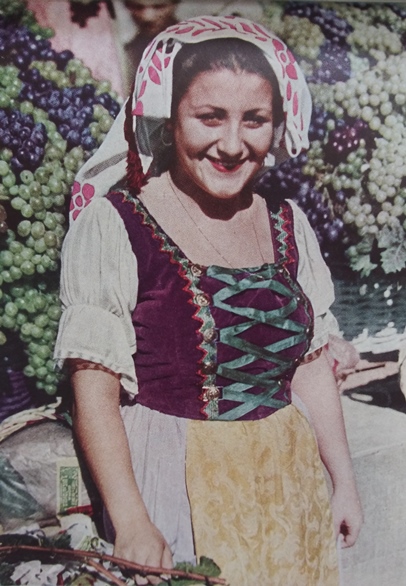
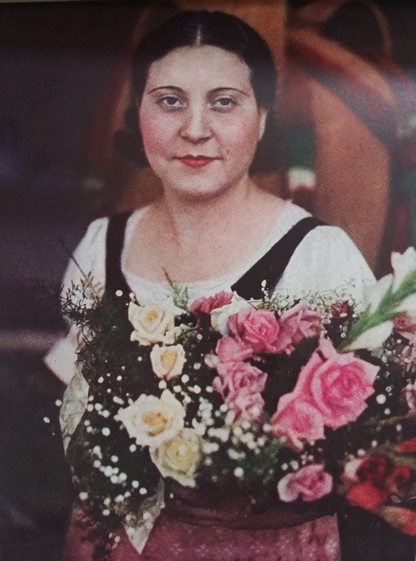
This grape girl wrapped her finest grapes in paper packages, while the salesgirl below sold roses in assorted colors.

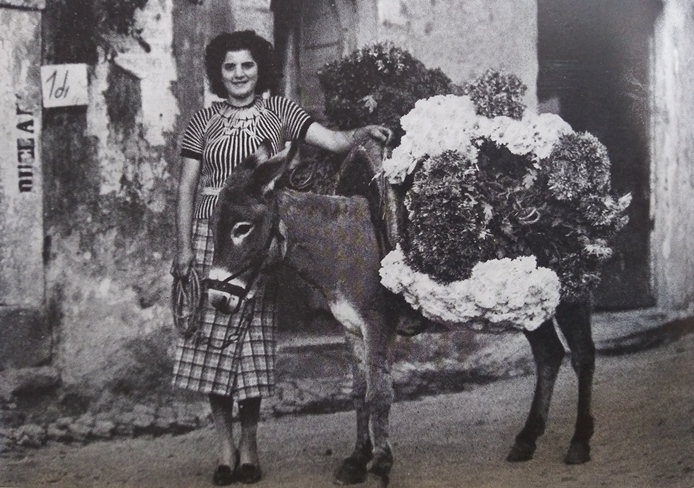
If a flower girl could not carry her burden, she used a beast.

Bernard F. Rogers, Jr.

This donkey was piled high with daisies, violets, and chrysanthemums, brought in from the fields to Nemi, near Rome. With such plentiful bounty, vendors often gave faded flowers to children to beat on the pavement and watch the petals fly.

Those who weren’t selling got into the spirit by wearing provincial costumes to celebrate products from the many district vineyards, displayed in the Basilica of Constantine. That’s a serious middle hair part.

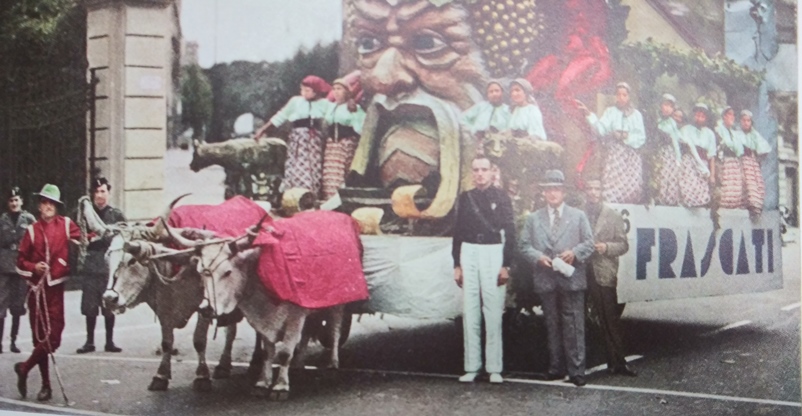
Once the Grape Festival got underway, 25 floats made their way down the streets. This one depicts Bacchus (Dionysus), the ancient Roman and Greek wine god. As the oxen moved, the tongue revolved as if lapping wine. Ew.


I Was Espresso When Espresso Wasn’t Cool

National Geographic Society

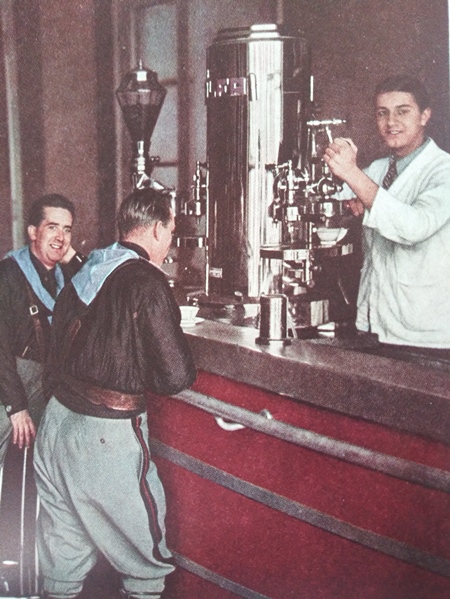
Granted, the fellow on the left looks 57, but apparently, he and his buddy were both Roman university students, sipping caffe espressos made from Brazilian beans between classes way back in 1937. Each student’s neckerchief bears colors denoting his course. Would you get a new neckerchief each time you changed majors?

Creature Comforts of 1928

As I write to you on this sweltering, oppressive August day, I find two words most lovely: frigid air. Indeed, frigid air has been welcome since Frigidaire was founded 103 years ago.

God bless frigid air, the choice of the majority. Such a democratic institution, nestled in its own kitchen nook.

But they didn’t have the monopoly on fridges. Behold the GE model, where all four food groups fit just swell–even wine, which was illegal to sell.


No drain-pipe? Sign me up! Drain pipes are the worst! But you know what’s the best? Running water. You should try it. It’s a “boon to health and pleasure.” You better believe it, sister. Simply turn the handle and PRESTO, legit water appears!

And now that you’ve got water at your whim, how about covering up that hideous radiator?

Me, I’m from Texas, so I’ve never seen a radiator in the wild. Seems like a hazard to me. I’d prefer real wood furniture instead of metal. You know–the kind that could use a nice coating of O-Cedar Polish.
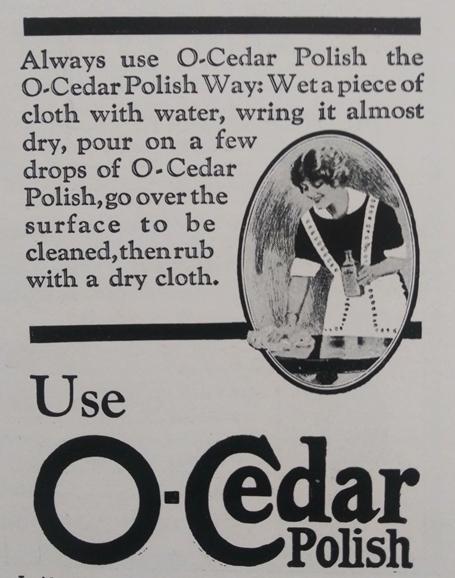
Goodness, she looks happy to be polishing! And that smart bob prevents hair from falling into her eyes. I bet she can see her own reflection.

But what’s this? By the time she gets to the banister, she appears more reticent, withdrawn. Her wrist aches from rubbing.

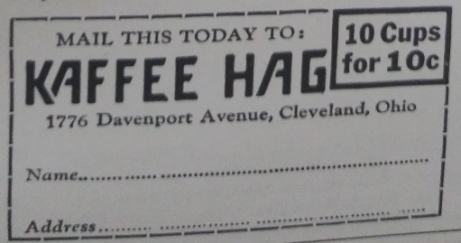
After all that polishing, Pearl might need a coffee break. But it’s 3pm! It would keep her up all night. Nope, not with Kaffee Hag, which sounds like Cliff Clavin is pronouncing it. Kaffee Hag lets all you hags sleep.

I think I’d rather be a “Pepper, too” than a Kaffee Hag, truth be told. But what a bargain, it is!
Now that you’ve got the inside of your domestic arena addressed, what about the outside? Your coffee may be unleaded, but your roof tiles shouldn’t be.

Leadclad was clad with lead. Only the finest toxins available with exotic Spanish appeal. Ole! Now all that’s left to do is trim that grass. And that’s not Pearl’s domain; that’s Walter’s. So while Pearl massages her aching wrists, Walter needs only a twist of his.
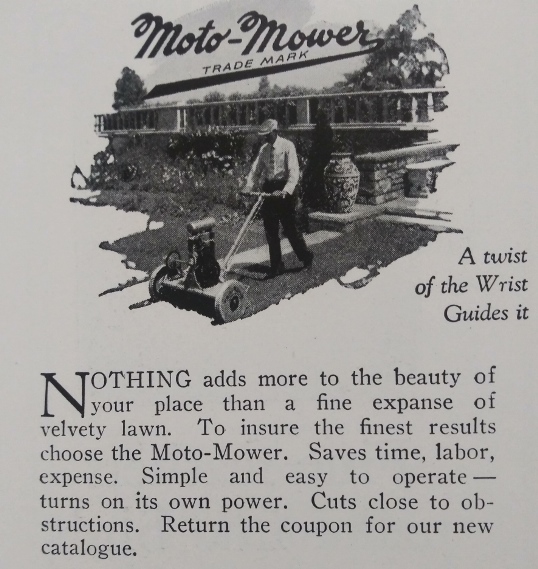
Well, now you’re set, folks! You’re up to date and ready for company!

Foamy Fascists

by Bernard F Rogers, Jr for Nat Geo

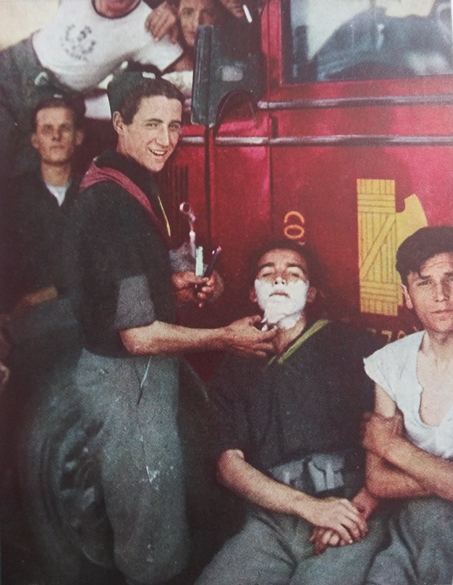
It’s 1936, and these members of the Young Fascists are killing time and facial hair while hanging at comrade camp in Rome. At the time, Mussolini was head of the police state of Italy as its Fascist leader. Fascism is generally a one-party, anti-democratic, often racist dictatorship, so you can imagine the experiences these lads had living under such a regime. Note the painted Fascist badge on the truck above, derived from ancient Rome’s fasces, or symbol of authority, a bundle of rods with a protruding axe blade. Mussolini was evidently the axe.

slideplayer.com

Mussolini made his intentions clear from the start, before he became Il Duce.

When dealing with such a race as Slavic—inferior and barbarian—we must not pursue the carrot, but the stick policy … We should not be afraid of new victims … The Italian border should run across the Brenner Pass, Monte Nevoso and the Dinaric Alps … I would say we can easily sacrifice 500,000 barbaric Slavs for 50,000 Italians …

–Benito Mussolini, speech held in Pula, 20 September 1920

He intended to brainwash the minds of the young men below. Here, they are doing a drill at a camp, to which they came from all over Italy, for a review by Mussolini himself, as part of the organization’s sixth anniversary in October of 1936.
Mussolini equated high birthrates in Africa and Asia as a threat to the “white race,” which led him to ask, “Are the blacks and yellows at the door?” to be followed up with “Yes, they are!”
Below, Romans swarm the Piazza Venezia, so that Premier Mussolini can review the Fascist University Groups, wearing bright neckerchiefs, from his headquarters. The review commemorated the 14th anniversary of the Fascist March on Rome, when Il Duce came to power.

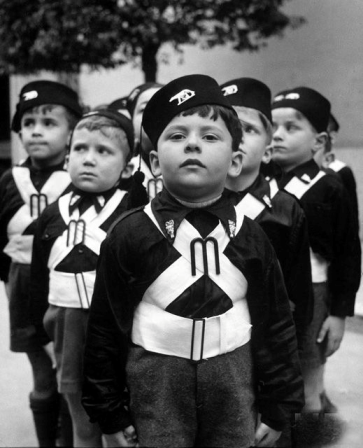
Opera Nazionale Balilla (ONB) was an Italian Fascist youth organization functioning between 1926 and 1937, which took its name from Balilla, the nickname of Giovan Battista Perasso, a Genoese boy who, according to local legend, started the revolt of 1746 against the Habsburg forces that occupied the city in the War of the Austrian Succession by throwing a stone at an Austrian soldier.

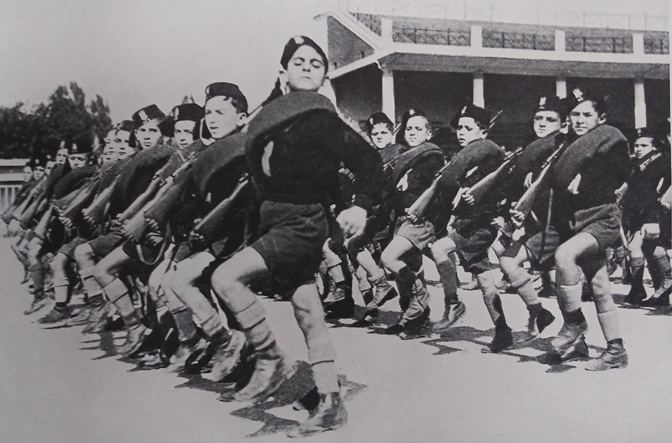
These Balillas, aka “boy blackshirts” emulate the posture of Il Duce, with squared shoulders, chins high, quickstepping with toy rifles and blanket rolls during a review.

Acme

Even the very young were indoctrinated.

wikipedia

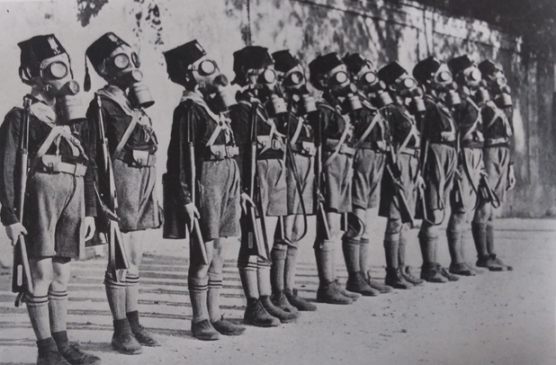
Italian boys donned uniforms at six and received real weapons in their 18th year on the anniversary of Rome’s birth, April 21. These youngsters are doing a drill with gas masks and miniature rifles.

photo by Acme
Fortunately, Italian partisans executed Mussolini two days before Hitler committed suicide, dumped his corpse in the Piazzale Loreto, let folks kick and spit on him, then hung him upside-down from the roof of an Esso gas station. Civilians were then allowed to stone him. Woot.
US National Archives
US Nat’l Archives

New Secret To Youth: Positive Agitation

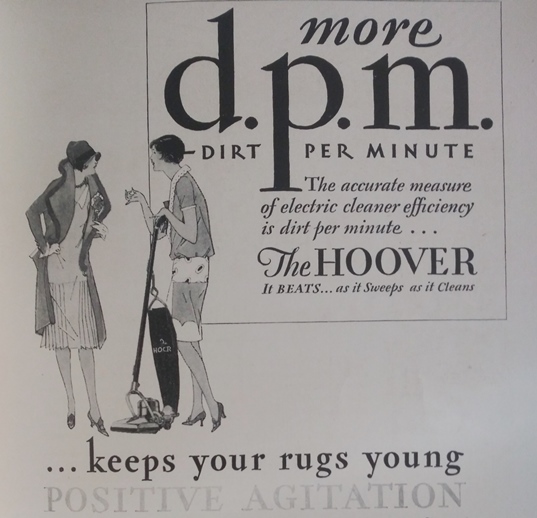
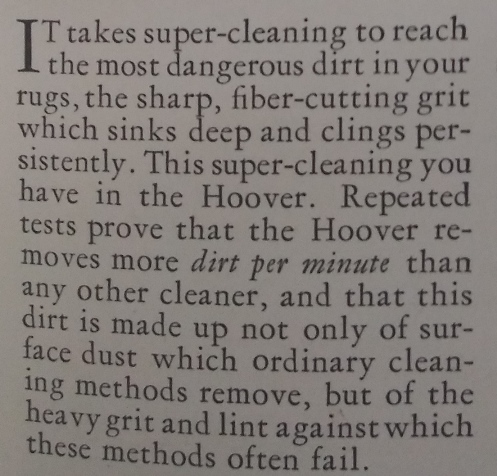
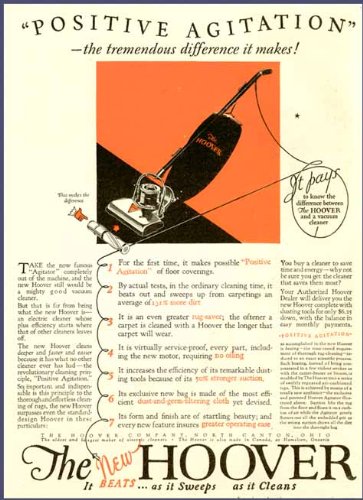
Hoover 1928

If it keeps your rugs young, maybe it keeps your skin young as well. Perhaps each time I exfoliate, I’m positively agitating my stubborn wrinkles.

I’m pretty sure this is also the secret of a long and happy marriage.

https://makeameme.org

Have you ever experienced any of these synonyms for agitation with your partner?

stirring, whisking, beating, churning, shaking, turbulence

tossing, blendingwhippingfoldingrolling, jolting

Perhaps you should implement some new verbs into your marriage tonight!

Please Do Not Spit

http://collections.vam.ac.uk

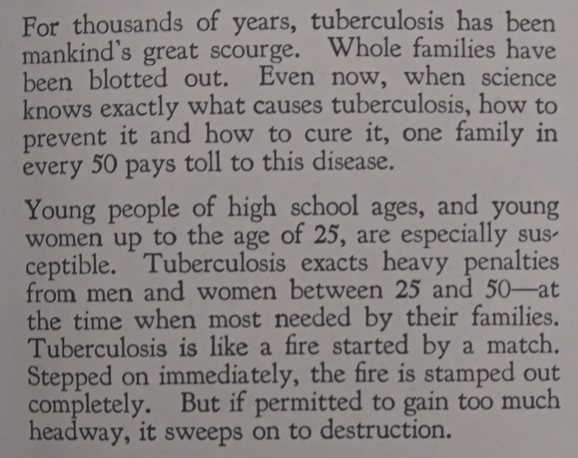
Unlike the scare tactics of Big Pharma today, encouraging you to take a pill if you’re sad, and another if you’re anxious, and another for every emotion known to man, tuberculosis was a legit concern in March 1928, when Met Life Ins. Company placed this ad below in National Geographic.

How terrifying it must have been, not knowing if it lay dormant in you, and you might pass it on to your babies.

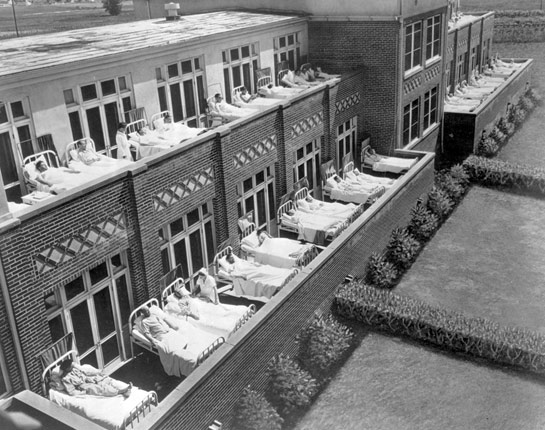
Way back in 1884, Edward Trudeau had opened the first U.S. sanatorium at Saranac Lake, NY, and others soon followed, including this one in Denver. Can you imagine a doctor telling you to go out into the sunshine to receive UV rays?

Denver Public Library
Library of Congress

But progress was on the horizon, and it wasn’t click bait. The Met Life ad continued:

Think about what an exciting time that was. The readers of this announcement will not have to worry about TB. Have you ever worried about TB? Does it cross your mind? PBS.org states that by the dawn of the 19th century, tuberculosis—or consumption—had killed one in seven of all people that had ever lived. Mindboggling.

Of course, it’s still a very real threat to those with HIV, their number one killer, in fact. Forbes stated, “In 2016, 10.4 million people became ill with active TB globally, and there were 1.7 million deaths from the infection. While ill, a person with active TB is likely to infect 10-15 others over a year’s time.” Still frightening, but not the threat that it was back in 1928. And the US did its best to keep the nation informed. The Met Life ad continued:

Fourteen years later, baseball player Larry Doyle would contract TB and enter the Trudeau Sanitorium in Saranac Lake. When they closed their doors in 1954 due to the development of an effective antibiotic treatment, Doyle was the last resident to leave, and Life Magazine captured his exit. He spent the rest of his life in Saranac Lake, and died there twenty years later, at age 87. Thank God for the cure.


Mister, That’s The Biggest Nickel I’ve Ever Seen

Nat Geo 7/36

I love how early ads doled out the facts. The US has 13 phones for every 100 people, and Europe has less than three. You better recognize that Bell Telephone worked its hiney off to get that done. You’re welcome, America.

Mad props to Bell.

Per http://www.elon.edu,

While Italian innovator Antonio Meucci is credited with inventing the first basic phone in 1849, and Frenchman Charles Bourseul devised a phone in 1854, Alexander Graham Bell won the first U.S. patent for the device in 1876.

And while this Bell ad states there were 34 million phones in the world in the summer of 1936, today there are 2.71 billion smartphones in use. Per http://www.bankmycell.com, 35% of the world has a smartphone. And most of us are addicted. Perhaps you are even reading this on your phone now, although I wouldn’t recommend it. You need a big monitor to enjoy these pics. 😉

Last night, my husband and I discussed the large long distance phone bills we used to accrue in the 90s, how I would call my mom collect at Christmas once I arrived at my grandparent’s house, finding a pay phone in the mall to call home, or a phone booth outside, complete with yellow pages (which some folks ripped out). All things our son will never understand. And while we still have a landline, we don’t have a rotary, so he won’t experience that either. And frankly, most of his communication is texting, so rare is the time he even speaks on a phone at all. Remember when we looked forward to hearing each other’s voices?

For Whom The Horn Blows

National Geographic, March 1928

I got on my hands on a tall stack of vintage Nat Geos this weekend, all from the 20s and 30s. And yes, even in 1928, they had colorful pictures of bare-breasted tribal women. Odd.

In this particular article about Michigan, “Mistress of the Lakes,” they declare Detroit a “City Without Slums.” Now that’s quite the declaration. Clearly things were going well in 1928. One of the manufacturing jobs listed, in addition to cars and gold pens, was the lumber industry. And let me remind you, if you’ve never read a National Geographic article, they are loooong. There was no TV yet, not everyone had radio. So this article on Michigan alone goes from page 269 to 325. Crazy, right? I won’t read it all. But I’ll share these picshas.

The curiously-coiffed gal above is the assistant cook at the lumberyard, who retires to the rear of the cook shack at noon each day to sound the call for “dinner,” which is what we call lunch.

Into the room, the men would file for nourishment. A unique feature of the lumber camps was absolute silence during eating. They maintained that it prevented arguments, which could lead to “brawls, broken dishes, and broken heads,” none of which that cook up top would want to fix. For those with misophonia, who lose their minds when forced to listen to others eating, this would have proven a challenge. But mental conditions were not coddled in their day, so group masticating it was.

The author of the article asserts that strong and faithful horses were better able to do certain lumber camp work better than “any motors,” but I imagine that didn’t last long.

While it was not uncommon to see huge rafts of pulpwood float downstream for consumption of paper mills, much wood was loaded onto ships and processed throughout Michigan.

This particular vessel below has just discharged a cargo of one million board feet of rough lumber from a Canadian port, which Saginaw’s mill will finish for ready-cut houses. Per michiganhistory.leadr.msu.edu, Saginaw hit its peak in the Lumber Era during 1882, with 1,001,274,905 board feet of timber cut in mills along the Saginaw River.

No wonder we hug the trees now.

greenbiz.com