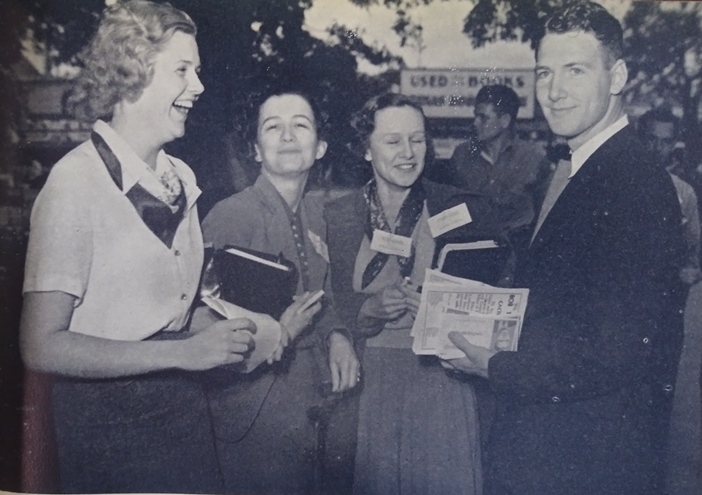
These Jayhawk college students have just taken a hayride out to the country to enjoy a campfire and REEEEEEEACH for some flame-grilled wieners during the autumn of 1946.
Below, Eugene Ryan grins for the camera, satisfied with a full belly and frosty beverage.
After dinner, Charlie Byers feeds Mary Jane “Zolly” Zollinger an ice cream bar. Careful, Charlie.
As the embers begin to dim, a trio from Locksley Hall pipes up with three part harmony. Lorraine Mai, Violet Orloff, and Dessie Hunter round out the evening before everyone loads up for the homeward trip.
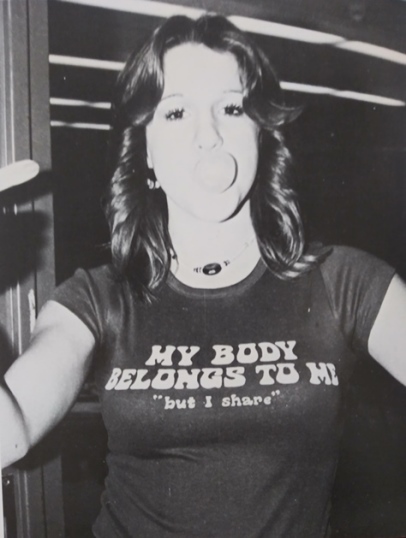
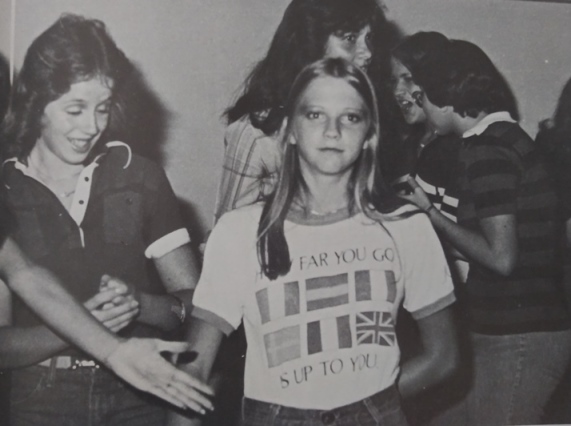
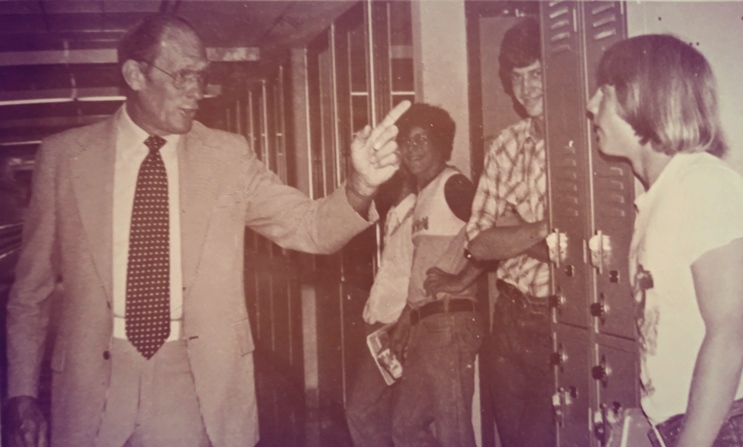
Back in 1978, this was seen as a clever tee, cute enough to make it into the yearbook. High schools would undoubtedly send this minor home in today’s #metoo era.
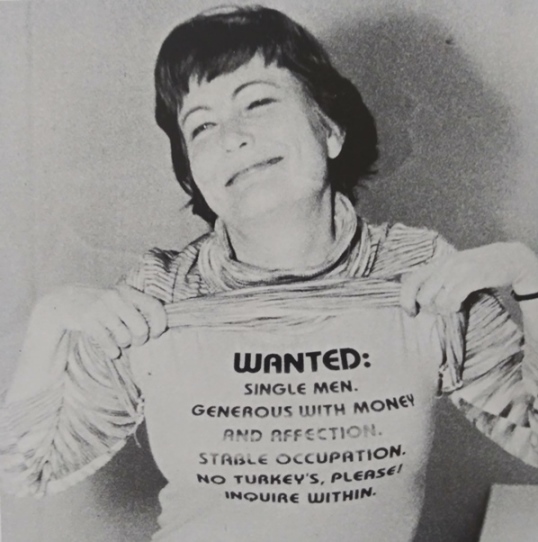
Even teachers were allowed to petition for partners.
You can’t wear that these days either. Turkeys would be offended.
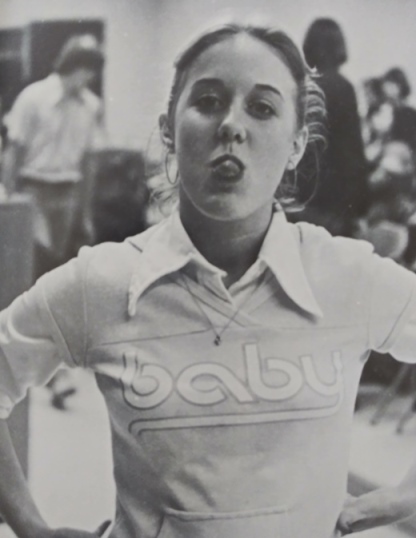
This one would pass muster, despite its inaccuracy.
At least this one tells the truth.
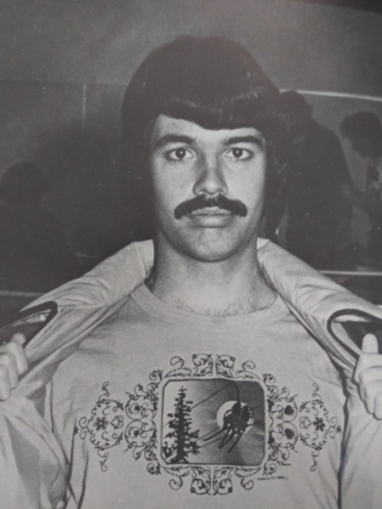
This next shirt pairs beautifully with his thick, manly ‘stache.
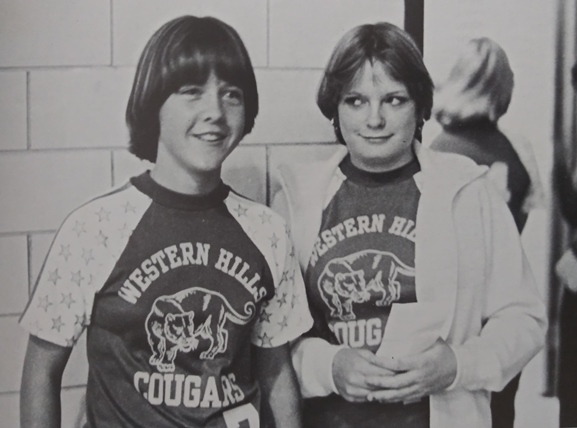
Maybe the safest course to take is to simply don some school spirit (and a Dorothy Hamill haircut for his and hers).
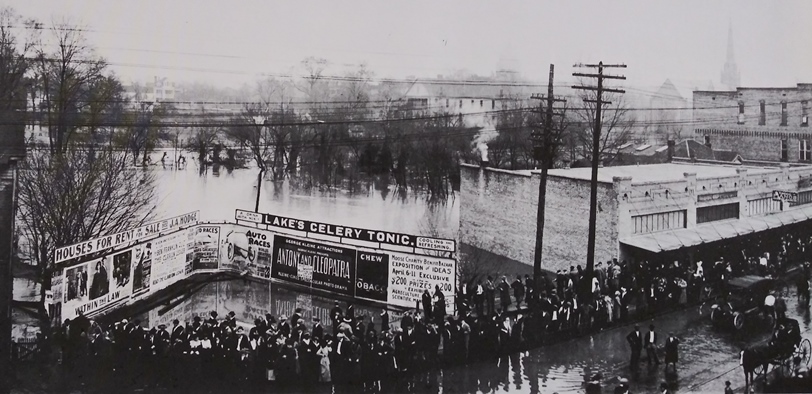
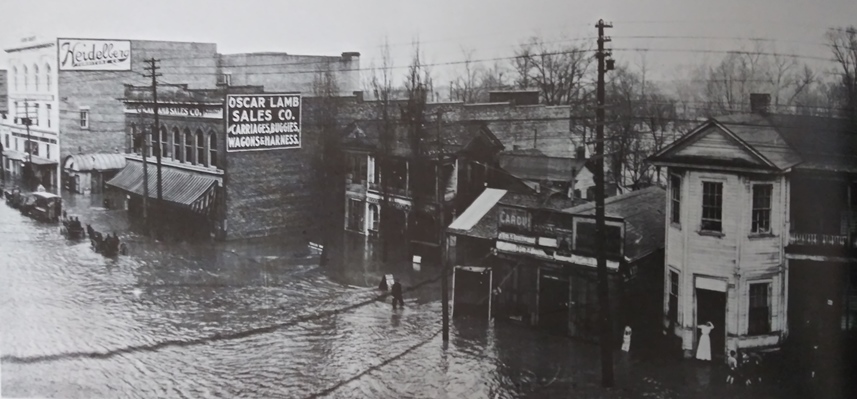
Photographer Albert Fred Daniel (yes, that is three first names) captured Capitol Street as it disappear underwater from the spilled banks of Town Creek, literally making the town a creek.
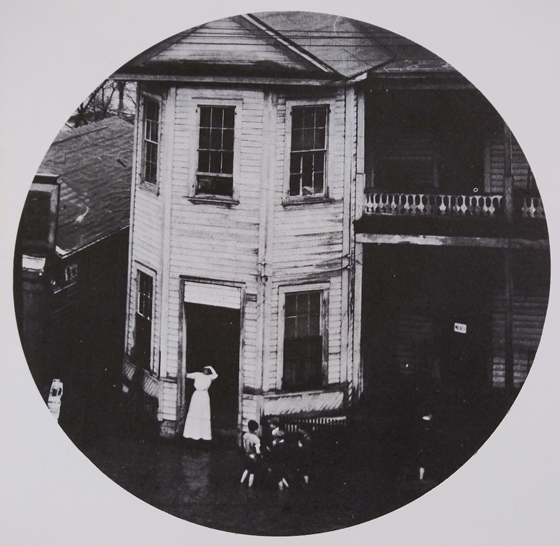
Oscar Lamb Sales took a huge hit, as well as the Heidelburg building movie house (ironically showing an epic about the Titanic), which reported its organ and all its seats total losses. The boardinghouse proprietor below tries to keep track of several of the boys who found wading in the cesspool an absolute delight.
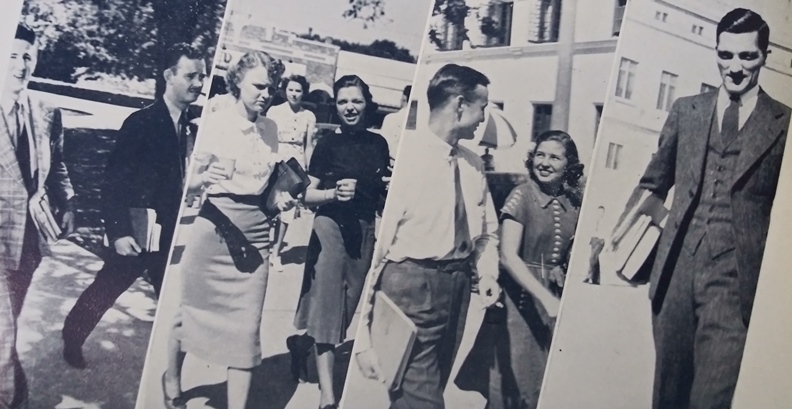
In the pages of my 1938 University of Texas annual is this image of a young John Connally, who would have been no more than 21 years old. Here he is celebrating his win as president of the student body. He had no way of knowing he would be seated with another president 25 years later, when he became Governor of Texas.
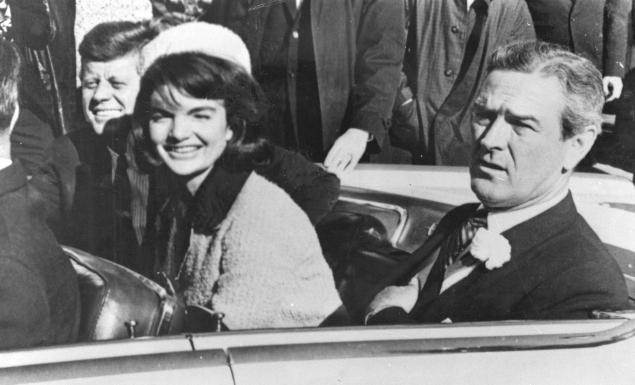
Most young folks (or frankly, even middle-aged folks) have probably never even heard of Connally and don’t know he was riding in the same limousine as JFK on that fateful day of November 22, 1963. Per the Warren Commission Hearings, Connolly asserted he immediately recognized the first shot as a rifle shot. Fearing an assassination attempt, he turned to his right to see if he could see JFK. As he turned to his left, he felt an impact to his back. He stated to the Warren Commission: “I immediately, when I was hit, I said, ‘Oh, no, no, no.’ And then I said, ‘My God, they are going to kill us all.'” He looked down and saw his chest covered with blood and thought he had been fatally shot.
NBC News
His wife, Nellie, wrote in her book that she pulled him onto her lap and covered him with her body. “I didn’t want him hurt anymore.” When the third shot hit its mark, exploding Kennedy’s head and showering Nellie with bits of blood and flesh, she was exposed but her husband was not. Nellie felt her husband move underneath her, bleeding heavily but alive. “I felt tremendous relief,” Nellie wrote, “as if we had both been reborn.” She pulled his right arm over his chest to draw him closer and comforted him as if he were a frightened child: “Shhhh. Be still,” she said. “It’ll be all right. Be still. It’ll be all right.” (https://www.texasmonthly.com/politics/the-witness-2/)
Connally was lucky to make it out alive, undergoing four hours of surgery for his wounds, which included three broken ribs, a punctured lung, a shattered wrist, and a bullet lodged in his leg. When Connally died in 1993, forensic pathologist Dr. Cyril Wecht and the Assassination Archives and Research Center petitioned Attorney General Janet Reno to recover the remaining bullet fragments from Connally’s body, believing that the fragments would disprove the Warren Commission’s single-bullet, single-gunman conclusion. The Justice Department had no authority without consent of his family, who refused. (June 19, 1993, “Wecht presses to recover Connally bullet fragments,” Pittsburgh Post-Gazette.)




 I Don't Get It