


In 1941, only 1% of aviation employees were women.
Two years later, they made up 65% of the industry.



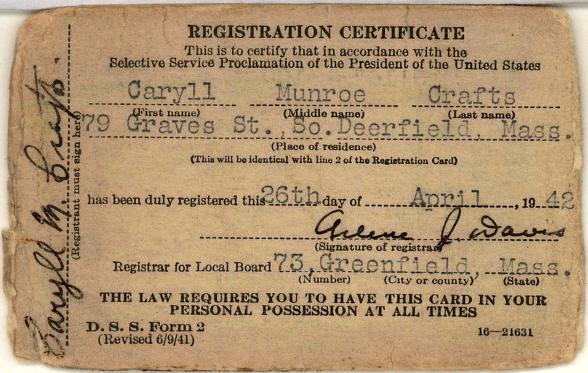
Actually, this woman was a draft service worker during WWII. Men 18-65 and were required to register and keep the card on them at all times. Men age 18-45 were subject to military service. From 1940 until 1947 – when the wartime selective service act expired – over 10,000,000 men were inducted.
This cartoon in the Saturday Evening Post depicted a draft board scraping the bottom of the barrel.

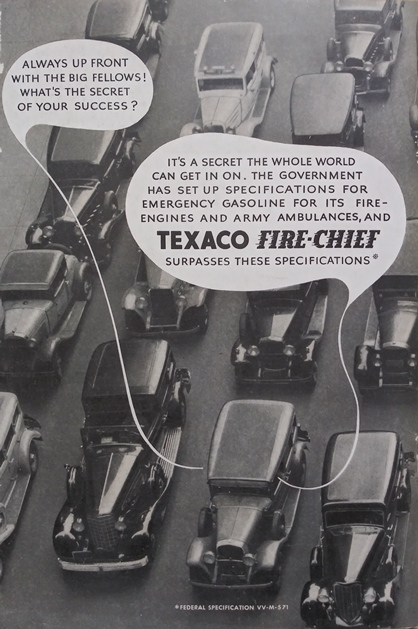
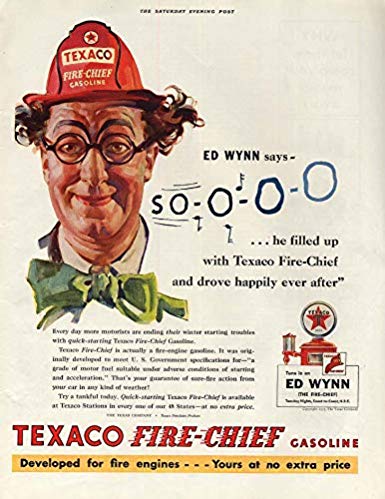
In 1932, Texaco introduced Fire Chief gasoline to the nation, a “super-octane” motor fuel touted, as you can see above, as “surpassing specifications” for emergency vehicles. Ed Wynn promoted it on his NBC radio program called the Texaco Fire Chief.

During WWII, the not-yet-vanquished German army occupied the north of France, including the port of Cherbourg, which they heavily fortified against seaborne assault. As the only deep water port in the region, it was particularly desirable, so American troops encircled the city in June of 1944 in the Battle of Cherbourg, and handed the Germans their asses five days later, when they surrendered. The fighting left the city in a compromised state. However, in only a month, cargo ships known as Liberty Ships began to arrive, and it became the busiest port in the entire world, with twice the traffic of New York, until the war ended. It has since merged with an adjacent city to become Cherbourg-Octeville.* In this image, we see American soldiers in Cherbourg who appear to have stumbled upon some German wine stores. I’ll drink to that.
*per wikipedia
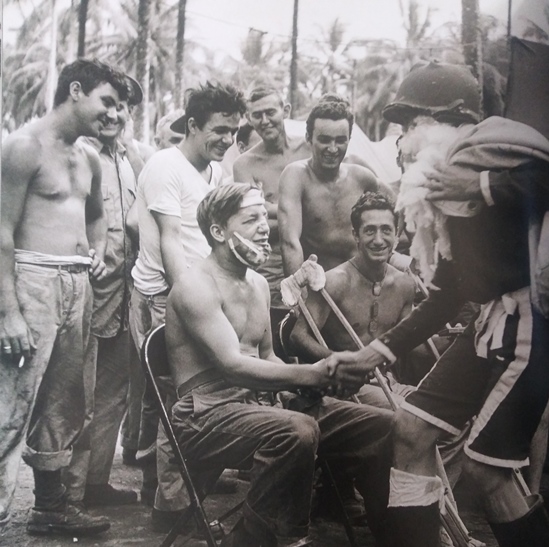
Christmas Day didn’t feel very wintry to these WWII soldiers in the South Pacific. Santa braved the 90 degrees to dispense Red Cross gifts to Army and Marine hospitals and bring some holiday cheer to those missing their families back home.

 I Don't Get It