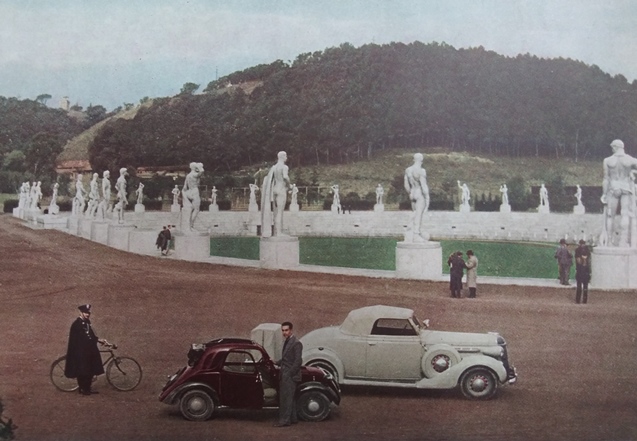
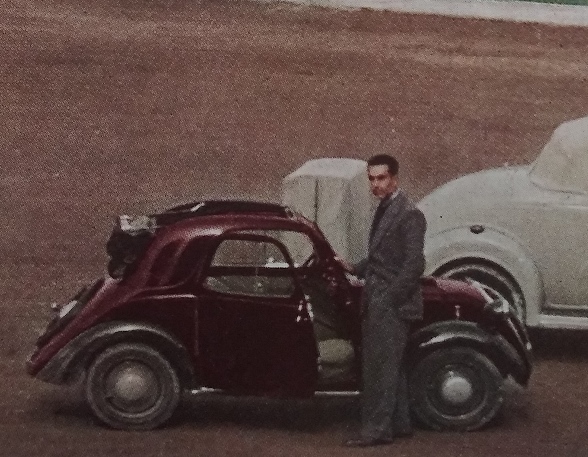
That little red Fiat 500 was a first-year Model A (produced from 1936 to 1948), the smallest car in the world at the time. Italians (like those in this shot in Rome’s Mussolini Stadium) dubbed the midget coupe Topolino (“little mouse” in Italian).
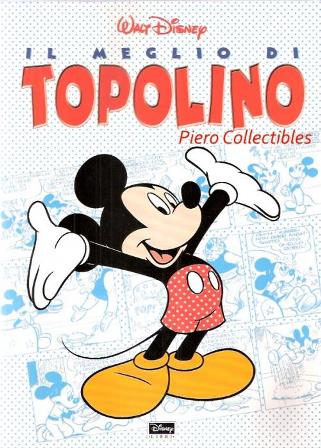
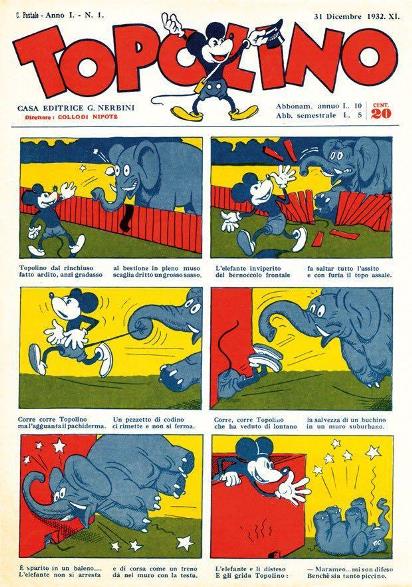
Topolino was also the name of this very famous mouse. Yep, that’s their name for Mickey.
But evidently, cartoons didn’t set well with Fascists back when that photo was taken. Per theguardian.com, “Comics were seen as a vehicle for the values of the Anglo-Saxon democracies … and Mickey Mouse was the last of the American cartoon heroes to be banned because he was a particular favourite with Mussolini’s children; they were among the very few Italians who were able to defy their father with impunity.”
The controlling craziness went so far as to forbid use of “speech balloons” in any comics at all. Who knew the life of a Fascist cartoonist was so hard?
For your further edification, according to hellogiggles.com, Donald Duck goes by “Paolino Paperino” (not pepperoni), Daisy Duck by “Paperina,” and Goofy is “Pippo,” yet for some reason Pluto is still Pluto and Minnie still Minni (close enough).

Before craft beer, choices were limited. And Budweiser did its best to make it seem like Bud was the life of the party, replete with black tie formal and an orchestra. The movement conveyed in the dancing, the yellow glow around the conductor, the bubbles in the bottle, the lovely amber and skyscraper greys all made for a most tasty ad. Even the face of the lady in the right foreground seems to be aimed straight at you.

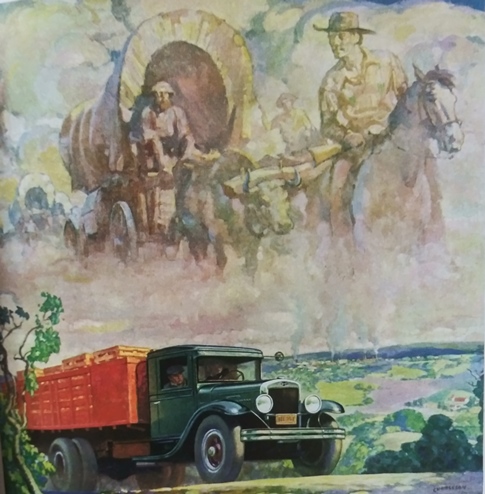
International Motor Trucks weren’t a party, but they were a part of history, as depicted in this colorful ad of a covered wagon, cattle, and pioneers.
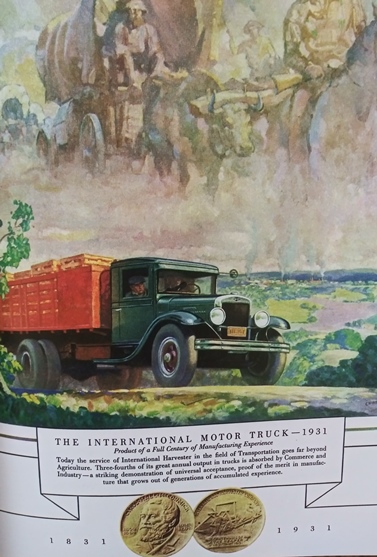
The curves of the green vehicle pop against the sharp red lines in its truckbed. It makes my eyes happy.
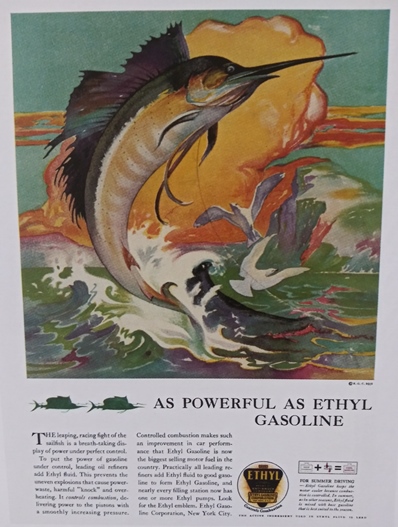
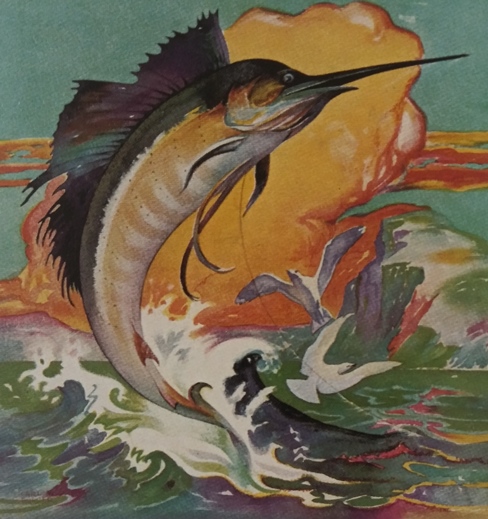
This last 1931 image may seem mismatched. A sailfish selling ethyl gasoline? Well, it’s all about power. But to me, it’s all about movement. The splashing water, the open wings of the seagulls, the almost melting yellow sun behind it. That doesn’t even make any sense, but I like it.
Aren’t the colors fun?
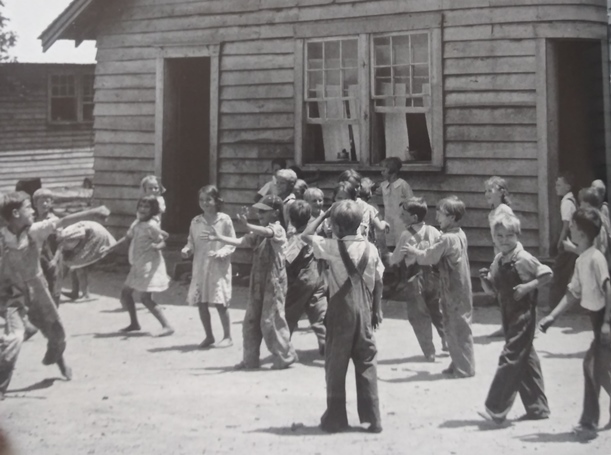
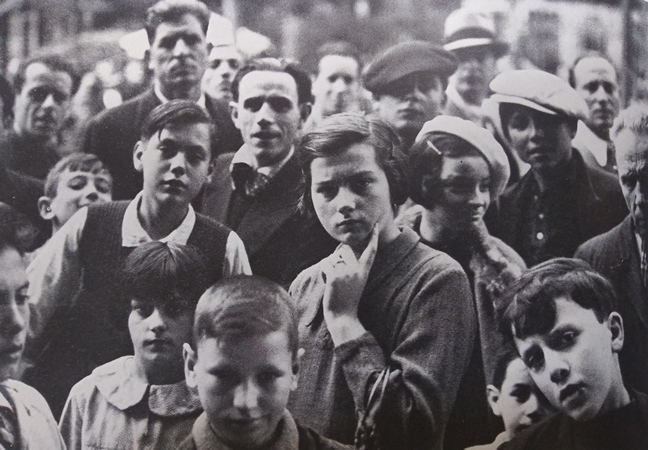
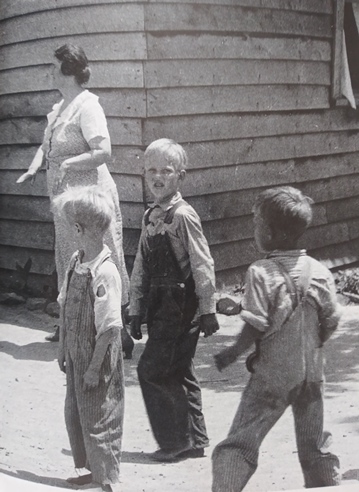
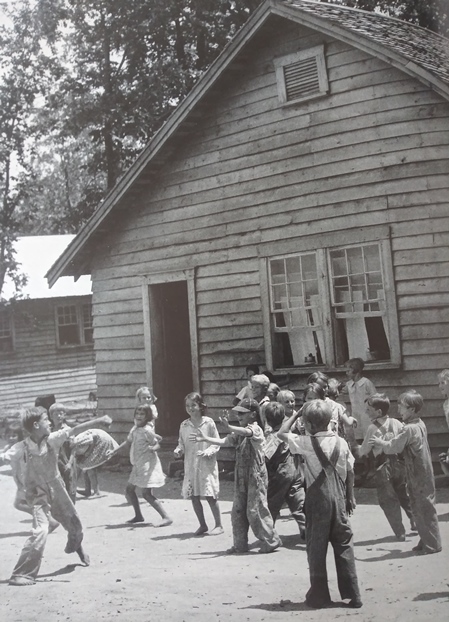
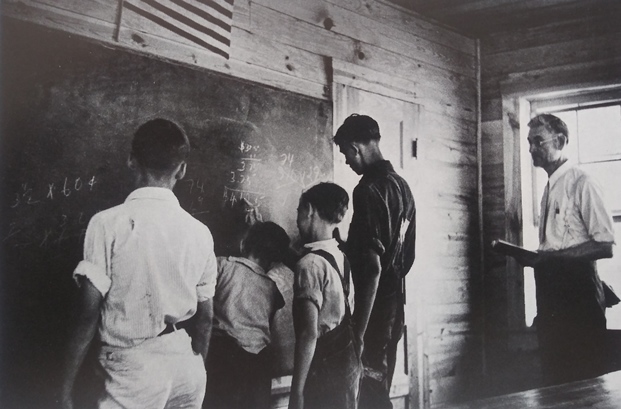
Scottsboro, Alabama, 1936 by the great Carl Mydans for Farm Security Administration

This kid’s got the right idea, and I don’t mean the pantaloons. Two is better than one.
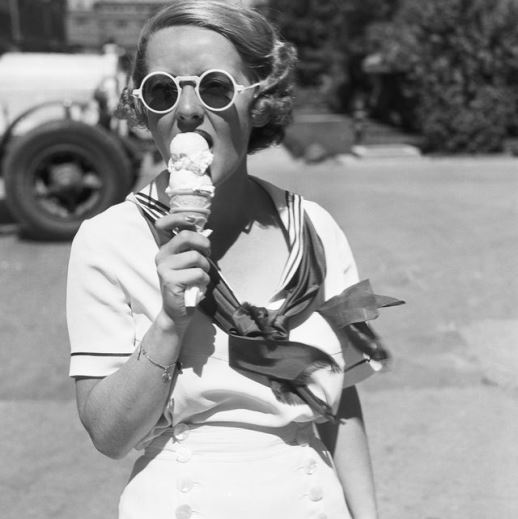
Bette Davis didn’t turn down two scoops, either.
Robert Plant went for three wee scoops. Perhaps they were accessories for his blouse.

Forrest Gump didn’t limit himself to one scoop because he knew it helps a body heal.

Marilyn played a balancing game. This can only lead to tragedy and mayhem.
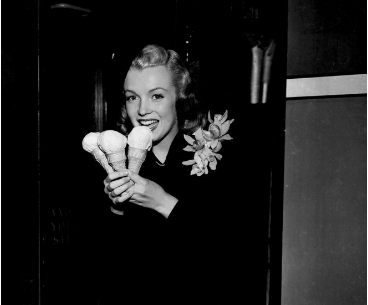
Wait. I spoke too soon. THIS can only lead to tragedy and mayhem.

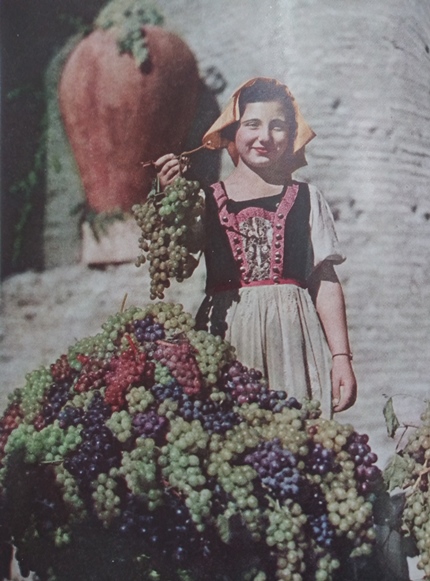
While this pretty maiden humbly offers two bunches of grapes on sticks during a Roman Grape Festival, her old-fashioned costume betrays her. She is no country bumpkin. As the article states, her wristwatch shows that she is a modern woman, and chances were high that she was actually an extra from a nearby movie studio.
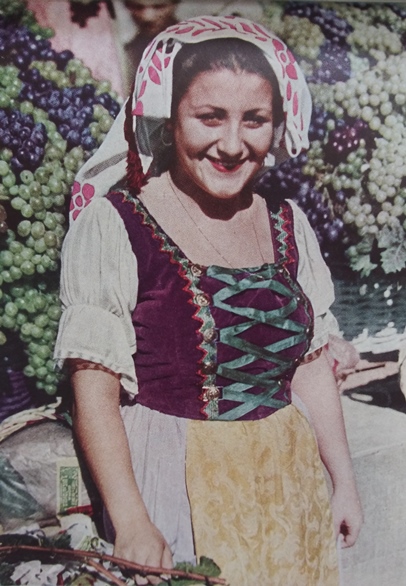
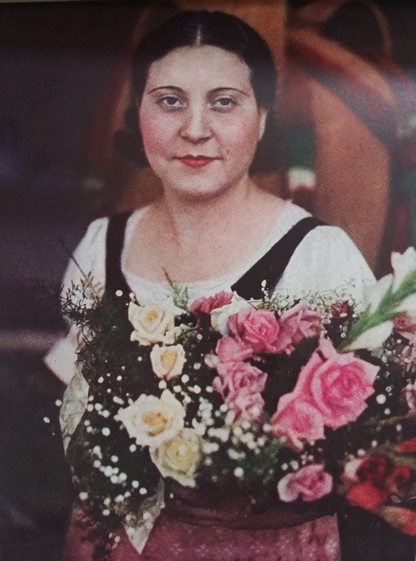
This grape girl wrapped her finest grapes in paper packages, while the salesgirl below sold roses in assorted colors.
If a flower girl could not carry her burden, she used a beast.
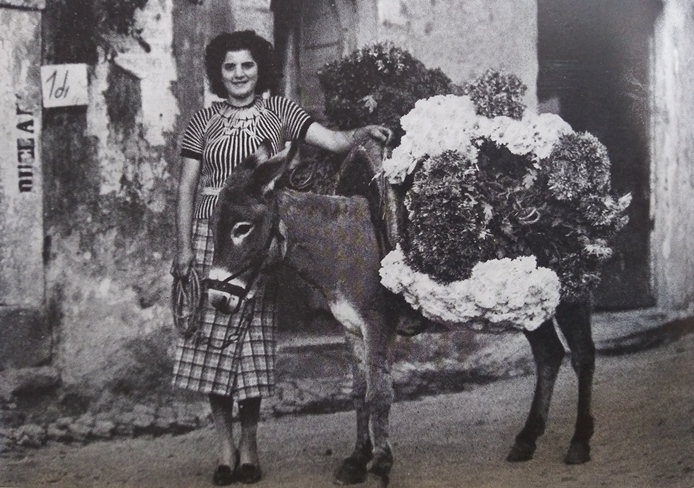
This donkey was piled high with daisies, violets, and chrysanthemums, brought in from the fields to Nemi, near Rome. With such plentiful bounty, vendors often gave faded flowers to children to beat on the pavement and watch the petals fly.
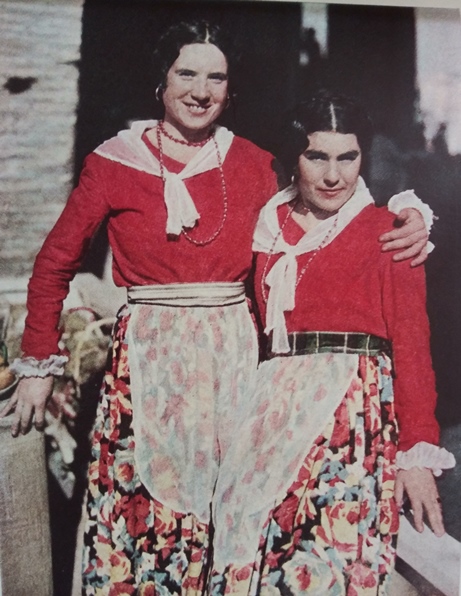
Those who weren’t selling got into the spirit by wearing provincial costumes to celebrate products from the many district vineyards, displayed in the Basilica of Constantine. That’s a serious middle hair part.
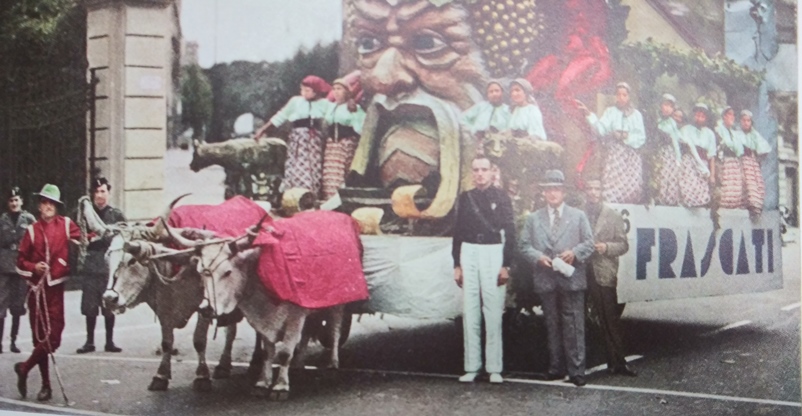
Once the Grape Festival got underway, 25 floats made their way down the streets. This one depicts Bacchus (Dionysus), the ancient Roman and Greek wine god. As the oxen moved, the tongue revolved as if lapping wine. Ew.
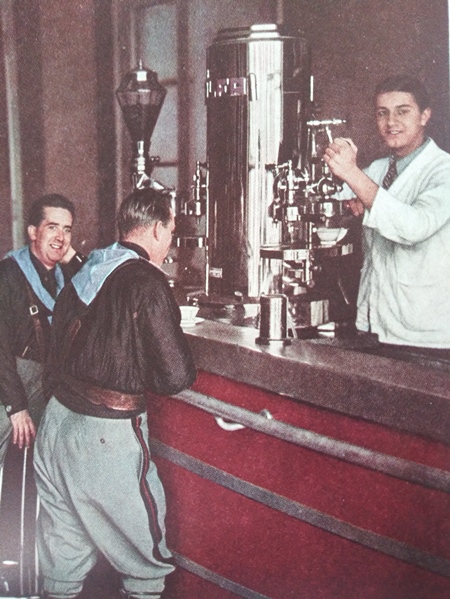
Granted, the fellow on the left looks 57, but apparently, he and his buddy were both Roman university students, sipping caffe espressos made from Brazilian beans between classes way back in 1937. Each student’s neckerchief bears colors denoting his course. Would you get a new neckerchief each time you changed majors?
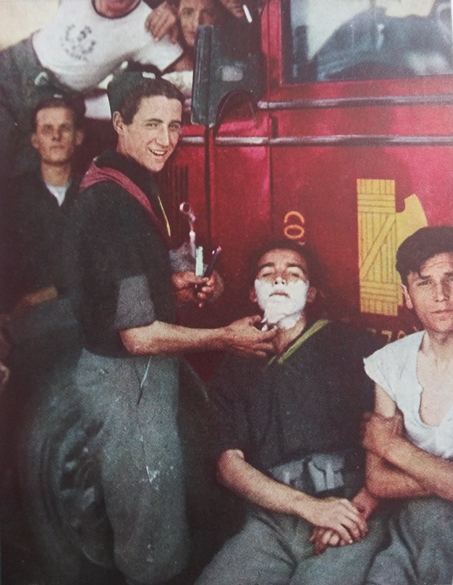
It’s 1936, and these members of the Young Fascists are killing time and facial hair while hanging at comrade camp in Rome. At the time, Mussolini was head of the police state of Italy as its Fascist leader. Fascism is generally a one-party, anti-democratic, often racist dictatorship, so you can imagine the experiences these lads had living under such a regime. Note the painted Fascist badge on the truck above, derived from ancient Rome’s fasces, or symbol of authority, a bundle of rods with a protruding axe blade. Mussolini was evidently the axe.

Mussolini made his intentions clear from the start, before he became Il Duce.
When dealing with such a race as Slavic—inferior and barbarian—we must not pursue the carrot, but the stick policy … We should not be afraid of new victims … The Italian border should run across the Brenner Pass, Monte Nevoso and the Dinaric Alps … I would say we can easily sacrifice 500,000 barbaric Slavs for 50,000 Italians …
–Benito Mussolini, speech held in Pula, 20 September 1920


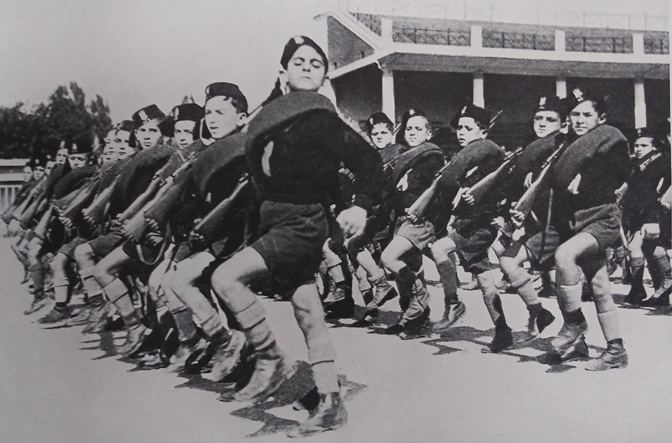
Opera Nazionale Balilla (ONB) was an Italian Fascist youth organization functioning between 1926 and 1937, which took its name from Balilla, the nickname of Giovan Battista Perasso, a Genoese boy who, according to local legend, started the revolt of 1746 against the Habsburg forces that occupied the city in the War of the Austrian Succession by throwing a stone at an Austrian soldier.
These Balillas, aka “boy blackshirts” emulate the posture of Il Duce, with squared shoulders, chins high, quickstepping with toy rifles and blanket rolls during a review.
Even the very young were indoctrinated.
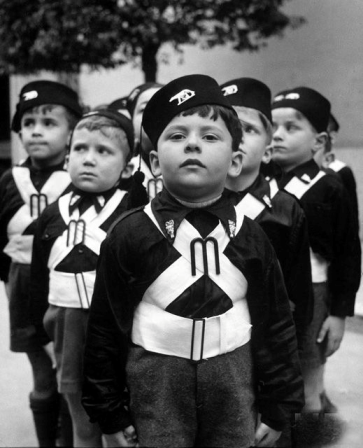
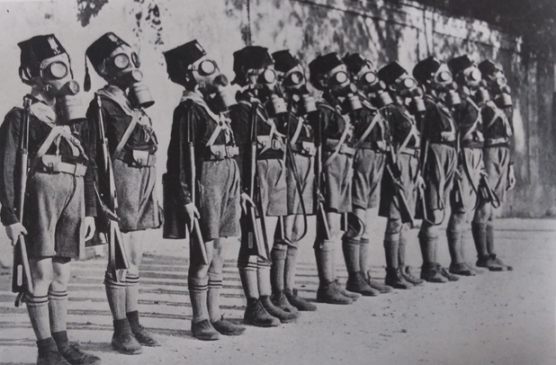
Italian boys donned uniforms at six and received real weapons in their 18th year on the anniversary of Rome’s birth, April 21. These youngsters are doing a drill with gas masks and miniature rifles.


I love how early ads doled out the facts. The US has 13 phones for every 100 people, and Europe has less than three. You better recognize that Bell Telephone worked its hiney off to get that done. You’re welcome, America.
Mad props to Bell.
Per http://www.elon.edu,
While Italian innovator Antonio Meucci is credited with inventing the first basic phone in 1849, and Frenchman Charles Bourseul devised a phone in 1854, Alexander Graham Bell won the first U.S. patent for the device in 1876.
And while this Bell ad states there were 34 million phones in the world in the summer of 1936, today there are 2.71 billion smartphones in use. Per http://www.bankmycell.com, 35% of the world has a smartphone. And most of us are addicted. Perhaps you are even reading this on your phone now, although I wouldn’t recommend it. You need a big monitor to enjoy these pics. 😉
Last night, my husband and I discussed the large long distance phone bills we used to accrue in the 90s, how I would call my mom collect at Christmas once I arrived at my grandparent’s house, finding a pay phone in the mall to call home, or a phone booth outside, complete with yellow pages (which some folks ripped out). All things our son will never understand. And while we still have a landline, we don’t have a rotary, so he won’t experience that either. And frankly, most of his communication is texting, so rare is the time he even speaks on a phone at all. Remember when we looked forward to hearing each other’s voices?

Look, I’m fine with barrel-chested men. No worries. But this is ridiculous. These heads don’t match these bodies, and these bodies don’t exist in nature.

Just look at the man above! He’s at least three feet wide. It’s like hugging a refrigerator.
The ads aren’t even targeted toward large men. They just presume all men are this wide? Perhaps if an elephant stepped on them, they would be.
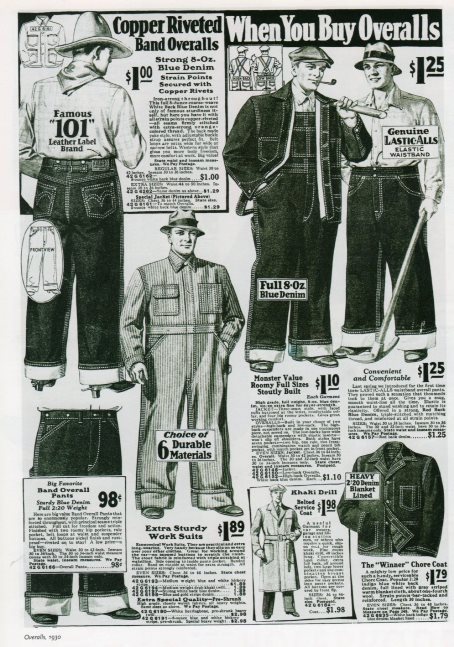
One would think that folks would be rationing material in The Great Depression, not overusing it.
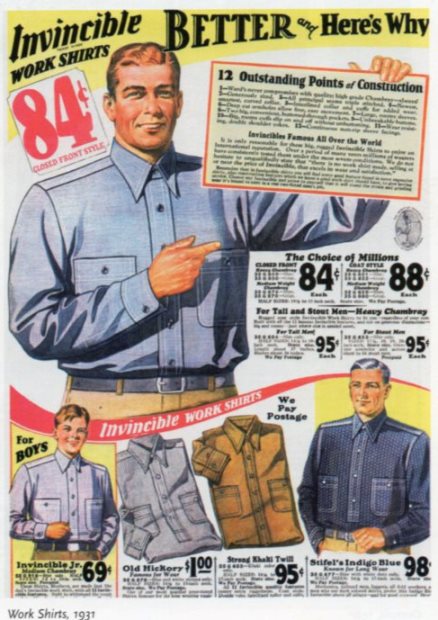
This last guy is ridiculous. He’s half farmer, half mobster, and 100% frightening. What do you feed him? Does he eat from a trough?

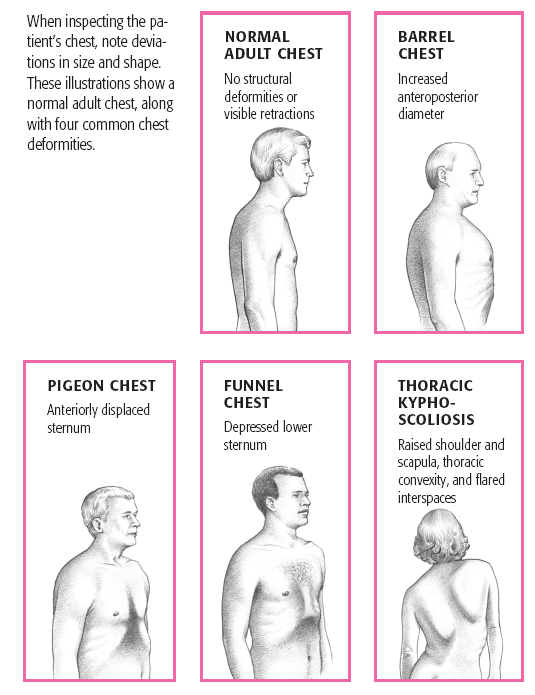
And just in case you’re not sure what kind of chest you have, here’s a chart.
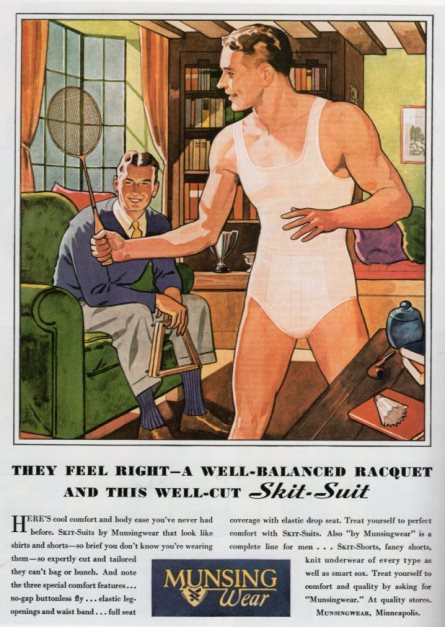
Men’s clothing ads of the 1930s were curious. I certainly don’t get it. Is this normal for a fully-dressed man to be supervising the sporting goods usage of a barely-dressed man? I don’t care for this tone.
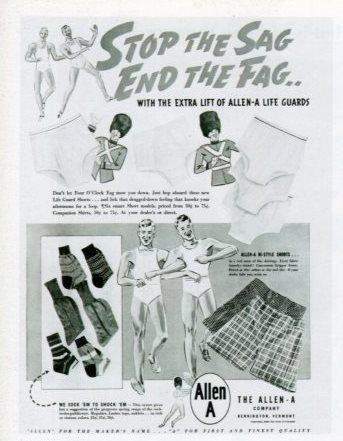
Nor do I care for the tone of this one. Young men, arm in arm, marching in their underwear. It’s getting weirder. And I can’t even with their tagline.
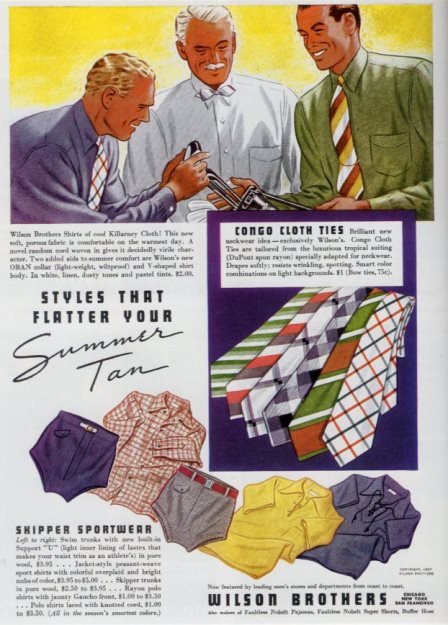
This seems to be more normal, just some men in office shirts checking out another man’s clubs. And while it’s odd to buy clothes that “flatter your summer tan,” it doesn’t really get strange until you see the belted briefs. What is that about? Do you have those?
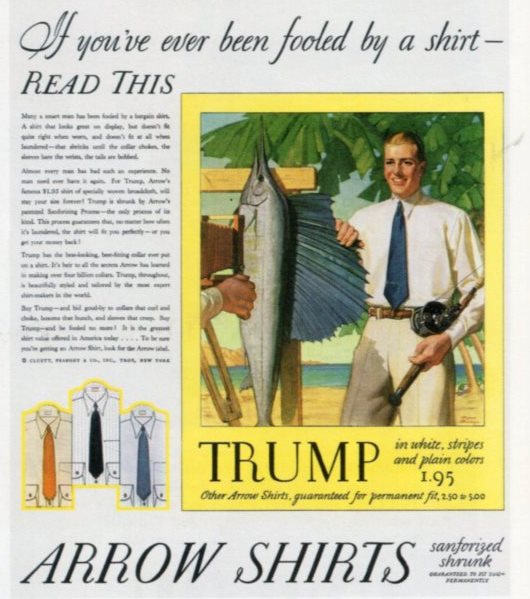
Let’s end on a less naked note, with this 1932 Arrow ad for men who get fooled by shirts. And no, that’s not our president; it’s a fellow who evidently goes fishing in a nice button-down, tie, and khakis. You know, like village fishermen. Is he petting that fish? Is he stroking its fins? Is that the proper protocol? No wonder shirts have been fooling him.
 I Don't Get It