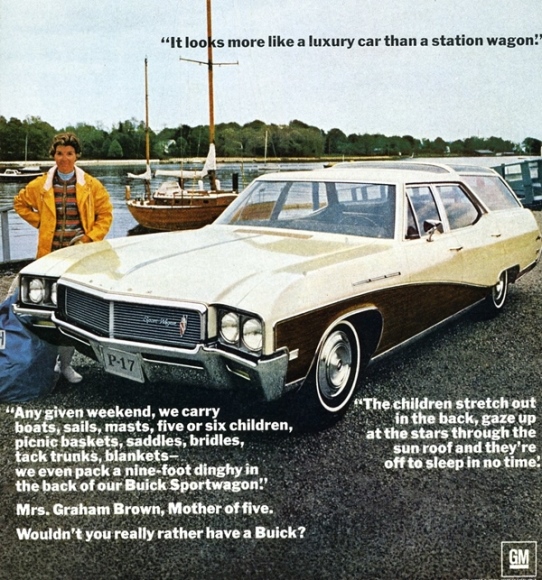
The Buick Sport Wagon had a sky roof that consisted of four tinted glass panels surrounding the elevated section of the roof.
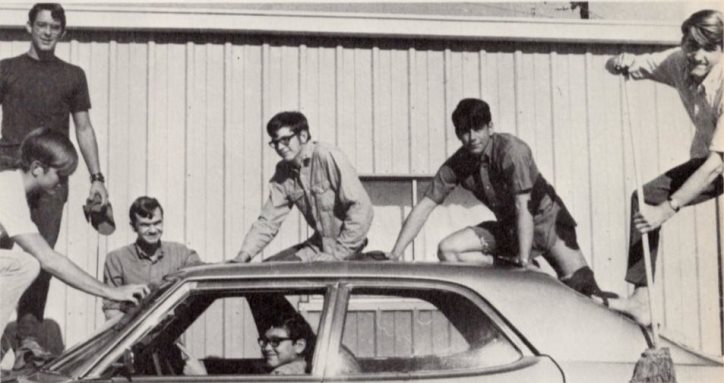
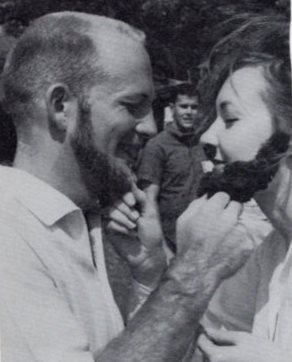
There are times in life when we just have to get up in each other’s personal space. Say, for matching beards.
Or making sure that a hairdo isn’t a hairdon’t.

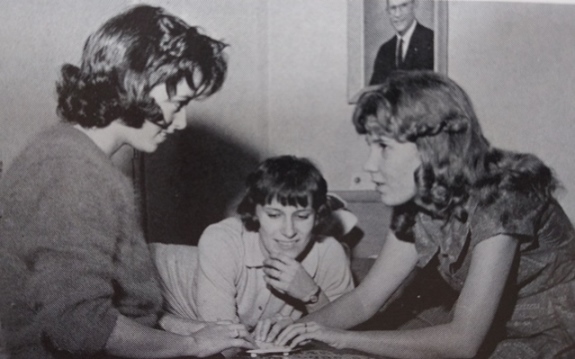
Ouija board, Ouija board… Look deep into my eyes…
Try to retain a buffer so you’re not actually singing cheek to cheek.

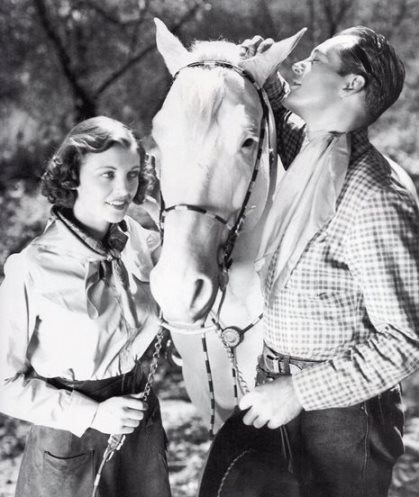
And if you don’t have the courage to get up close, just tell your horse to pass on the news.

Yesterday, we looked at the life of a University of Kansas Jayhawk in the spring of 1936. Today, we start with scenes from their social life. 
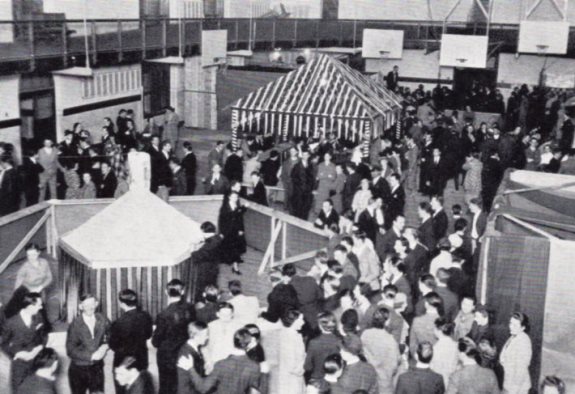
Students bought tickets for Carnival Town.
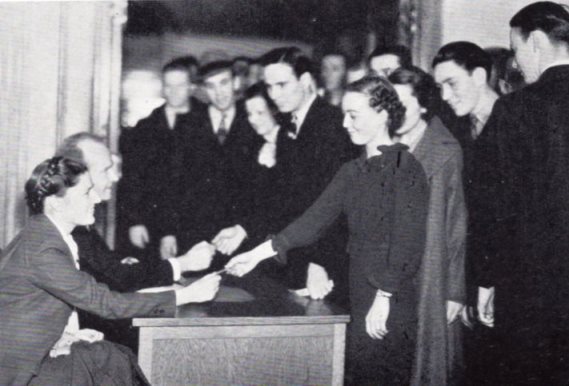
It was an indoor affair.
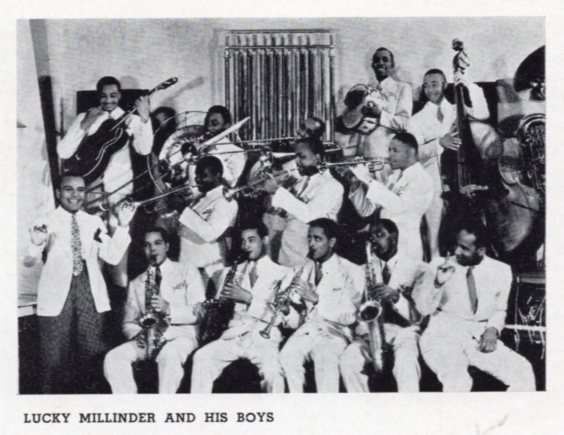
Lucky Millinder provided the music.
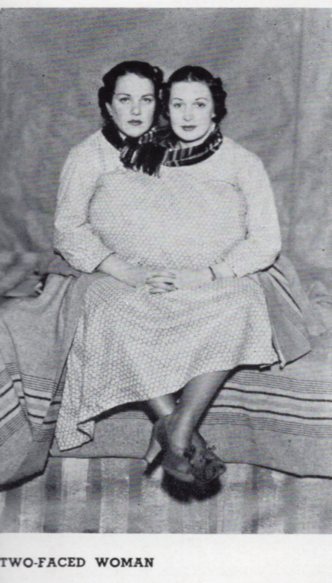
There were sideshow acts as well.
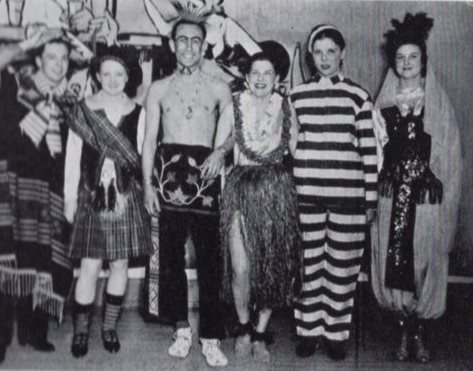
The students loved costume parties.
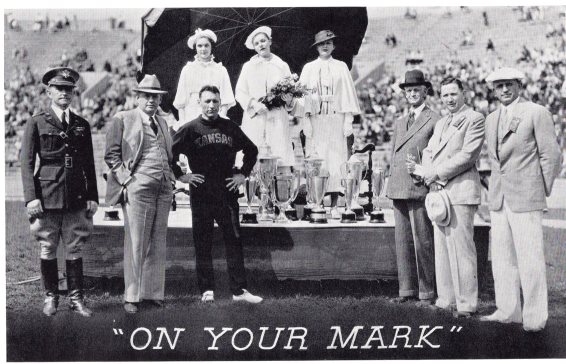
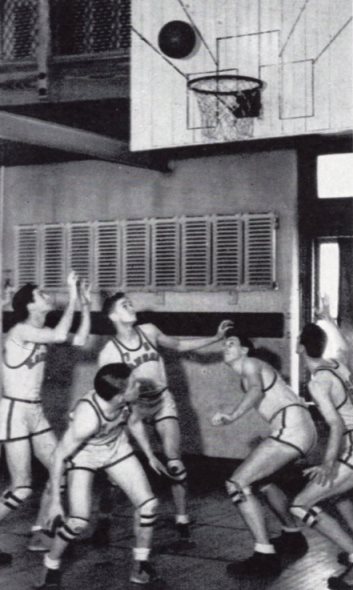
And sports were taken seriously.
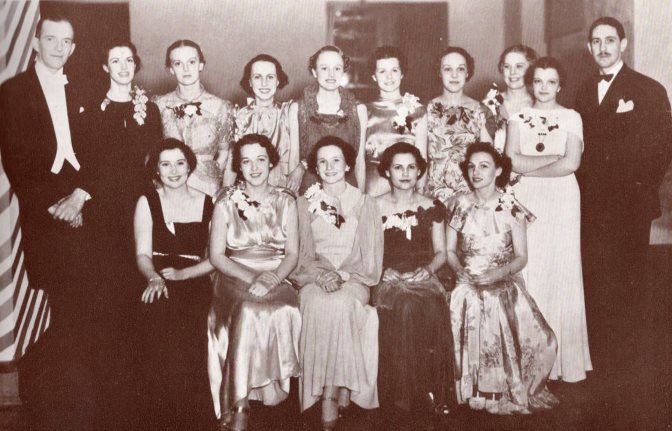
The ladies below were the junior queens of the annual prom. As you can see, this was a “bare forehead” time in hairstyling.
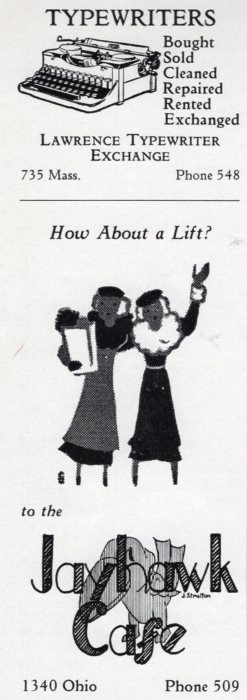
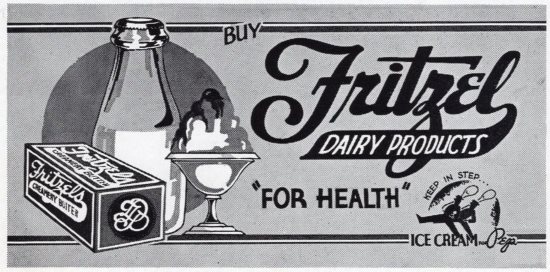
I also wanted to share some of the ads in the back of the magazine, for the artwork as well as the three-digit phone numbers.
And how about that cute little image at the bottom right? Keep in step! Everyone knows ice cream is healthy!
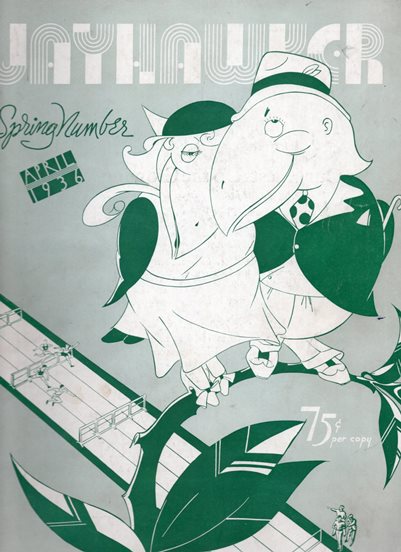
Though we don’t think of 1936 as a particularly hopeful, happy year in American history, the students at the University of Kansas seemed to be doing just fine.
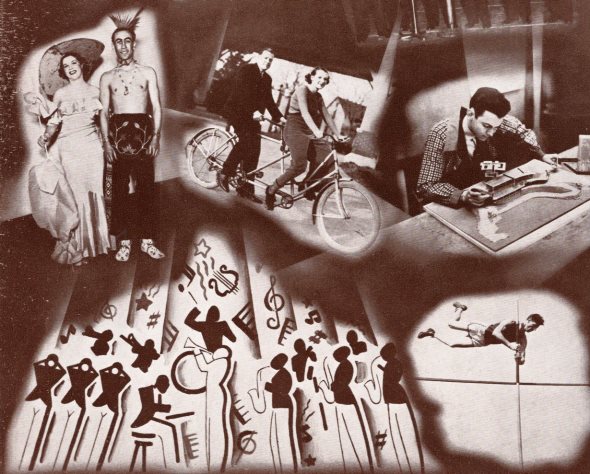
Interesting jazzy artwork, no? Costume parties, bicycles built for two…
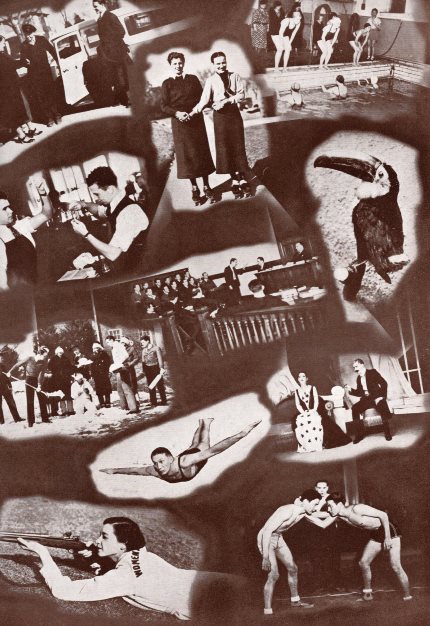
Roller skating, swimming, snowmen, shooting, wrestling, and a toucan that is in no way a jayhawk, their mythical mascot. The name is a combination of two birds — the noisy blue jay, known to rob nests, and the sparrow hawk, a stealthy hunter.
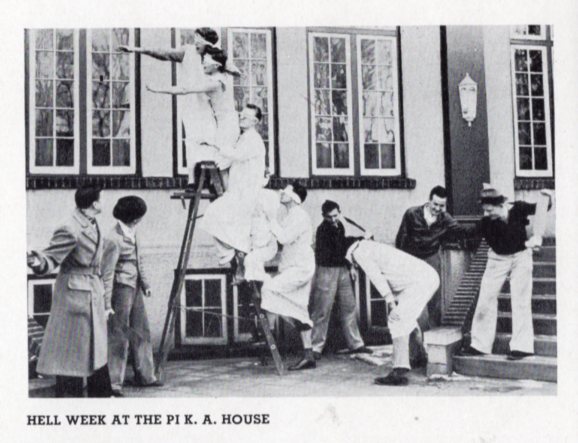
The typical hazing took place.
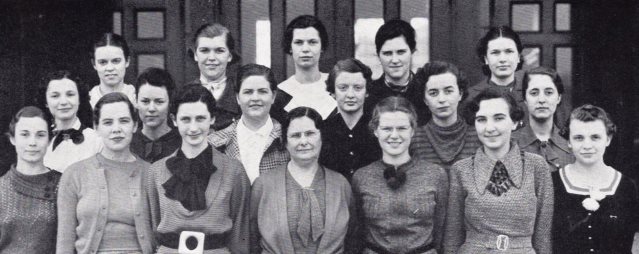
The ladies of the YWCA posed for this portrait.
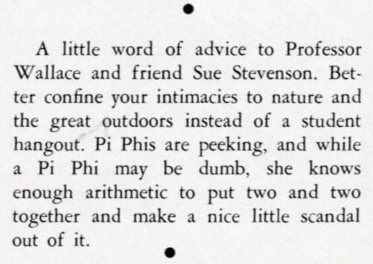
I found this an odd item to place in a university magazine. What say you?

Newlyweds Anne Nafe and Edwin Marks exit the Danforth Chapel on the K.U. campus.
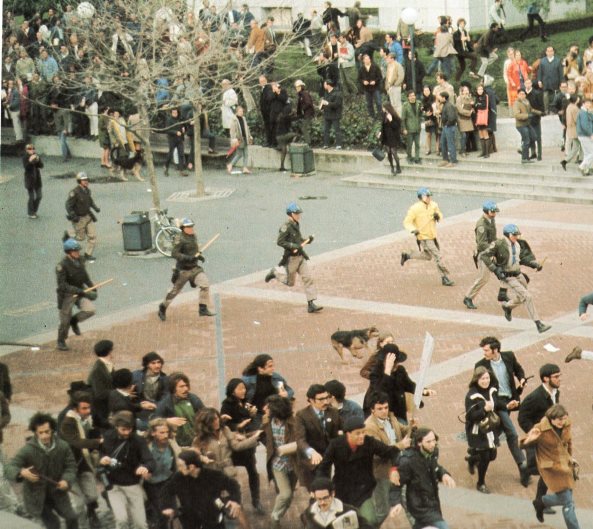
I’m glad I wasn’t a student at Berkeley in the 1960’s. Being chased by cops during student protests looks fairly terrifying.

Berkeley pioneered the Free Speech Movement (FSM), a long-lasting student protest which took place during the 1964–65 academic year.
These days when we see students running for their lives, it’s for a different reason. But either way, it’s still frightening.

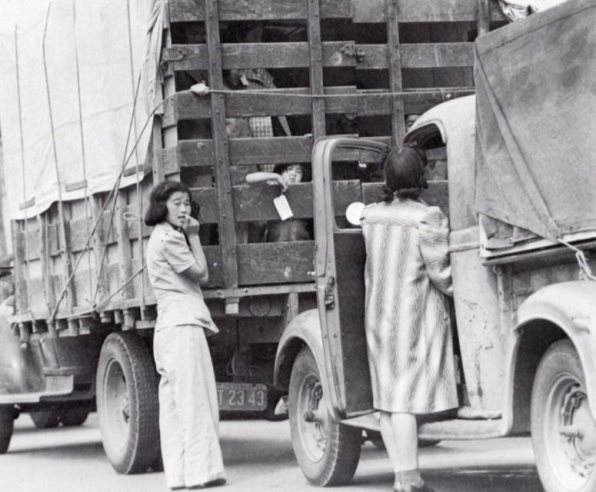
Panic and fear of a Japanese invasion led to the rounding up and internment of Japanese-Americans during WWII per Executive Order 9066. This woman’s body language in Redondo Beach seems to show some panic and fear as well. Both Canada and Mexico followed suit shortly thereafter.
This shot of First Lady Eleanor Roosevelt and Dillon S. Myer, director of the War Relocation Authority, seems to imply no resentment on the part of those who were relocated to Gila River Relocation Center in Rivers, Arizona. Can we leave soon please?

Per http://www.history.com, about 117,000 people were affected by relocation, with a total of 10 housing camps. Two were located on Indian reservations, despite the protests of tribal councils, who were overruled by the Bureau of Indian Affairs. Snap.
Army-directed evacuations began on March 24. People had six days notice to dispose of their belongings other than what they could carry.
Anyone who was at least 1/16th Japanese was evacuated, including 17,000 children under 10, as well as several thousand elderly and handicapped.
These folks are smiling at Santa Anita, but the crowded conditions betray them. Although they were not met with the horror and atrocity of concentration camps, a cage is still a cage is still a cage, especially since most of the people were American citizens.

The last Japanese internment camp closed in March 1946.
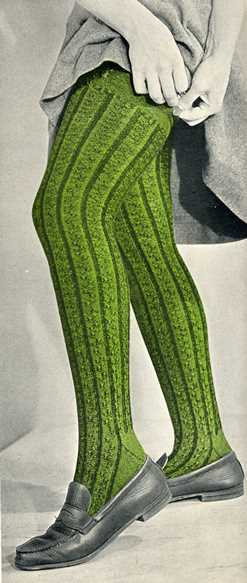
This February 1941 LIFE article states that these colored stockings are head-turners. I agree that these green stockings DO turns head, but not for the right reasons. I don’t know any gal who’d find those a compliment to her ensemble.
They actually look much better in black and white, especially when paired with lovely smiles and (of course) a bottle of Coke. Coke makes everything better. 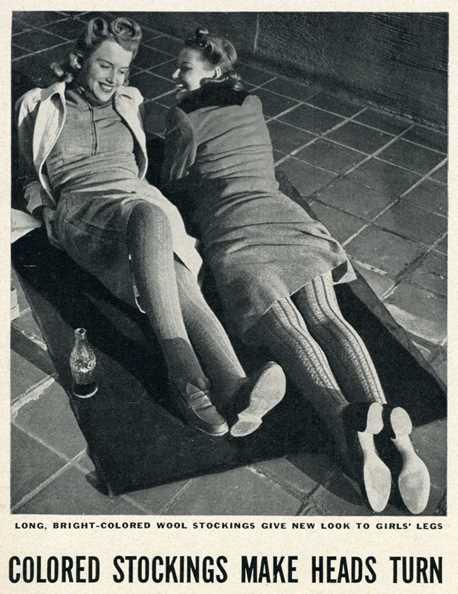
Boy, this gal is a stunner, such a lovely image of spring.
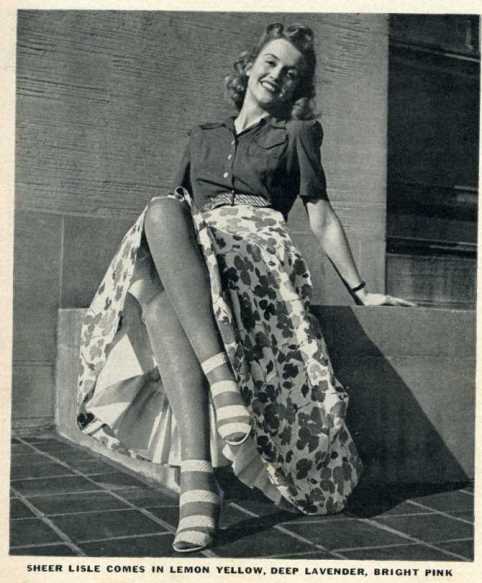
Evidently, stockings are made of lisle, a word with which modern women are not familiar.
lisle. n. 1. a fine, high-twisted and hard-twisted cotton thread, at least two-ply, used for hosiery, gloves, etc.
The only Lyle with which I’m familiar is Waggoner, the actor from “The Carol Burnett Show.” Did you know he’s been married to his wife for 58 years??

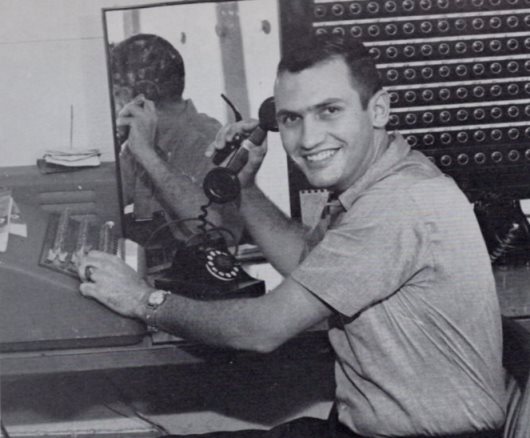
All images are from the 1961 Baylor University Round-Up.

According to these pictures from over a half century ago, folks have always had a love affair with phones. All that was available at the time was the black, corded rotary kind, like the one we had in our dining room for years.

I still have nightmares, where I’m calling someone on a rotary phone, and I have to start over again, or the rotary won’t work right.
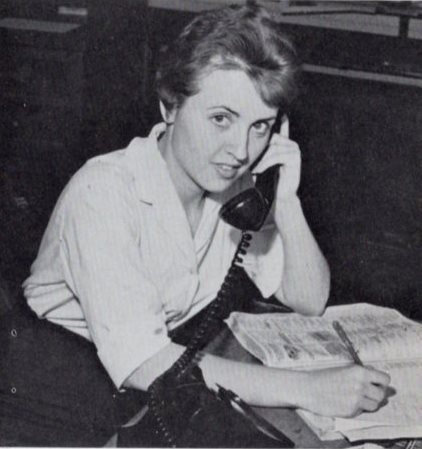
I remember waiting for hours for my friends’ numbers to stop giving me the busy signal, so that I could update them with the latest dish. Sometimes, I’d just give up altogether. There was no voice mail, and you had to get through to the line in order to leave a message on the answering machine.
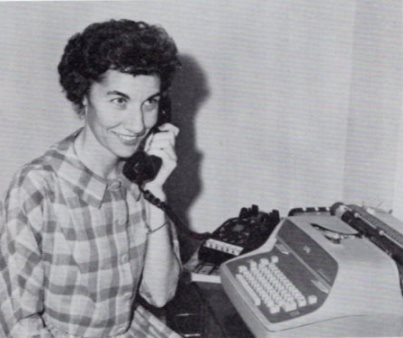
We couldn’t walk around the house, either, so we were tethered to the base. And the cords would inevitably get wonky in their coil. You remember janky, improperly-coiled cords? I guess that still happens to office phones.
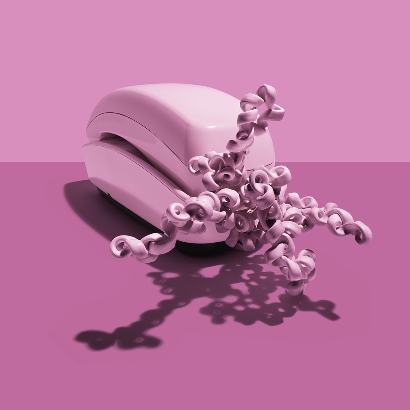
By the way, did anyone ever clean their receivers? These days, I Lysol-Wipe our phones regularly. I guess those were the days before antibacterial soaps and hand sanitizer.

The university even had a Cotton Bowl float devoted entirely to the phone!

So don’t let anyone tell you we haven’t always loved our phones, even before they were smart!

 I Don't Get It