

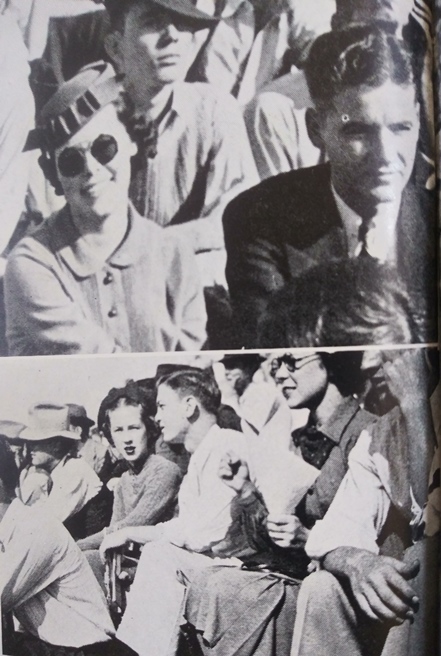
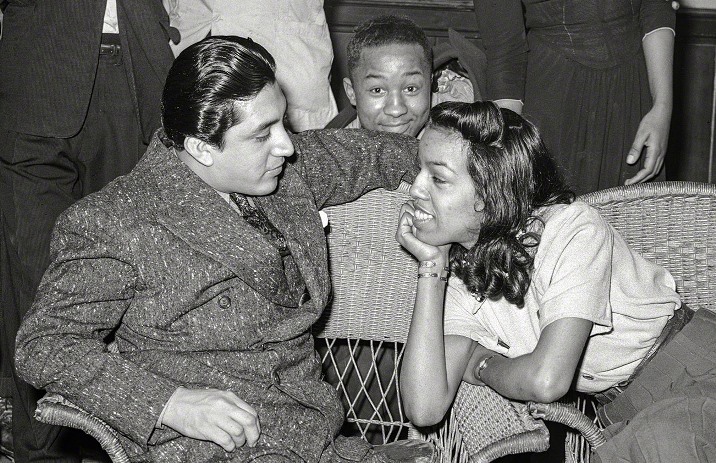
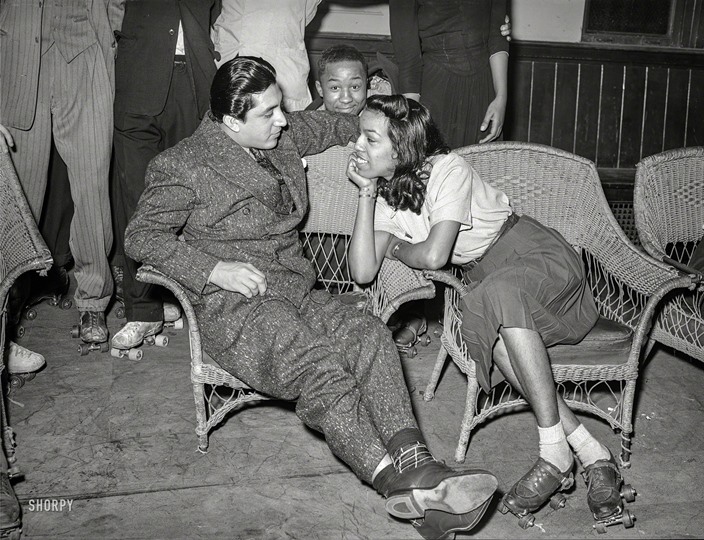
This rollerskate-clad lady doesn’t seem too shy with the slick-haired fellow at a rink in Southside, Chicago, Illinois in April 1941. Looks like there’s a good chance they’ll “find us a new recipe,” in the words of Ol’ Hank. Not sure what to do with that onlooking third wheel, though…
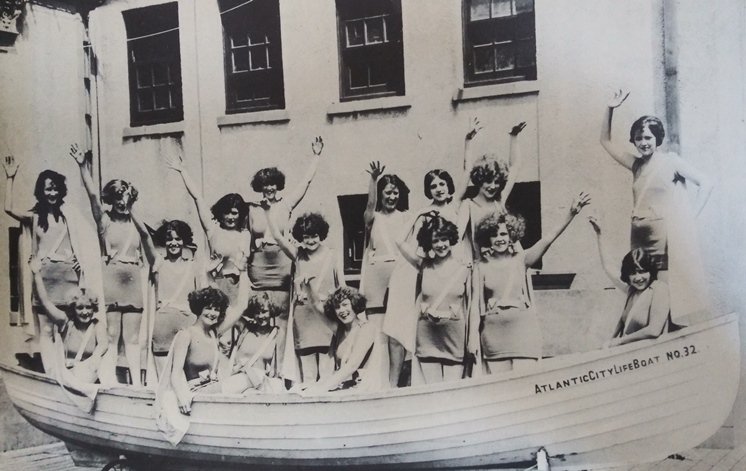

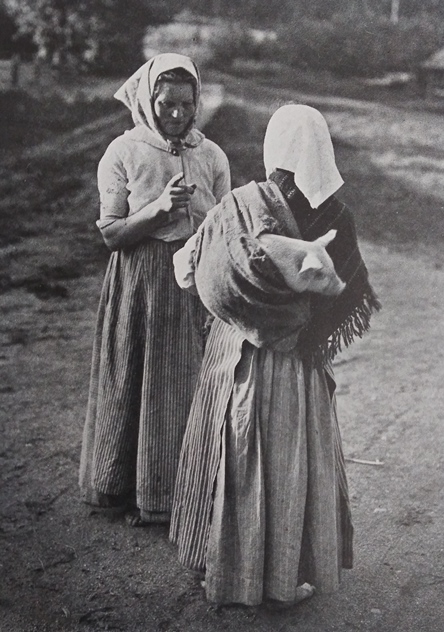
Today we pay homage to the costumes of Old Sweden. The ladies above were from Rättvik, a Swedish lakeside locality adjacent to a bunch of words that sound like the Swedish Chef said them. They were waiting for a “conveyance” to take them back home. Who says that anymore? Probably not even the people of Sweden at this point.
Next, we see another three dolls, Dals to be precise, in Boda, a locality situated in Rättvik Municipality. Already, you can notice the Swedes liked red horizontal stripes, which flatter almost none of us.

They were also fans of hats, as you can see in this next pic of a native of Södermanland, the duchy of then-Prince William. No, not that William. And no, not douchey, but duchy, which is a territory of a duke or duchess, or a dukedom. But not a dumb duke.
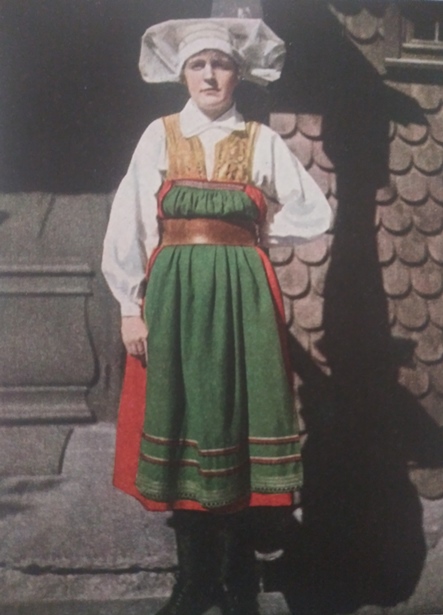
Speaking of fetching hats, this next trio sported three different variations. Mora’s hat, on the left, was “staidly Puritan.” Mora is a place, not her name. The middle girl, from Rättvik, wore a peaked cap with red stitching, perched atop the back of her head. The Leksand girl on the right wore a white cap only if she was married, and red if not.

Not to be outdone, men also sported old costumes and winter sleeping caps.
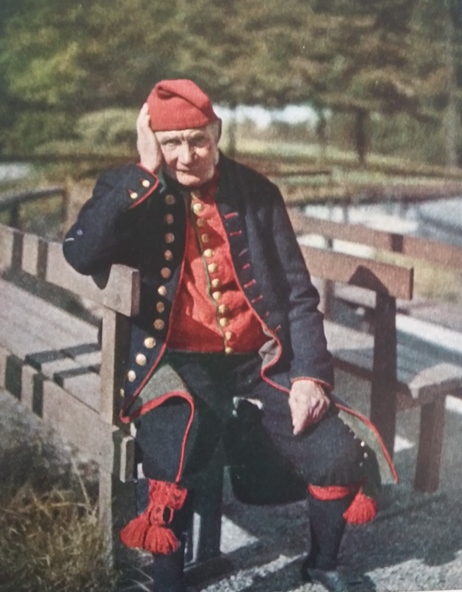 This bloke from Hälsingland is wearing something that reminds me of Rip Van Winkle. The quote below him says,
Therefore my age is as a lusty winter,
Frosty, but kindly.
– William Shakespeare
Children were not immune from donning gay apparel as well, while the women of Lake Siljan held tools.
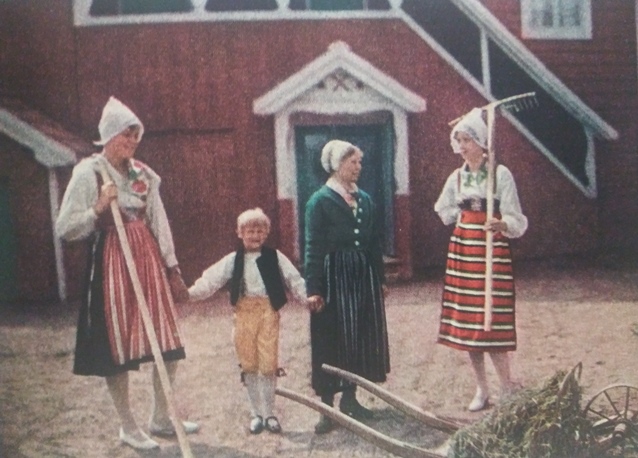
As you can see, they could not get enough red stripes.


Rare were the outfits that strayed from the norm. But always, the head was covered.


Two maids stood in the doorway of an old farmhouse at Leksand, one hopeful and one bitter.

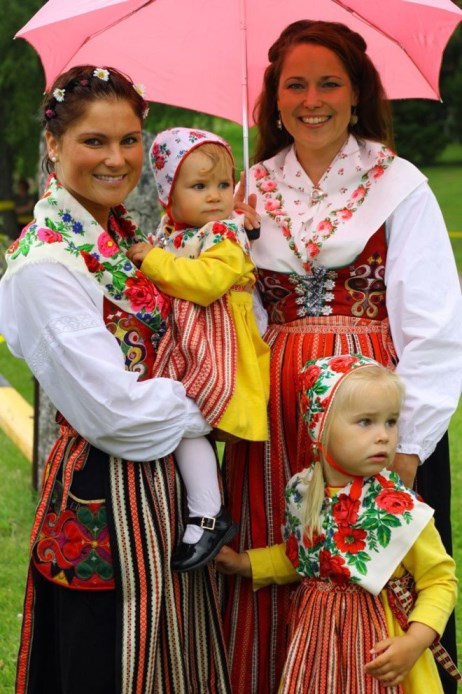
In modern-day Leksand, natives still sport traditional folk costumes as a nod to their past. Way to keep the history alive, ladies!
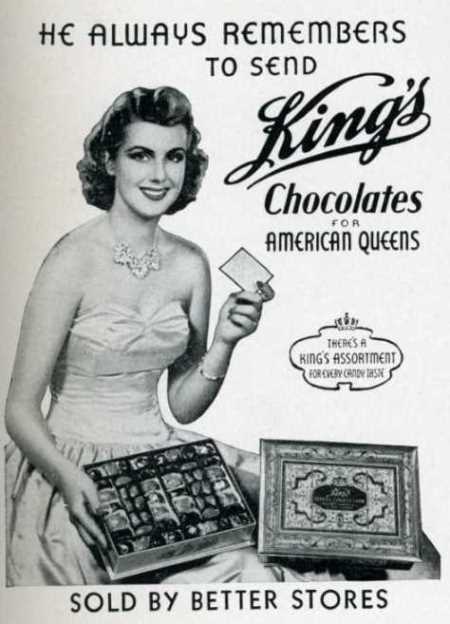
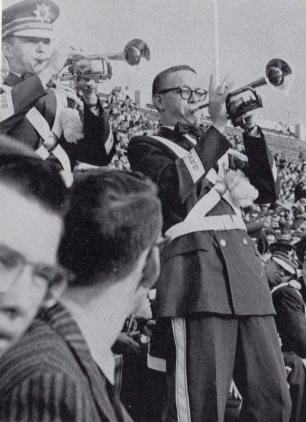
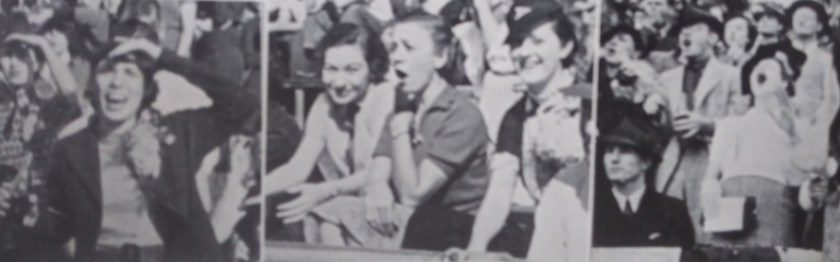
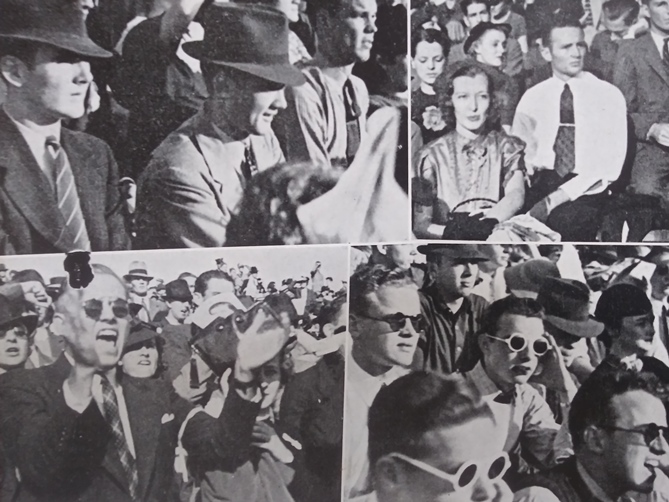
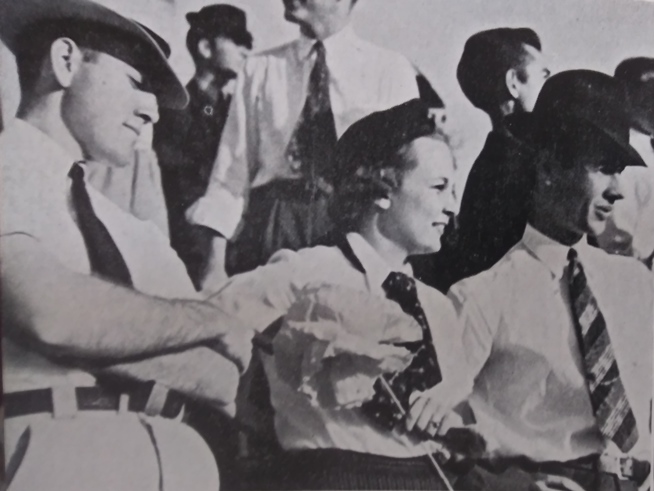
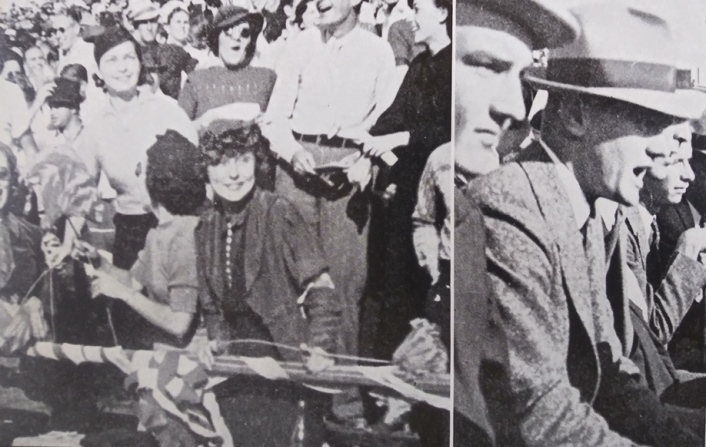
Baylor University’s 1961 Round-Up is chock full of merry music. From the marching band to the spectators…

To the upright bass.


There was crooning.
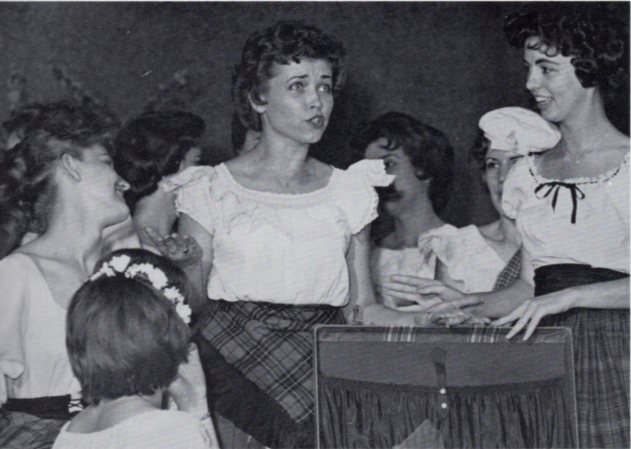
And dancing.

And whatever the heck this thing is.



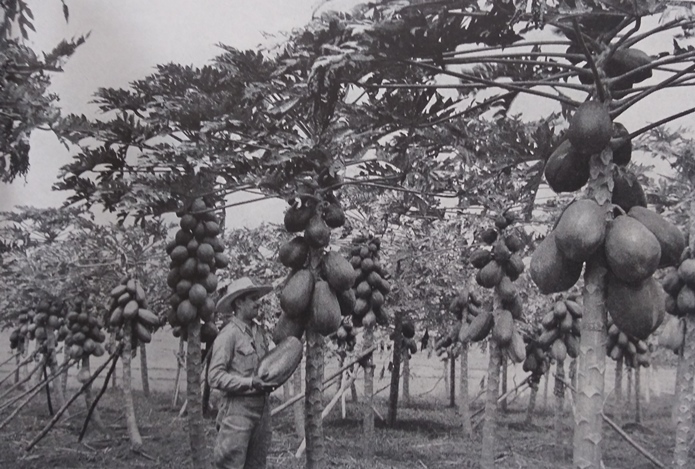
With grapefruits and papayas, I am familiar. But breadfruit? Never heard of it, never seen it, never scrolled past it on a menu. Evidently, you can roast and fry it. Have any of you ever tasted breadfruit?

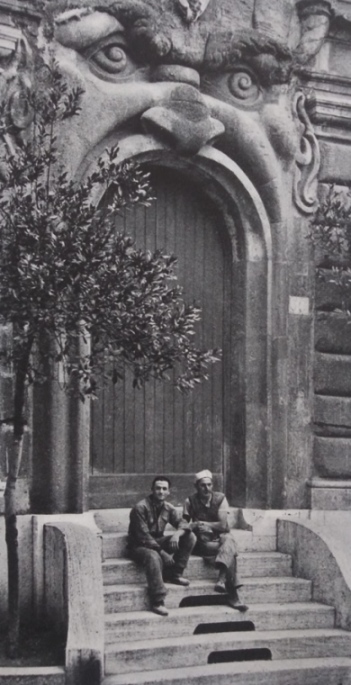
The stuff of nightmares. A workman wearing a newspaper hat and his pal chill at the steps of the Palazzo Zuccari, a 16th century building in Rome. It houses the Bibliotheca Hertziana – Max Planck Institute for Art History, a German research institute that isn’t even in Germany.
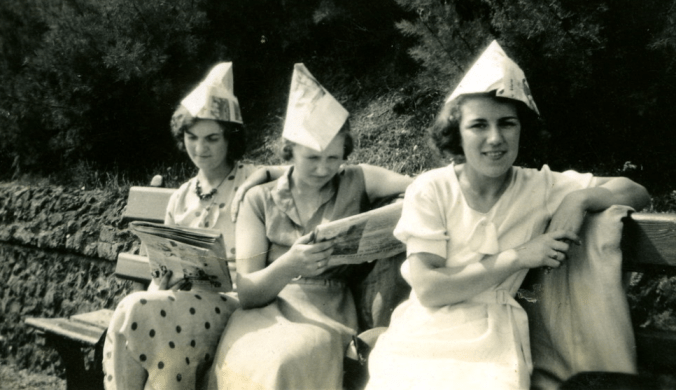
Evidently, newspaper hats were a thing. They would be great in central Texas because we have no wind and no rain, so they would never blow away. And if your phone ran out of juice, you could just grab your hat and read Garfield.
As you can see, the ghastly ghoul door remains nearly unchanged after 82 years, right down to the steps. With no visible door handle, I wonder how one enters.



In 1935, Italy invaded Ethiopia, tipping off the Second Italo-Ethiopian War. To bolster gold reserves, the Italian government, under Mussolini, made a plea to its citizens to exchange all of their wedding rings and jewelry and even false teeth for these stacks of iron bands. Fascist officers in Rome supervised the exchange.
But what’s crazier than that is that Italian-Americans helped with the effort as well. Per shoeleatherhistoryproject.com, Mussolini proponent Father Andrew J. Kelly, pastor of St. Anthony’s Church in Hartford’s Italian east end in Connecticut, convinced 500 Hartford women to give up their gold bands at a blessing ceremony on Sunday, May 24, 1936. “The substitution of iron for gold wedding rings by Italian wives,” the priest said, “symbolizes… the unanimity of Italian sentiment in favor of its government.”

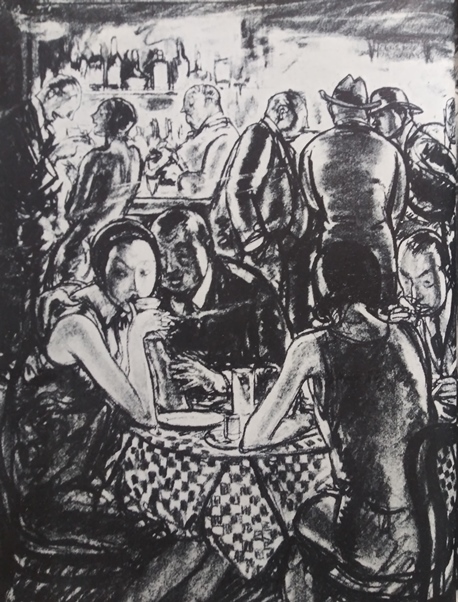
As you can see, illustrator Morgan was a master of movement, using his sketches to adeptly convey the energy and complexity of the speakeasy. Also called a blind pig or a blind tiger, a speakeasy was an illicit establishment that sold alcoholic beverages. I was today years old when I learned of the two blind terms. Now it makes sense that I went to a bar called The Blind Tiger in Shreveport 24 years ago, where I met comedian Mario Joyner, who invited my galpal and me to Harrah’s to gamble with him. But that’s another story for another time.
Contrary to the term, it was not a place where it was “easy to speak;” in fact, the opposite was true. It was a place that necessitated one speak easily or softly, as selling and consuming the bootleg booze was illegal. You can see the quiet conversations, imagine the hushed tones, of the clients, keeping it all on the downlow until sufficient intoxication raised their voices. That’s the power of the drink. We’ve all seen a gaggle of middle-aged women drinking margaritas at a Mexican restaurant. Speech is never soft.
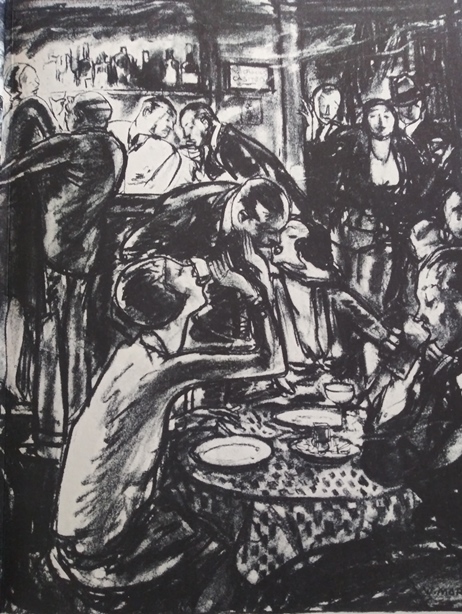
From the last sip to a stolen kiss to gossip and entrances, Morgan was able to make the background just as engaging as the foreground.
When the comic was published, the country still had yet three years of Prohibition remaining.

But until then, speakeasies flourished. NYC claimed over 100,000 speakeasies alone. Saloons with player pianos and swinging doors made way for password-protected jazz-playing joints. Instead of aligning with the Prohibition moral compass, American women let loose with drinking, smoking, dancing, bobbing their hair, and donning shortened skirts. Make way the flapper. Gone were basic beer and liquor, as cocktails required mixers to make hootch drinkable. And once folks tasted sugary, fruity drinks, those who had never enjoyed beer and liquor found they enjoyed this new concoction. Organized crime soared. Cops couldn’t keep up with raiding and disposing. It was a losing battle. No wonder FDR repealed the 18th Amendment as soon as he was elected. The woman in the foreground clearly isn’t playing.


 I Don't Get It