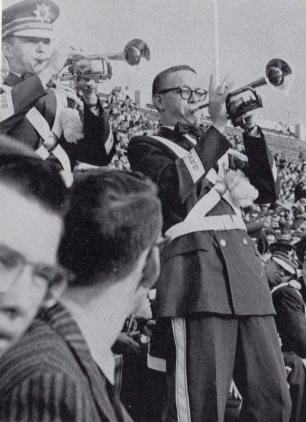
Baylor University’s 1961 Round-Up is chock full of merry music. From the marching band to the spectators…

To the upright bass.


There was crooning.
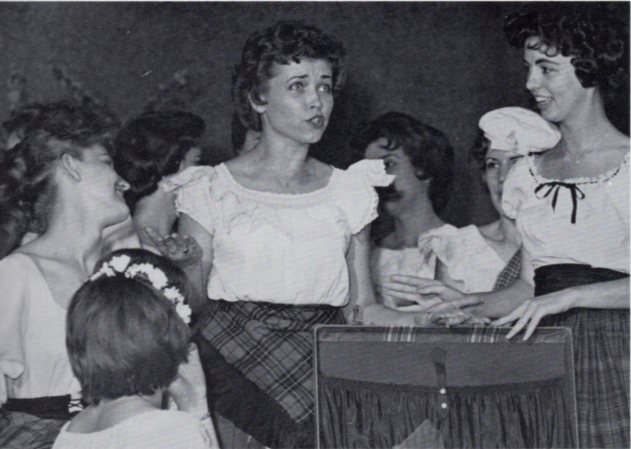
And dancing.

And whatever the heck this thing is.

Baylor University’s 1961 Round-Up is chock full of merry music. From the marching band to the spectators…
To the upright bass.
There was crooning.
And dancing.
And whatever the heck this thing is.

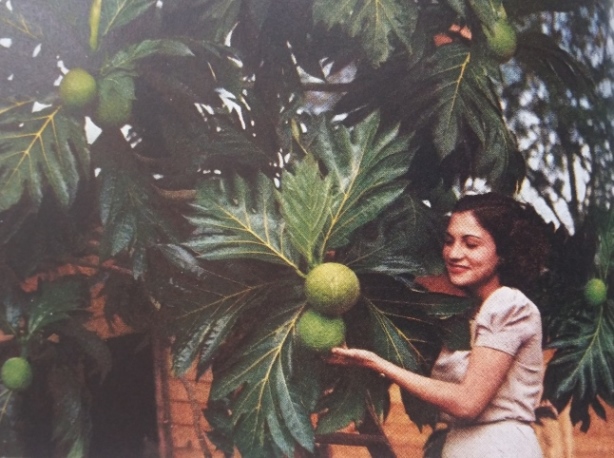
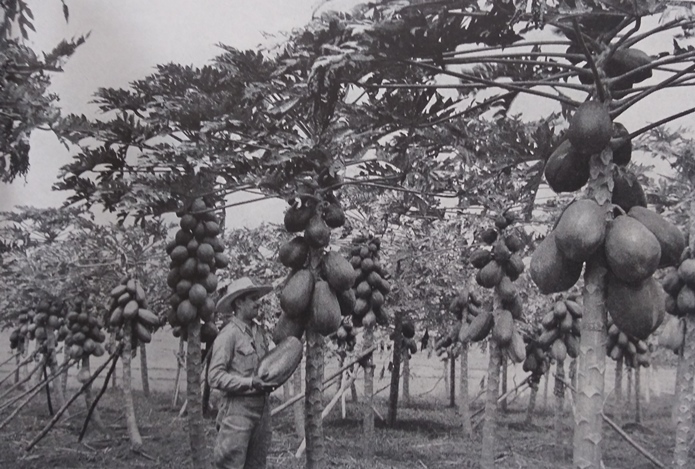
With grapefruits and papayas, I am familiar. But breadfruit? Never heard of it, never seen it, never scrolled past it on a menu. Evidently, you can roast and fry it. Have any of you ever tasted breadfruit?

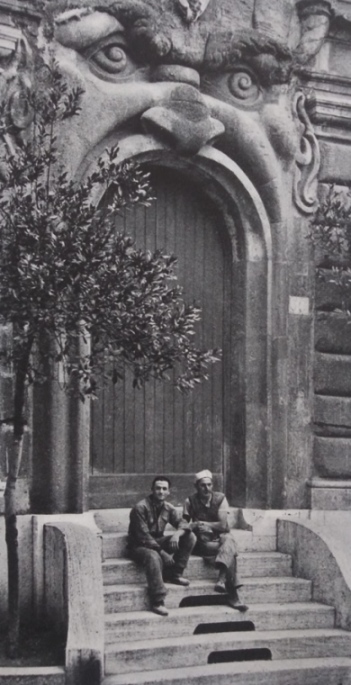
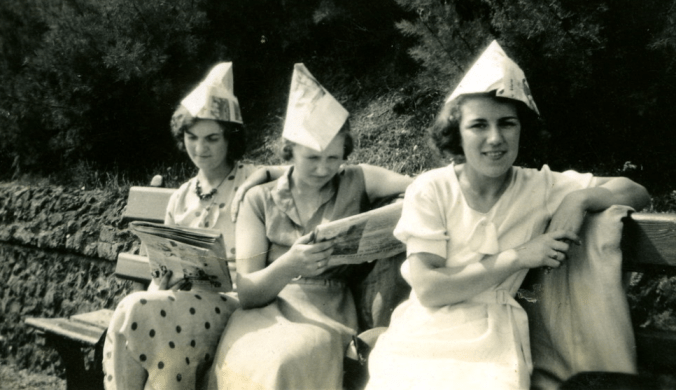
The stuff of nightmares. A workman wearing a newspaper hat and his pal chill at the steps of the Palazzo Zuccari, a 16th century building in Rome. It houses the Bibliotheca Hertziana – Max Planck Institute for Art History, a German research institute that isn’t even in Germany.
Evidently, newspaper hats were a thing. They would be great in central Texas because we have no wind and no rain, so they would never blow away. And if your phone ran out of juice, you could just grab your hat and read Garfield.
As you can see, the ghastly ghoul door remains nearly unchanged after 82 years, right down to the steps. With no visible door handle, I wonder how one enters.



In 1935, Italy invaded Ethiopia, tipping off the Second Italo-Ethiopian War. To bolster gold reserves, the Italian government, under Mussolini, made a plea to its citizens to exchange all of their wedding rings and jewelry and even false teeth for these stacks of iron bands. Fascist officers in Rome supervised the exchange.
But what’s crazier than that is that Italian-Americans helped with the effort as well. Per shoeleatherhistoryproject.com, Mussolini proponent Father Andrew J. Kelly, pastor of St. Anthony’s Church in Hartford’s Italian east end in Connecticut, convinced 500 Hartford women to give up their gold bands at a blessing ceremony on Sunday, May 24, 1936. “The substitution of iron for gold wedding rings by Italian wives,” the priest said, “symbolizes… the unanimity of Italian sentiment in favor of its government.”

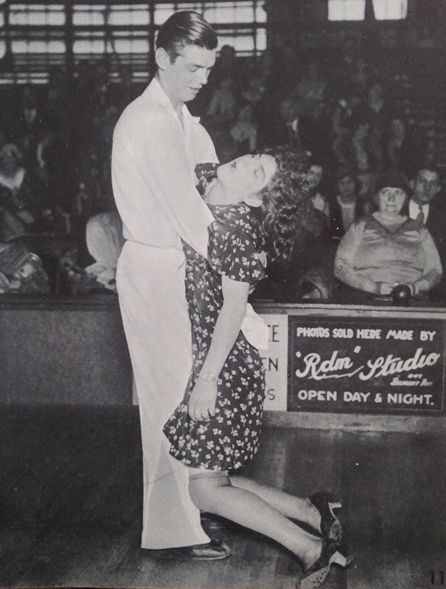
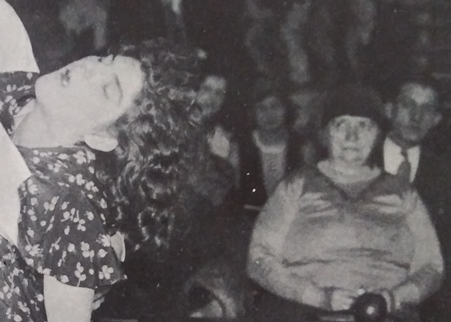
No, it wasn’t bad breath that caused Marie Micholowsky to pass clean out in her brother Frank’s arms. Believe it or not, this image was snapped at HOUR 3327 into a Chicago dance marathon. The seated woman shares my sentiment exactly. Girl, what were you thinking?
Now most of us have heard of dance marathons, especially popular during the 20s and 30s. But did you know that some lasted for weeks, even months? This particular one began on August 29, 1930 and ended in 1931. And yes, they did get intervals in which to nap. But can you imagine having started dancing TWO WEEKS AGO, only to ultimately finish next January? I guess these couples didn’t have jobs? Or families?
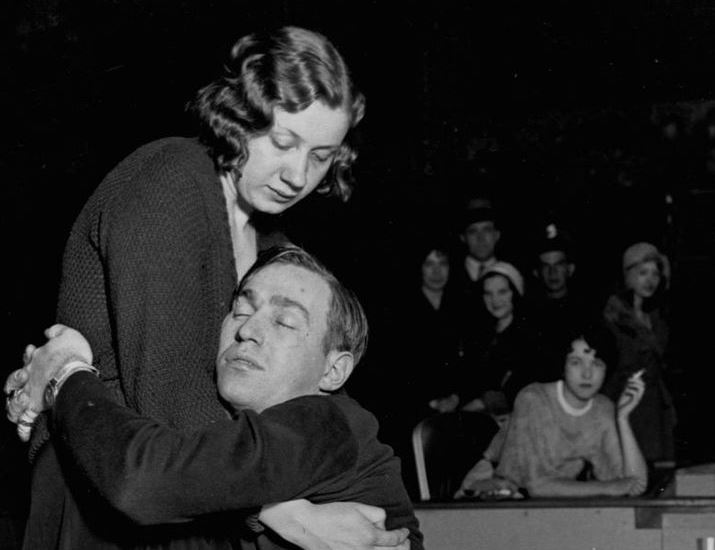
This next pair had the benefit of not being siblings in embrace, but you can see the pickle petite Anna Lawanick is in, having to support slumbering Jack Ritof, aka the failure.
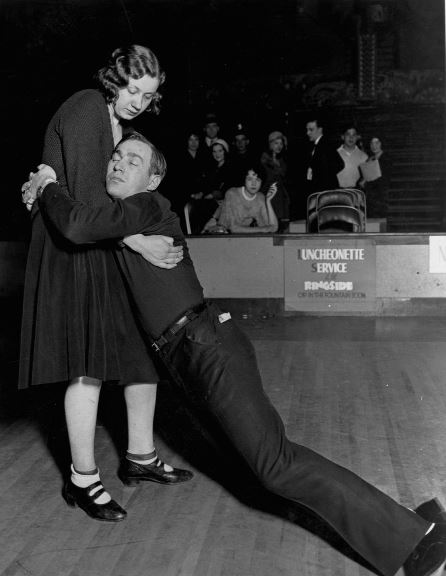
What had begun as opportunities for the glow of youth to show its endurance and immortality eventually morphed into the exploitation of those who desperately needed the cash reward given to the last couple standing. As you can see, the onlookers (who paid an entrance fee to gawk) kept their eyes on the dance floor.
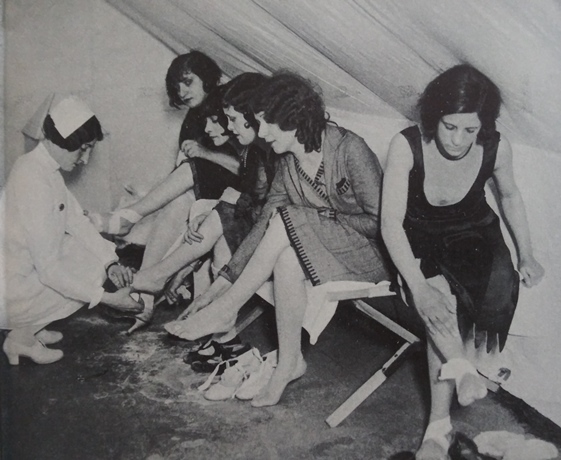
But what of the pain in their feet? Rules often allowed for one partner to visit the restroom or nap as long as the other partner continued dancing, so the feet were only briefly spared their dancing duties. The contestants below received medical attention for their tootsies during a Madison Square Garden marathon in June of 1928, where the prize was $5000, more than an average annual income.
Spectacle it was, as folks pushed themselves past the point of exhaustion, and in the case of Homer Morehouse, heart failure at the age of 27.
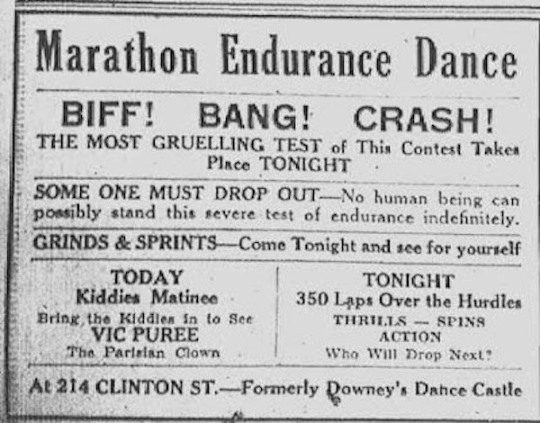
The predecessor to today’s reality shows or movies like Hands On A Hard Body, dance marathons proved both cruel and entertaining. Ultimately, the fad passed as fads do, and Americans moved on to the next big thing.

The two ladies above are listening to the FIRST factory-built radio made for entertainment: a 1921 Westinghouse. Did you know that radios initially required headphones?

A year prior, in 1920, Dr. Frank Conrad, while experimenting in a Pittsburgh barn, discovered that wireless enthusiasts enjoyed listening to the phonograph records that he put on the air, and the rest…is history! Except that we need the actual history to understand.
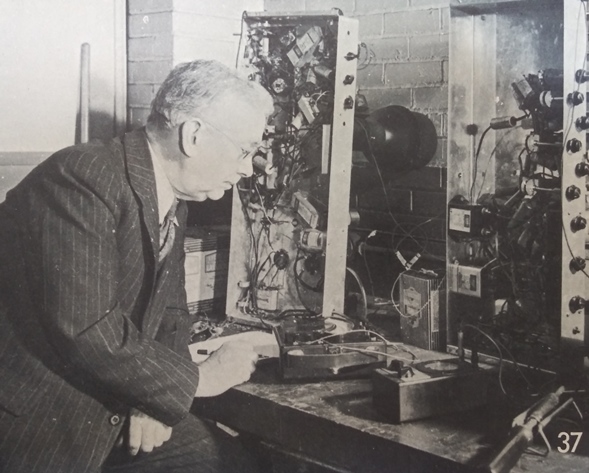
If he put music on “the air,” did that mean radio stations weren’t already playing music? Well, let’s ask Wikipedia. Conrad began work at Westinghouse Electrical & Manufacturing at 16 in 1900. At 23, he moved up to their test department, where he invented the circular-type watt-hour meter, over 30 million of which were in use by 1937. He would eventually be awarded over 200 patents throughout his life. But it was in 1916 that he installed a radio station in a two-story garage. It used a spark-transmitter, which could only be used to transmit Morse code. So no music.
When the US entered WWI in 1917, all civilian radio stations were silenced. But Conrad, working for Westinghouse, spent his time developing radio technology, using vacuum-tube transmitters, and inventing a wind-driven generator. Two years later, when the radio ban was lifted in October, he resumed his experimental station and was able to entertain other local amateurs by playing phonograph records.
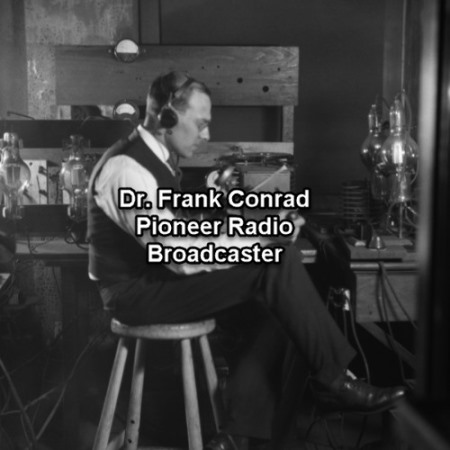
As interest grew, he adopted a schedule of music. In 1920, Pittsburgh’s own Joseph Horne Dept Store began selling radios, aka “wireless receiving stations” to listen to “air concerts.” It didn’t take long for Westinghouse to construct its own broadcast station and sell receivers for this free entertainment.
The first radio station, KDKA, opened on November 2, 1920. Initially a tent on a roof, it soon became the indoor studio you see below (the tent kept insisting on blowing away). Draperies covered the ceiling and walls to prevent reverberation. A disk hanging below the upper end of the slanting bar was called “the enunciator” (which we now call a microphone). Early listeners used crystal detectors in tubeless receiving sets, but the development of the vacuum tube expanded the radio audience significantly.

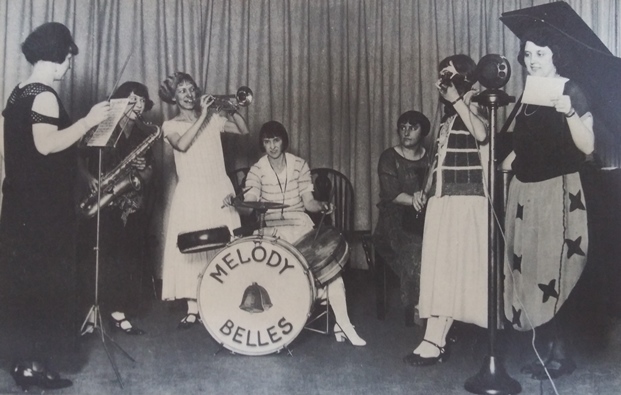
Soon entertainers were asked to provide music for radio stations.
Young people especially were excited by the new technology, and competitors soon crept in. This Crosley model was advertised at $3.75.

“Oh, boy! There’s London! Last night I had Honolulu, and the night before that Porto [sic] Rico. Here’s where I get Rome. This Crosley sure does bring ’em in. There’s nothing like a Crosley.”
In 1928, Dr. Conrad received an honorary Doctor of Science degree from the University of Pittsburgh. Not until age 66 did he retire from Westinghouse, having spent his entire life in radio. He received many awards for his work, including the 1930 Edison Medal “for his contributions to radio broadcasting and short wave radio transmission,” and the 1936 Lamme Medal “for pioneering and basic developments in the fields of electric metering and protective services.” The next time you flick your radio on, pause for a moment and think of Dr. Conrad, shown below.
One third into September, and we’re still at 100 degrees or more each day. Last month was our second hottest August on record. It hasn’t rained this month. Or last month. Or the month before.
Not.
One.
Drop.
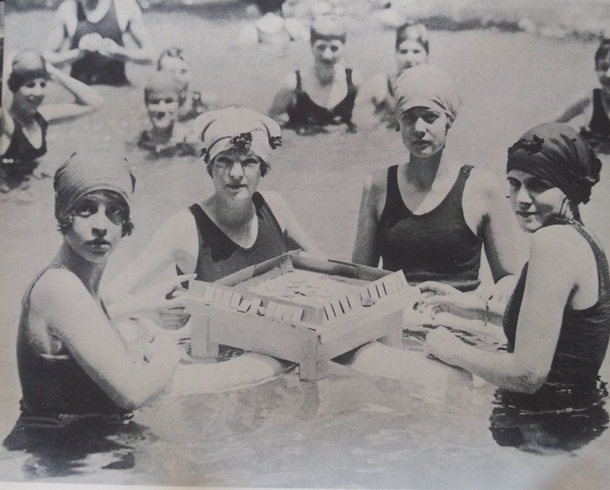
While it will remain 103 degrees in central Texas well nigh into October, the rest of y’all will soon be enjoying autumn weather. If your neighborhood pool remains open (as our does here, though never would we ever stick a pinky toe into it), I suggest you soak up the last bit of sun, carpe diem, and do not go gently into that good fall by taking advantage of the sun’s warm rays with a friendly game of Mah Jongg. Why sit in the shade of a cozy house at a card table with cocktails and salted cashews when you could stand in a public pee pavilion, trying desperately not to let the Chinese tiles fall into the water, yelling at nearby kids to leave you be, constantly looking over your shoulder to make sure you’re not in the path of an errant cannonball? These ladies at Wardman Park Pool, Washington seem absolutely ensconced.
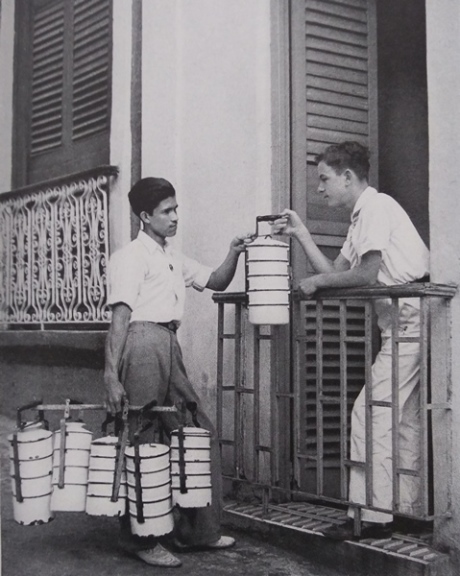
Curbside cans: a five decker lunch of rice, beans, fish, fresh vegetables, and dessert. Sounds great. But how does Gilberto get his cans back?

There’s Valerie White, holding it up for all the free world to see.
And Vanna looks HORRified.

Can you blame her? Sponges are nasty, no matter what kind.

A scrub brush with fibers works fine.
Or this.