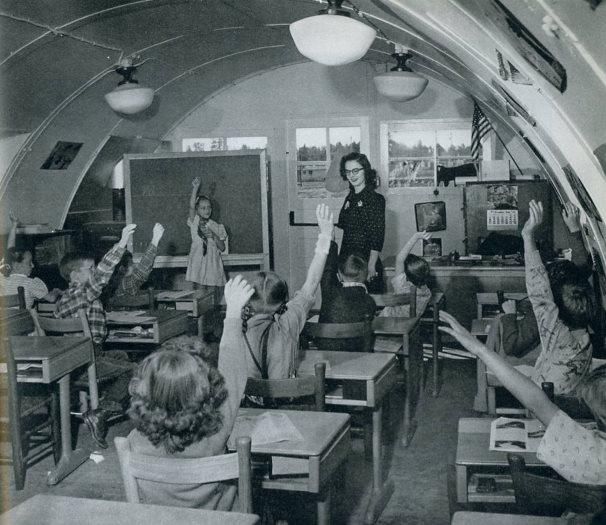
No Large Paintings In A Quonset Hut
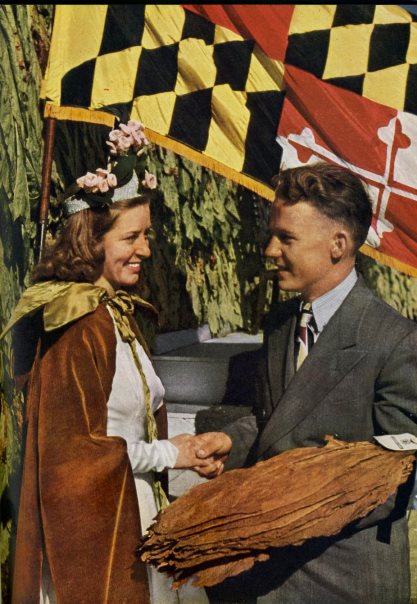
Crafty Bill Hardesty knows that roses won’t cut it when you’re bestowing a gift upon Elizabeth Greer, aka “Nicotina, Queen of the Tobacco Festival” in Maryland. I seriously did not make that up. Instead, he comes bearing “five hands” of choice, air-cured Maryland tobacco, the secret to long life and prosperity.
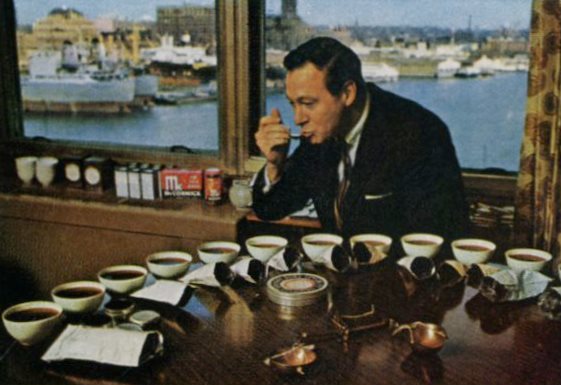
You know those McCormick seasonings that you have stashed in your cupboard? The ones that probably should have been tossed and replaced five years ago? Easily half of our spices have the red, white, and blue McCormick label, and our funds help support the desperate research that Mr. William Hall is performing.
All day long, poor Mr. Hall must sit at his desk, teasipping and deciding which flavor, bouquet, and body combine for an ideal blend of tea. Once his palate is exhausted, he pauses to stare out his huge window that overlooks a busy Baltimore pier, where freighters unload cargo from exotic ports.
Nice work if you can get it.
But what, you ask, is even more curious than being a professional teasipper? How about the fact that there is in fact another William Hall currently running the Charleston Tea Plantation–and he is a third-generation tea taster.
If you are one of the many teetotalers among us, unable to visit the trendy wineries and breweries dotting the landscape, rest assured that you can visit the Charleston Tea Plantation instead. Get your sobering beverage fix on.
Per Charleston Living magazine,
The Charleston Tea Plantation has become a tourist attraction, welcoming 75,000 visitors each year to see how tea plants grow and how the tea leaves are harvested and turned into a refreshing glass of iced tea or a warm comforting mug of hot tea.
“I wanted a place to educate people on tea,” Hall said.
Visitors can tour the factory, board a trolley to ride through the acres of historic tea plants and learn all about the rich history of tea in the Lowcountry.
Perhaps, like me, you’d prefer a brimming mug of coffee any morning over some watery hot tea, but the truth is that tea is the second most consumed beverage in the world after water. And Mr. Hall, who lives on the farm, is pretty happy about that.


Mr. Johnson and Mr. Wright pause for a break on a hot August day in 1939. Both men were Farm Security Administration clients in Syracuse, Kansas who worked to maintain an irrigation well.
Below you see Mr. Johnson irrigating, having just built a dam of board and tumbleweed. Looks exhausting, no?

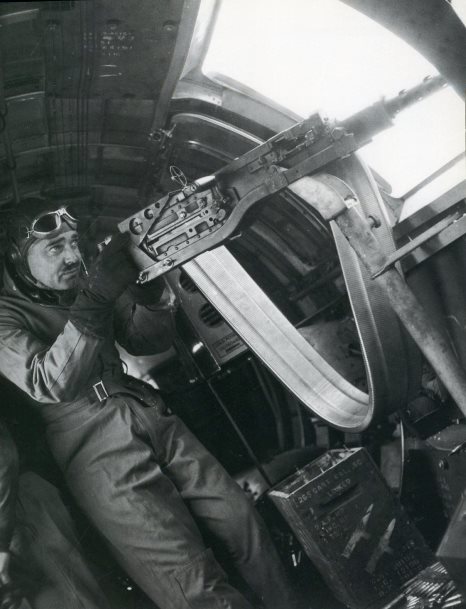
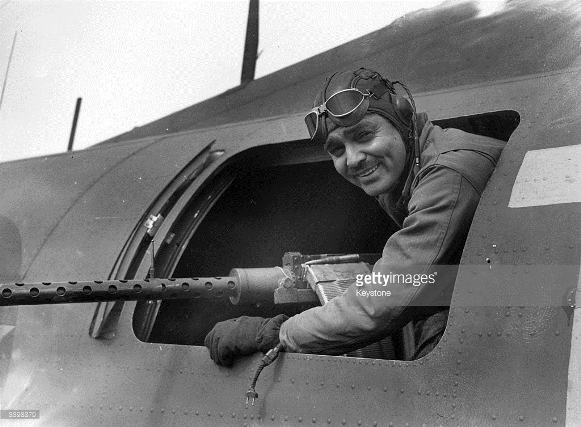
Gunnery instructor Clark Gable shows his skills with the US Army Air Force during 1943 in England.

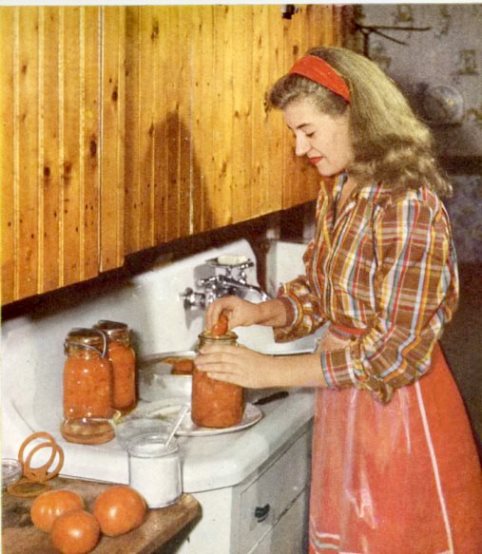
What festive autumn colors! Sixteen-year-old Jacqueline LaVigne, aka Miss Vermont, took part in several 4-H canning projects, using tomatoes from her Essex Center garden. Check out that plastic apron!
This beauty had her hands full at the State Fair in Indianapolis. She was one of the 1,760,000 boys and girls taking part in 4-H Clubs in 1948. During WWII, 4-H club members canned 74 MILLION quarts of food. 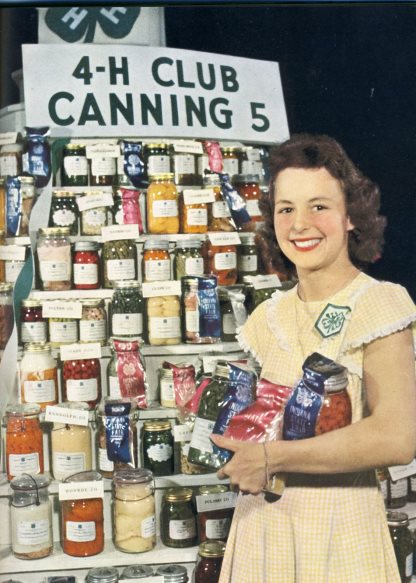
But it wasn’t only 4-H members canning. Home canning reached its peak in 1943, with over 4.1 billion jars canned in homes and community canning centers (Bentley, 1998). 
http://www.nal.usda.govwww.aliexpress.com



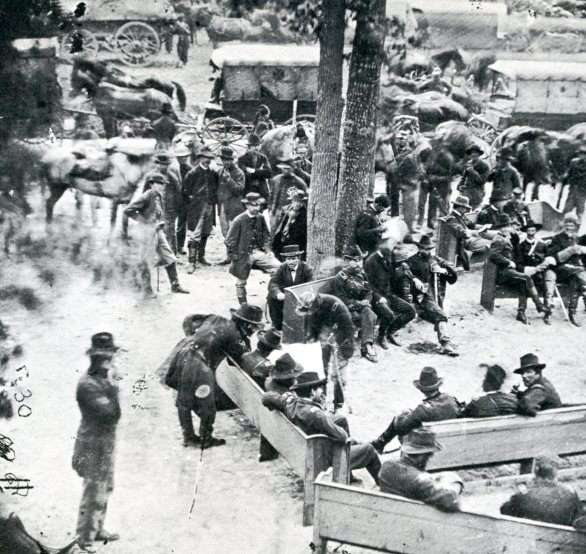
It’s June 2, 1864. Photographer Tim O’Sullivan has taken to the steeple of Bethesda Church in Virginia to capture this image of Ulysses S. Grant (between the trees), listening to a report by Colonel Bowers (reading at the far right, inside the circle). On Grant’s right is General Horace Porter (reading a newspaper), and on his left is General Rawlins, chief of staff. Here’s a closer look.

In the next image, Grant has risen, walked around the church pews, and is leaning over Meade’s shoulders, consulting a map. Shortly afterward, he will write out orders for the battle of Cold Harbor the next day.
Per www.britannica.com,
Minor skirmishes followed by delays began on 31 May, but the main attack occurred on 3 June, when Grant launched a frontal assault on Confederate defenses. He believed that Lee’s men were overextended, but Lee had taken advantage of a delay in Grant’s assault to bring in reinforcements and improve his fortifications. The result of his preparations was carnage; the advancing Union troops were soon felled, with those making it through the first line of defenses soon being slaughtered at the second. More than 7,000 Union troops were killed or injured in one hour before Grant halted the attack.
For the next nine days, the two armies faced each other in opposite trenches, often only yards apart, until Grant marched off his army on 12 June to threaten the critical rail junction at Petersburg, near Richmond. His own comment on the battle: “I regret this assault more than any one I have ever ordered.”


After some time had passed, photographer John Reekie took this image of African-American men gathering bones of the dead soldiers.
Union: 1,844 dead, 9,077 wounded
Confederacy: 83 dead, 3,380 wounded

It’s August of 1864 at the Potomac headquarters, and Captain Charles Frances Adams, Jr, appears to have the best back support. He is flanked by officers of the 1st Massachusetts Cavalry. The man on the far left is unknown, the man sitting backwards in his chair is Capt. Edward A. Flint, and the far right is Lt. George H. Teague.
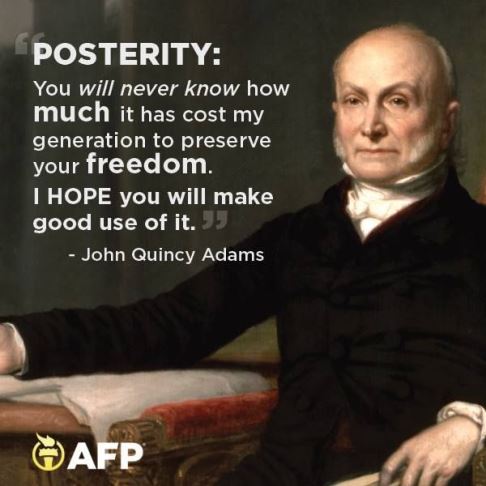
Adams was the great-grandson of United States President John Adams, and the grandson of president John Quincy Adams. John Quincy Adams was the earliest president to be photographed. Here is a daguerreotype taken by Brady in 1843.

He would die five years later. Isn’t it amazing to see an image of a man born in 1767? After he left office, Adams won a seat in the House of Representatives, becoming one of only two presidents to hold political office after serving in the White House (Andrew Johnson returned to the Senate shortly before he passed). During a passionate debate, Adams suffered a heart attack on the House floor and died a few days later.
 I Don't Get It