
If I Was King For Just One Day
We ate quite literally high on the hog today because Labor Day and because BBQ and because America and because after watching over an hour of Senator McCain being eulogized, I felt deeply that it was what he would have wanted (RIP to a national hero).
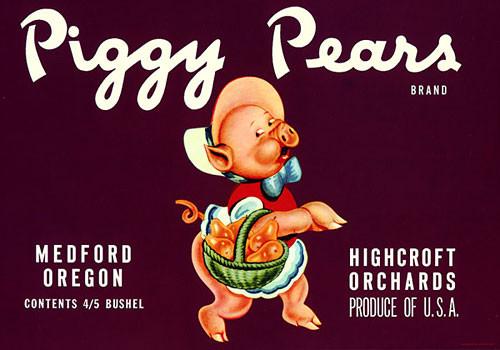
The wall of our BBQ joint booth was covered with old fruit crate labels (gorgeous, bold color art that I find preferable to almost all modern art). Among the Frisco, Statue, Floyd’s, and Bellboy, was a Piggy Pears. I had to say it aloud.
What’s the pork-pear link? I don’t know. With that basket, it appears that Piggy just came from market. But we all know that in the nursery rhyme, “This little piggy went to market,” that doesn’t mean the piggy is going shopping. That means the piggy is going to BE the market, to BE sliced up at the deli, and eventually fried up and slid aside two sunny side ups. C’est la vie, no?
It bears repeating:
Piggy Pears
Piggy Pears
Piggy Pears
But don’t go overboard.

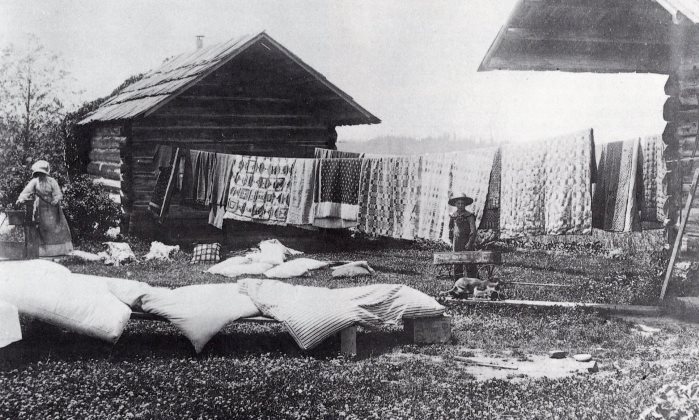
I could tell you this pic is from the late 1800s.
That it’s just housecleaning day on a homestead in Seattle, Washington.
We could talk about quilting or how washing pillows in the washing machine always destroys the integrity of the fluff, and you wind up trashing them and going to Ross for a new $9 pillow.
We could even rehash memories of hanging clothes on the line when you were young.
Or maybe even talk about playing Lincoln Logs as kids.
But you already read the word “lice” up top.
So at some point, you’ll scratch your head.
Because lice.

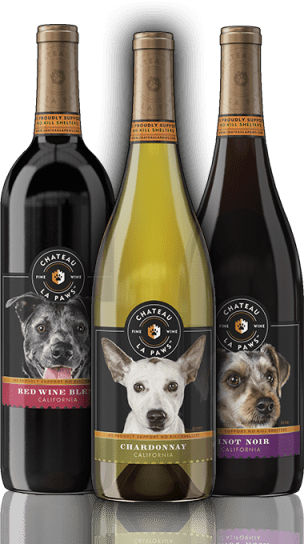
‘Tis an odd image indeed, of young women in the 1890s, taking part at “a drinking bee” in White Chapel, Dawson, Alaska–a base during the 19th-century Klondike Gold Rush. I can’t say that I understand the canine/wine connection, but I’m certain that it was before this label existed.
Or this one.

But evidently, some dogs do like their ale.

 Smiles, everyone smiles! Look at the joy on the faces of the law students at Havana University in 1947. What hopes they had for the lives ahead of them.
On an aside, all of these images were taken by Melville Bell Grosvenor, editor-in-Chief of National Geographic magazine and the grandson of inventor Alexander Graham Bell. Who knew?
Here we see a honeymooning couple in Matanzas, having their portrait made in front of the statue of Jose Martí, poet and national hero.

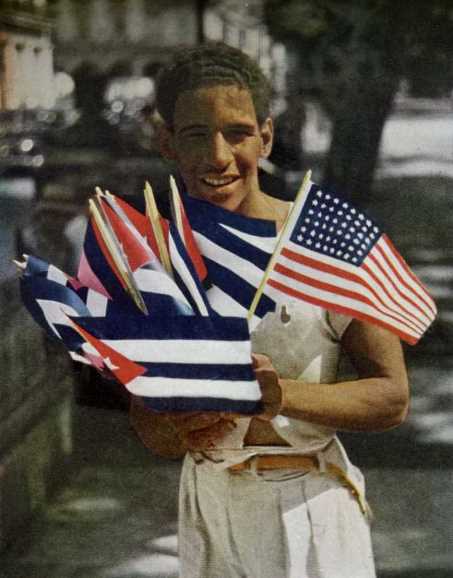
During this time, many Americans visited the island (and Cubans were able to freely leave the island to travel as well, which they have not been able to do for 58 years now). As such, this peddler on the Prado made sure to have Old Glory handy among his Cuban flags. Now tell me, what American would go to Cuba and buy an American flag? I don’t get it.
The new generation of women, unlike their mothers, were allowed to work and vote and attend the university, rather than staying at home. I just love their outfits and the bus behind them.

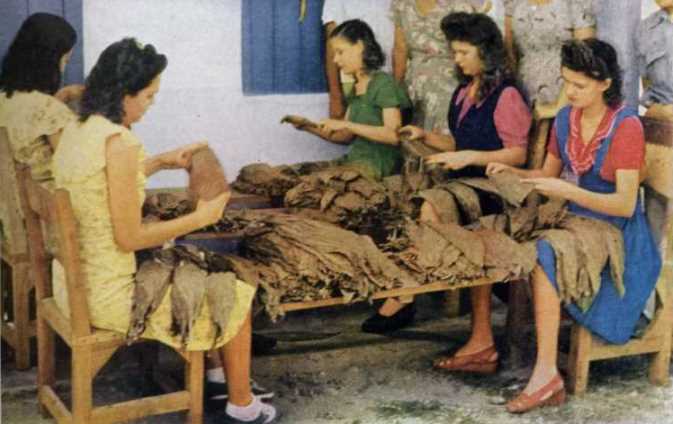
Other woman (albeit still fabulously-garbed) chose to work in the tobacco industry, grading and selecting the best Pinar del Rio tobacco. Some of the finest in the world, it was grown under cheesecloth to protect it from insects and the hot sun. Leaves that were thin and silky with tiny veins were ideal, and each leaf wrapped two cigars.
This last image shows a home where doors and windows were almost always left open to allow the breezes to sweep through the homes.
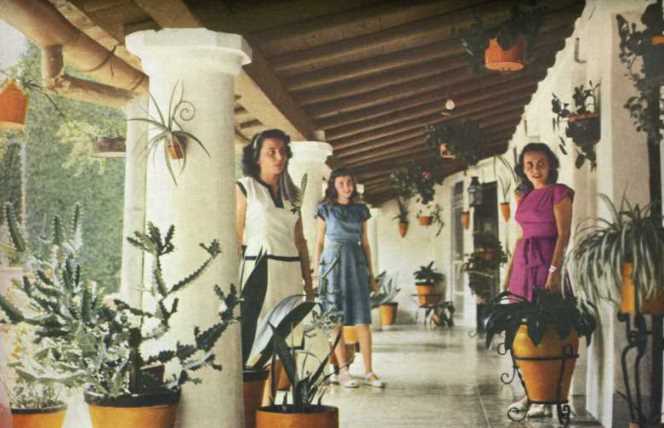
One can only assume that this lovely home still exists, now crumbling and in disrepair, as with nearly every other building in Cuba.
A 2011 New York Times article stated “There are no vacancies in Havana. Every dwelling has someone living in it. Most Cubans are essentially stuck where they are.” Cubans don’t build custom homes; most of them live in dwellings older than they are, older than their parents are. At best, you can hope to trade apartments or pray a relative drops dead. However, with recent law changes and the realization that capitalism brings a struggling country much-needed income, even Airbnb now offers homes to visit, including a one bedroom for only $24 per night. Wow! Seems to good to be true.
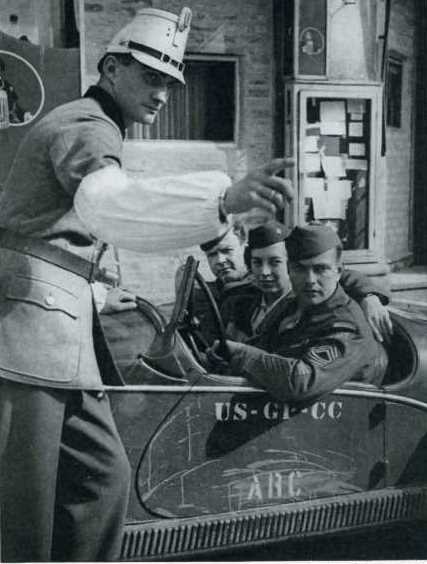
An American Red Cross worker is snugly sandwiched between two soldiers in a requisitioned vehicle, as a Berlin traffic policeman directs them during a sightseeing tour.
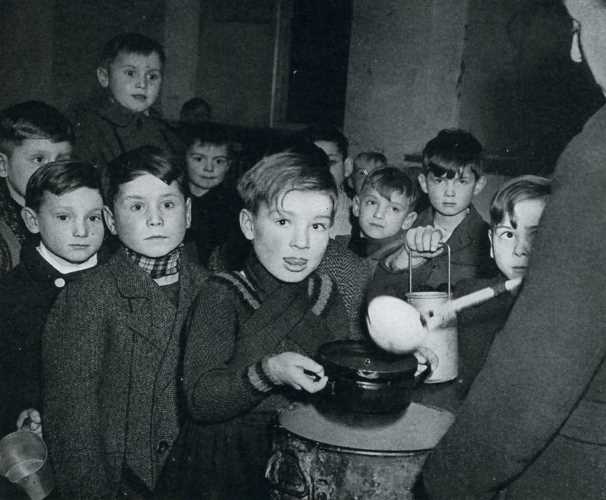
These hungry little tots are lined up for hot soup at one of the many Berlin soup kitchens. The feeding program began in November 1945, just months after WWII ended, seeking to aid the diet deficiencies incurred by the kids.
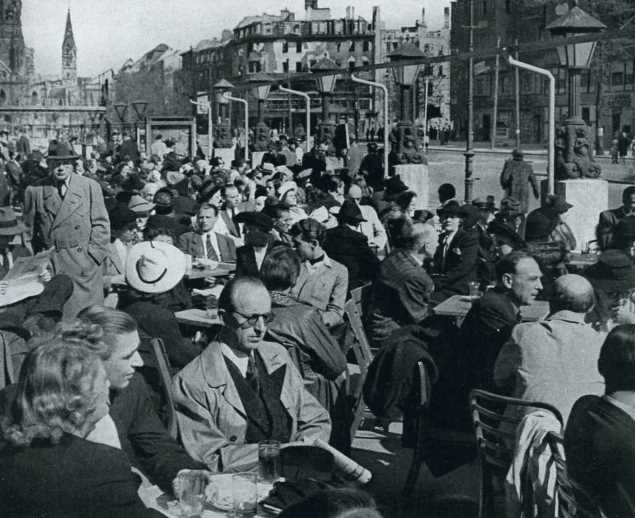
The caption on this next National Geographic image read Berlin Still Has Sidewalk Cafes, But Little Gayety. The glum faces in this British occupation zone belie the fact that it was, in fact, Easter. This wide strip of the Kurfürstendamm, the famous avenue in Berlin, was once well-known for shops, cabarets, cafes, and dance halls. Here, patrons drink imitation fruit juices and “ersatz” coffee, as there was no access to fine wines and liqueurs of yore.
For a larger dose of fun and frolic, Allied-victorious American soldiers made the six hour trek south of Berlin to Garmisch-Partenkirchen, where they spent hours on the slopes.
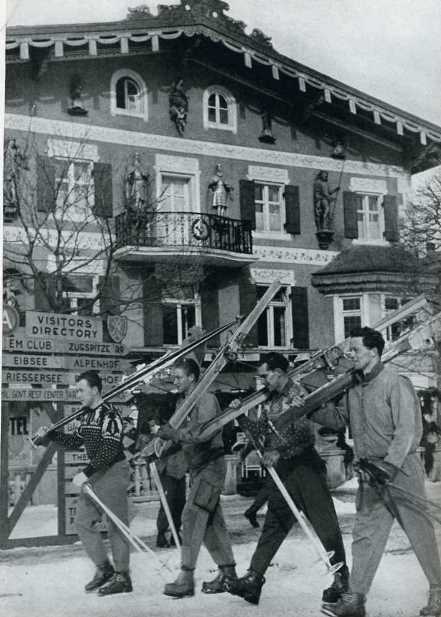
Who could blame them?


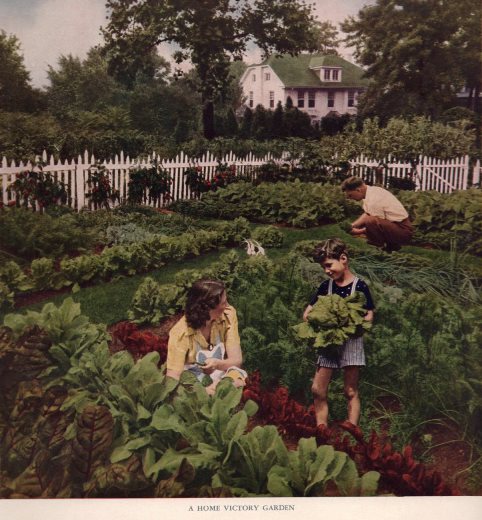

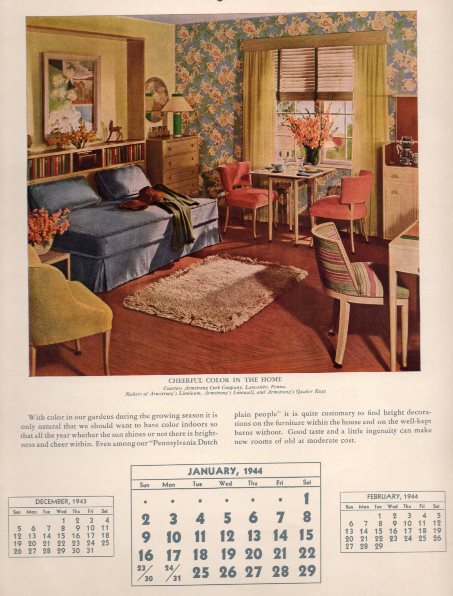
This 1943-1944 calendar from the McFarland Company is full of lovely images, including this victory garden, popular during WWII. The floral side of gardening is covered in the month of July.

Bright colors fill the room for January.
And who wouldn’t want their yard filled with wisteria?


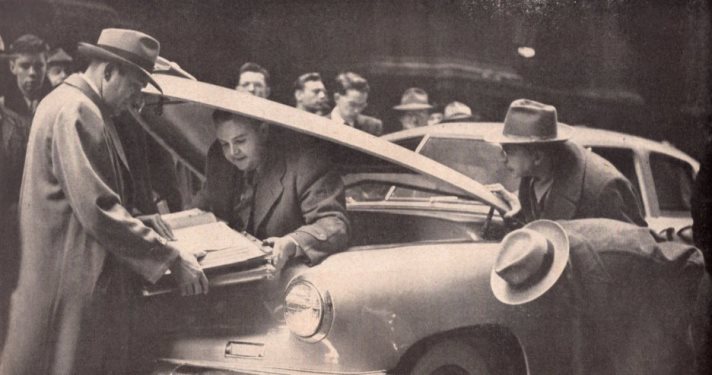
Preston Tucker, owner of the Tucker Corp, tries to prove to investors that a car can be manufactured with engines in the rear.
This photo was published exactly four days after the company ceased operations of the Tucker 48. Only 51 cars were ever produced. Among other negative publicity, top newspaper columnist Drew Pearson reported that the car was a fraud because it could not go backward and it went “goose-geese” going down the road.

But what horsepower!
 I Don't Get It