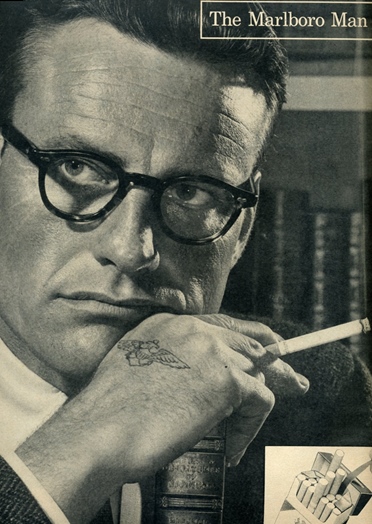
Who’s THIS guy with the glasses, shelves of books, and a tat on his hand? That’s not The Marlboro Man. The Marlboro Man wears a cowboy hat and has a cigarette dangling out of his mouth. He’s wincing into the sun with crow’s feet and leathered skin but yet ruggedly handsome, despite the huge probability of melanoma. I’m going to have to take a pass on 1957 Marlboro Man.
Soviet and American soldiers share a dance upon their meet-up at the River Elbe near Torgau. This contact between the Soviets, advancing from the East, and the Americans, advancing from the West, meant that the two powers had effectively cut Germany in two and would be commemorated as “Elbe Day”, the 25th of April 1945. Near Torgau, Saxony, Germany. 26 April 1945.
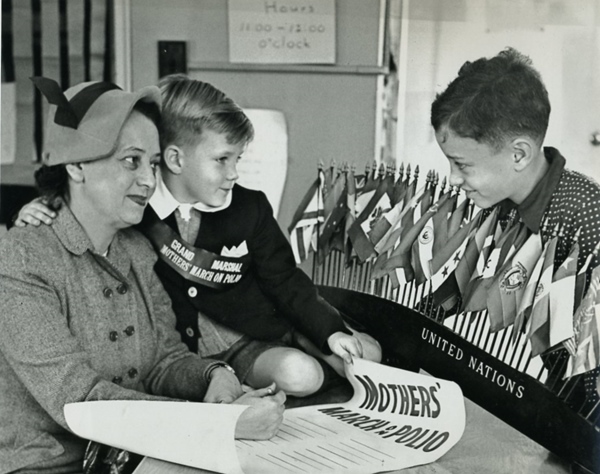
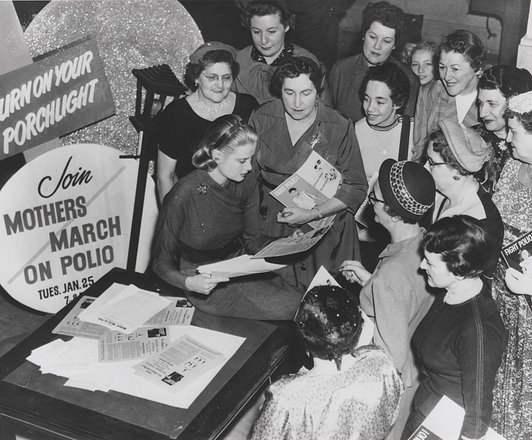
Founded by President Franklin D. Roosevelt, as the National Center for Infantile Paralysis, it became known as the “March of Dimes” when the call went out for regular Americans to simply give a dime – ten cents – to fund research into a cure for polio. The call came from entertainer Eddie Cantor who mused, “Nearly everyone can send in a dime, or several dimes. However, it takes only ten dimes to make a dollar and if a million people send only one dime, the total will be $100,000.” The dimes poured in and by 1955, Dr. Jonas Salk developed the first polio vaccine. Eventually the disease was licked and the March of Dimes turned its focus to birth defects. –www.deborahnorville.com
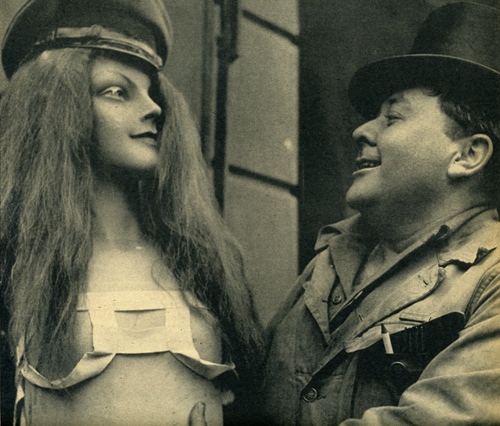
During WWII, American soldiers were forbidden from fraternizing with German girls, no matter how comely or eager. Corporal Harold Goodden could hardly resist this mannequin, replete with German officer’s cap and lustrous locks. Surely she was not harboring Nazi tendencies.
But rulebooks be damned. By 1949 (four years later) over 20,000 German war brides had emigrated to the United States to join their charming US serviceman (and to get the H out of Europe).
Italy was also the enemy, but no matter to stationed soldiers. No less than 412 brides were all aboard the liner Algonquin in this shot. Clearly there was more than “fraternization” going on.
Women from many nations soon found the US to be home. An estimated 100, 000 UK women, 1,500 hundred New Zealand women, and 15,000 Australian women married American soldiers and moved to the US as well.
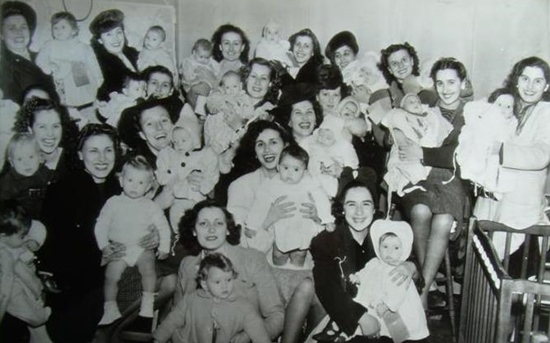
Ireland was neutral during WWII, and evidently Irish lasses were not immune to the charms of American soldiers. Exactly one year after the above picture was printed, these Irish war brides set sail for a new life in New York, where their babies would be introduced to their American fathers.
Nameless pretty girl and P.O. Fryklund, curator of the Roseau County Historical Society in Minnesota, test the sound of the “bass viol for two.” I can’t imagine them making beautiful music together but you never know.