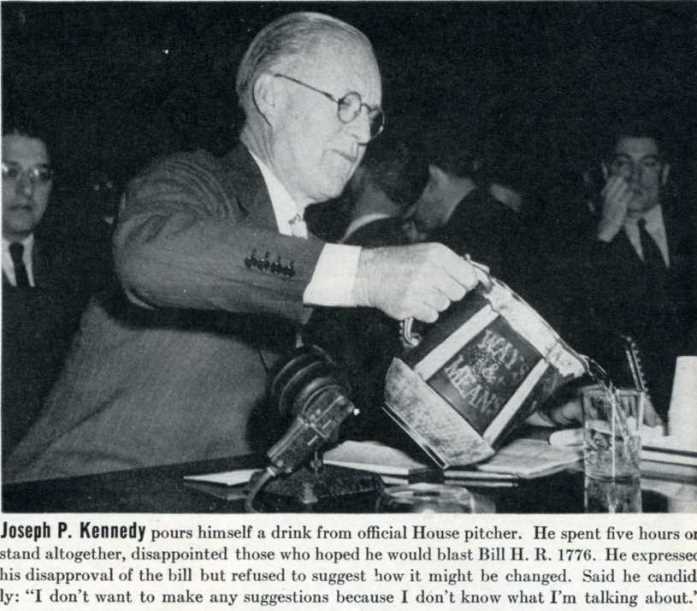
In this image from a February 1941 LIFE, the original Joseph Patrick Kennedy Sr chooses to stay hydrated during a meeting of the House of Representatives. At the time, he was serving as the United States Ambassador to the United Kingdom. During the Battle of Britain in November 1940, a pessimistic Kennedy expressed concern that “Democracy is finished in England,” which annoyed President Roosevelt. Not only would it prove untrue, but it contradicted sentiment by Churchill, who notoriously stated, “Never never never give up.” By the time this picture was published, Kennedy had resigned his position.
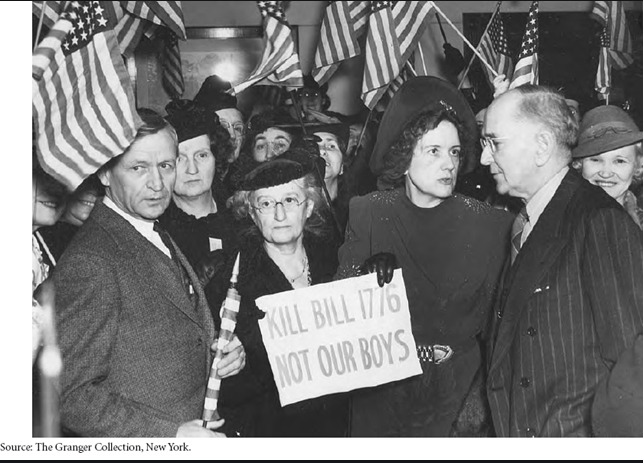
H.R. 1776 was also known as the Lend-Lease Act. Per visitthecapitol.gov:
In 1941 Congress passed a bill allowing the president to provide assistance to nations whose defense was considered vital to the security of the United States. Known as the Lend-Lease Act, it became the principal means for providing U.S. aid to key Americans allies, especially Great Britain, during World War II. The act permitted the president to “loan” war materiel such as ammunition, tanks, and airplanes to allies without expectation of repayment. Though the United States would not declare war until December 8, 1941, the Lend-Lease Act effectively ended U.S. neutrality.
That could feed Dolly Parton and all of her ELEVEN brothers and sisters. Not a big tarpon eater? Perhaps bullfrog, like this pair in a Washington DC market, sounds tastier? The patron is off her head with anticipation.
by Clifton Adams
This DC chef seems no more excited about his frog-boiling tasks as he inspects the shipment from New Orleans.
The Puerto Rican peddlers below may not be flashing any smiles, but the market promises a tasty dish from the land crabs. First they boil their little bodies, scrape the meat out of the shells, toss them in with ham, green peppers, olive oil, and seasoning, mix it up, then return it to the empty shells. An egg is then placed on top and baked. Interesting, no?
by E. John Long 1939
Maybe you would prefer something tamer, like this morning catch from Winnibigoshish Lake in Minnesota.
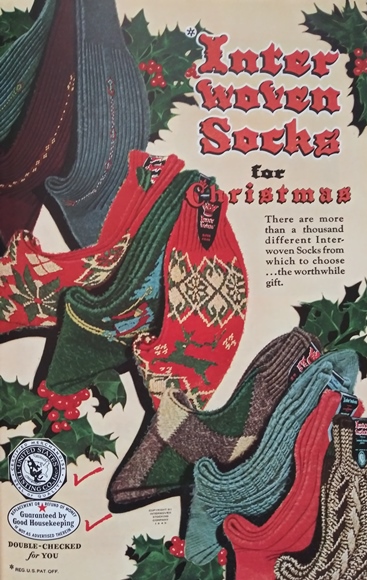
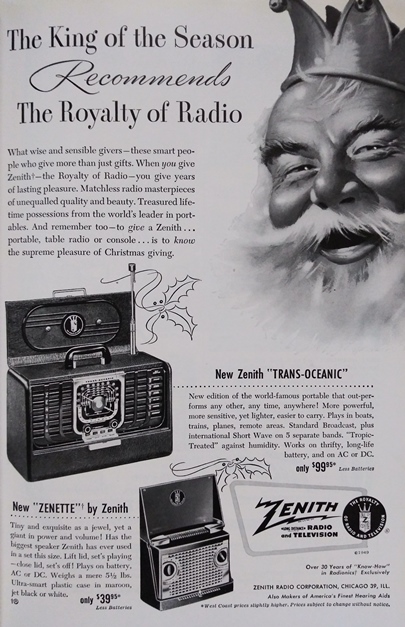
I don’t know what it is about that font, but I don’t cotton to it. It’s not Nordic or Viking, but there’s something very anti-American about it, believe me. I can see why they chose it; it looks like holly leaves, sure enough. But no me gusta.
Today, we’ll be checking out more Christmas gift ideas from 1949. Yes, 70 years ago! Yes, another Christmas post! Only FOUR MORE DAYS!!
giphy.com
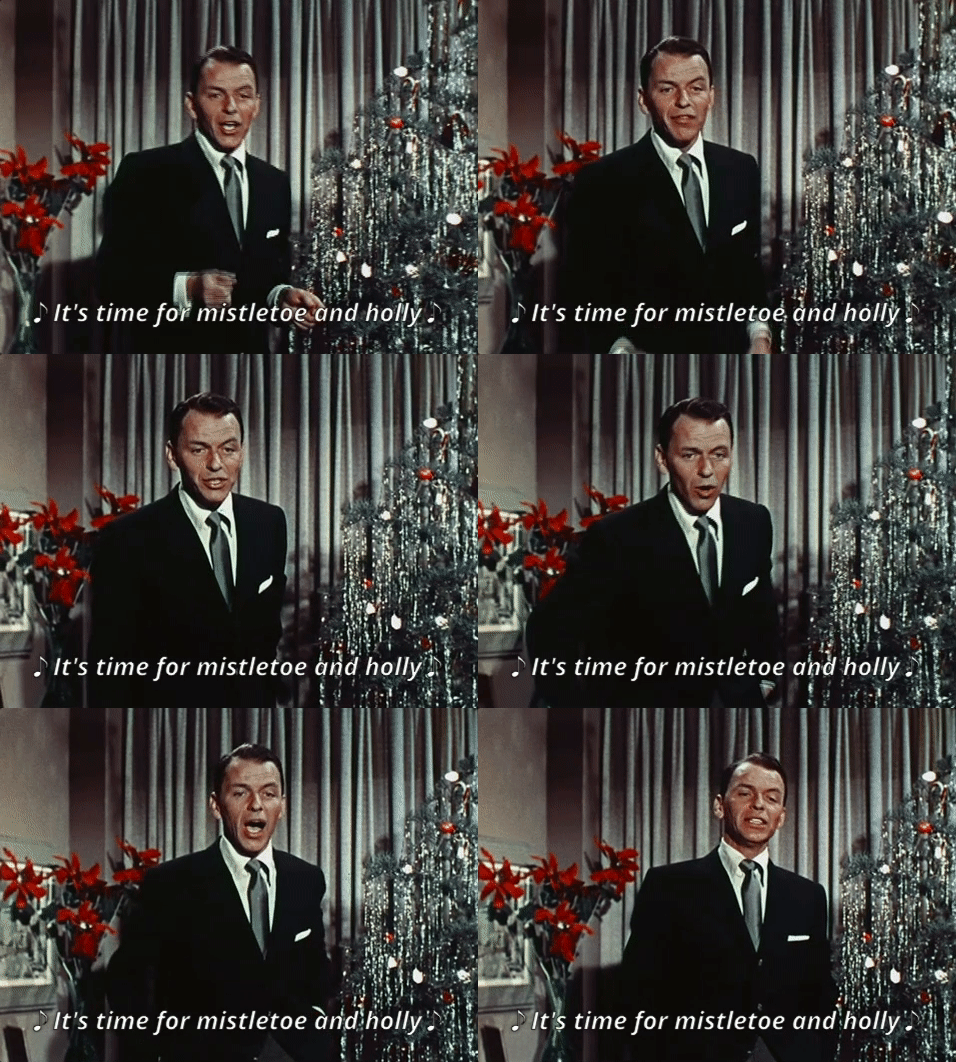
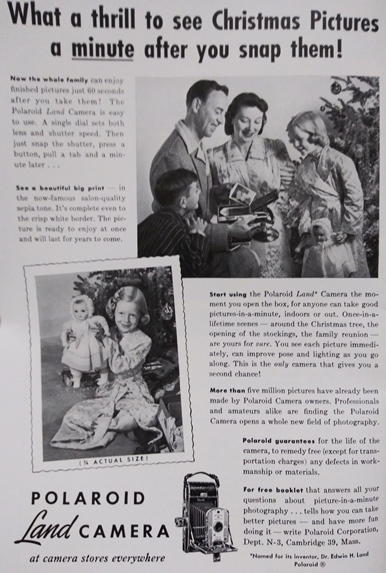
That’s right, Frank! And it’s time for indulging impatience with a new Polaroid camera! Don’t wait a week to have your film developed; get a chemical-smelly, low-res image NOW! You can see the actual size!
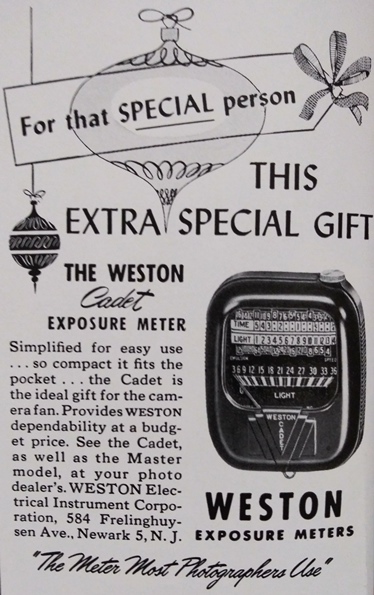
But maybe you don’t have a Polaroid. Maybe you have a real camera that needs a real exposure meter. Isn’t it cute–like a l’il Fitbit?
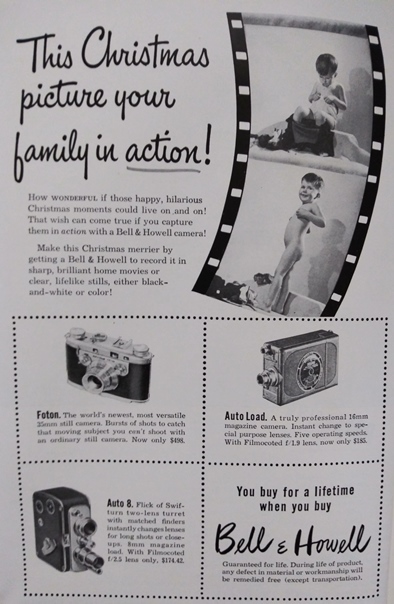
You could upgrade from still photos to moving pictures with a Bell & Howell camera. Is it me, or do the “hilarious Christmas moments” below seem poor choices?
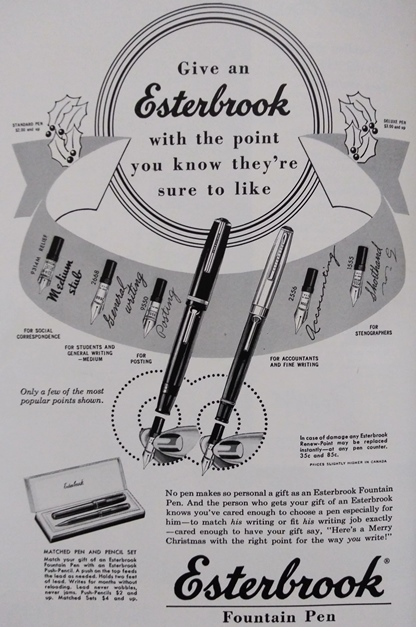
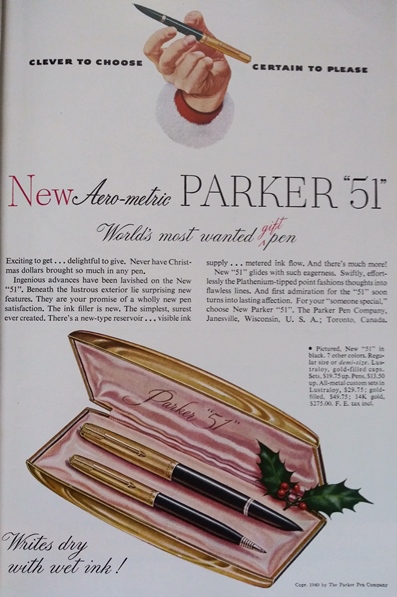
If cameras weren’t your bag, you could gift a pen. Folks used to use pens a lot. For writing letters. And doing accounting stuff. And writing out checks. Now we just use them to sign forms. But Esterbrook gave you all kinds of tip options. Fun!
However, Parker claimed they made the world’s most wanted gift pen. The case looks as snazzy and cozy as a coffin. And no, it wasn’t 1951 yet.
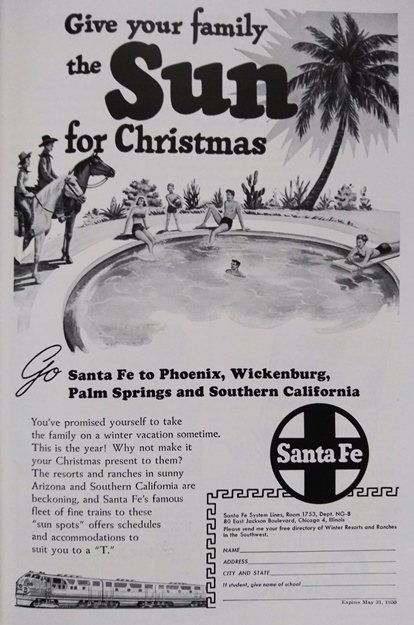
All these gifts sound to mainstream? Too predictable? Well, you could always give your family the gift of Vitamin D and melanoma with a trip to warm places. No self-respecting Hallmark movie would host Christmas in Arizona or California, but if it’s swim trunks and palm trees you desire, wrap some tickets to paradise and stick a bow on them! And whatever you do, Merry Christmas!
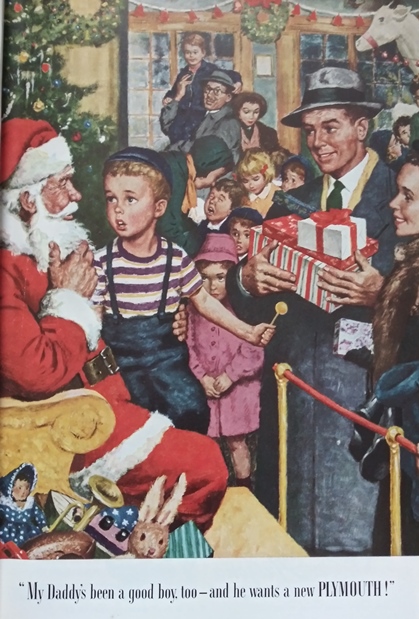
Before we lived in a culture where some believed that asking your child to sit in Santa’s lap was a violation of personal rights, kids would line up at department stores to sit in the lap of jolly old Saint Nick and tell him what they wanted for Christmas, without having parents looming within earshot. The little boy in this Plymouth ad definitely has his dad’s back.
Let’s keep in mind that Coca-Cola had only decided what the now-iconic Santa should look like back in 1933, so tweaks were still being made. This Santa hat looks more like a jester cap. How fun is that squiggle of a holly detail?
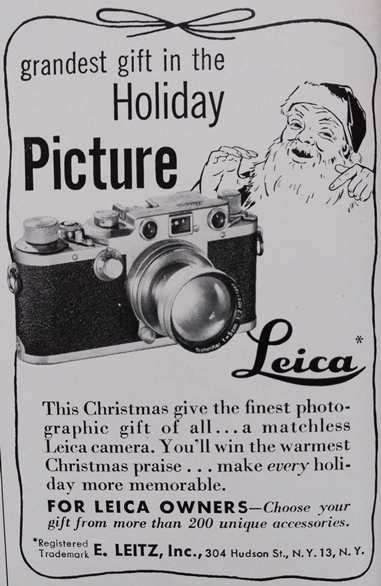
Next, we have a very basic Santa rendering. He looks like might be about to sneeze, but he’s pointing to the gift of Leica, which should be at the top of your list.
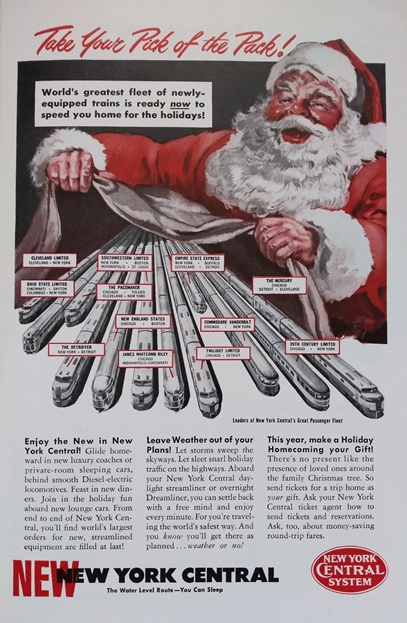
Lastly, we have a rotund and active Santa (no sitting for him!). Fluffy beard? Check! Rosy cheeks? Check! Proper hat? Check! He appears to be unveiling a new fleet of trains.
So if you grew up watching Santa animation and cartoons…
giphy.com
…and got older and decided it was impossible for him to travel from chimney to chimney…
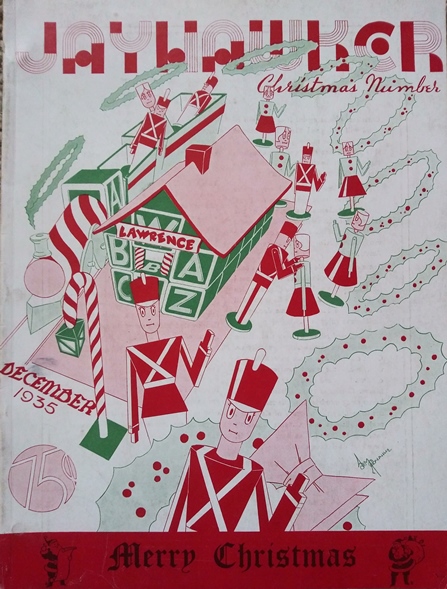
Today’s images come from the pages of my grandpa’s December 1935 Jayhawker, from the University of Kansas. As you can see, the colors are still bright. The December issue was littered with ads for the holidays.
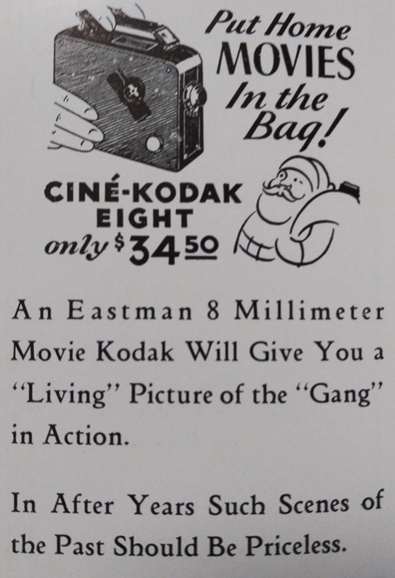
Home movies were the bee’s knees. Just remember that “in after years such scenes of the past should be priceless.” Sounds like Engrish. Also, do any of you have any home movies from 1935? We have zero zilch nada home movies of any kind.
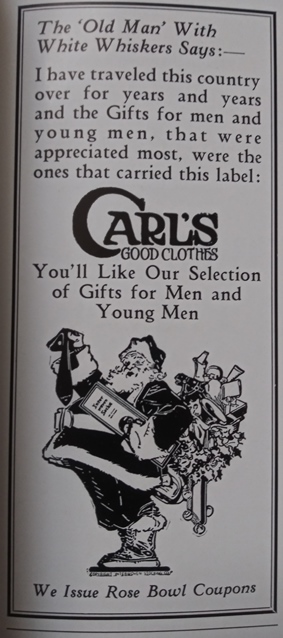
In this Carl’s ad for “good clothes,” Santa is shown as morbidly obese, and his sack of toys actually balances out his belly, making perfect spinal alignment.
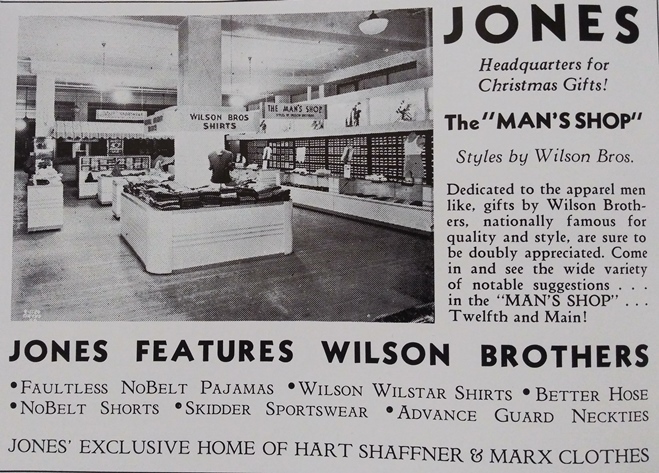
In this Jones’ ad, we can see inside a clothing store in 1935. Seems organized but sparse. Then again, they did carry Faultless NoBelt Pajamas.
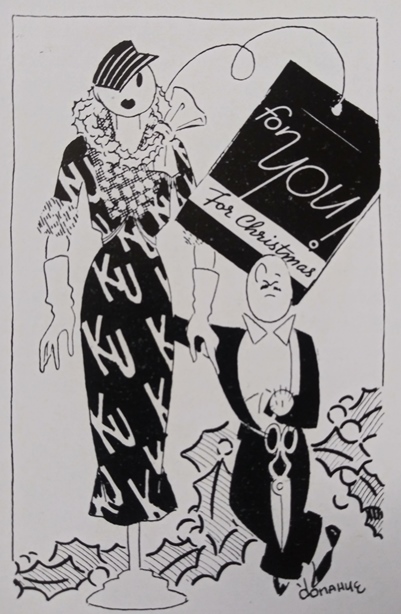
Included in the pages were disturbing cartoons like this one.
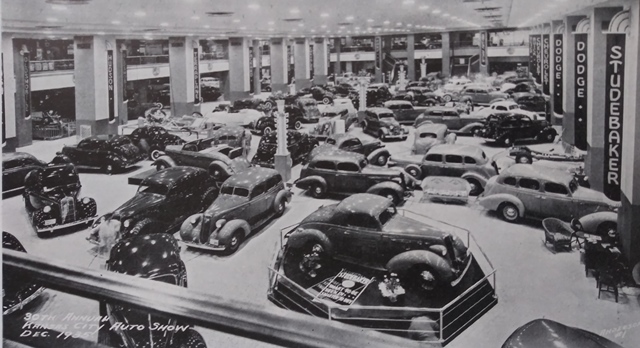
If your wallet was fat in those Depression-era days, you might hit the Kansas City Auto Show and snag yourself a shiny Studebaker.
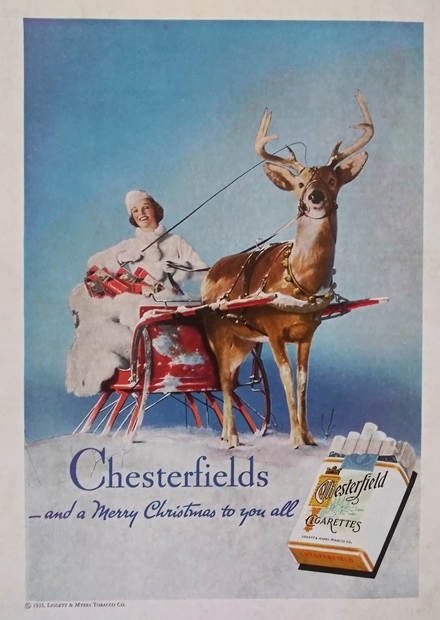
But if all you had was change in your pocket, you could still pick up a carton of Chesterfield’s. It’s what Rudolph would have wanted.








 I Don't Get It