Finding work in 2019 can be a problem. Otherwise, I’d be working right now and not typing up a free blog post. But the Craigslist jobs of today pale in comparison to the backbreaking jobs available in the country of Cyprus in 1928.
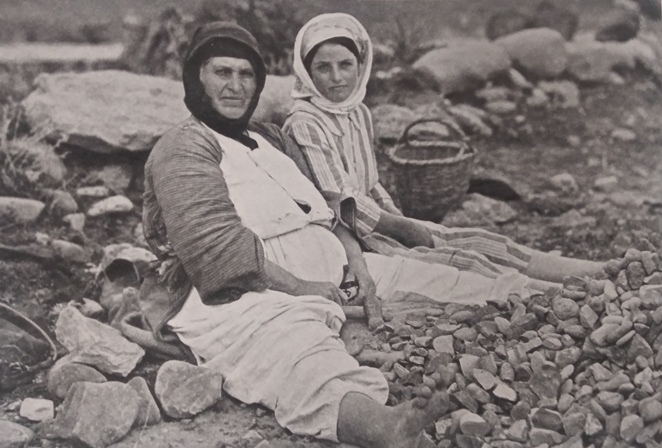
First off, we have the arduous task of rockbearing. Don’t let the smiles fool you; as soon as the sun went down, they were off to the local chiropractor and physical therapist to straighten up those spines.
Nat Geo July 1928
For those of you who enjoy being bent over all day (but don’t like transporting rocks), consider washing laundry with your feet, like the women of Kalopanayiotis traditionally do. Bonus duty: using a paddle to bludgeon the water out of the clothes.
Helene and her mother seem to have found a more suitable alternative to leaning forward. However, they were only briefly upright for the picture, as their job entailed breaking rocks to make them usable for road work.
This farmer may have found the best seat in town, seated on his sledge as the oxen move forward. The children serve as makeweights.
While none of these jobs seem to be pleasurable in any way, the next one offers gluteny fruits of one’s labors. The “itinerant Cypriote bakery” must delight all those who encounter it–despite the dust, flies, and stray dark hairs of the baker who made it. If nothing else, he clearly has the best work uniform among the bunch.
Tomorrow, we’ll peruse yet more want-ads of the Cyprus papers, and perhaps you can find your niche!
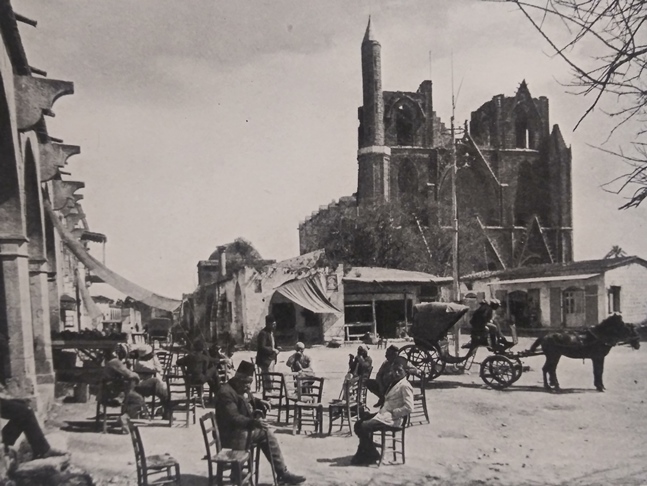
Imagine yourself in Famagusta, a city on the east coast of Cyprus, over 90 years ago. The tiny Mediterranean island of Cyprus currently has a population just over a million, or a scooch more than the capital of Texas. So you can imagine how sparsely populated it must have been in 1928. You could hit the open-air market early for coffee in the cafe on the left. Then you could purchase fresh fruit and grab a goat carcass to go.
Or if you were feeling especially fancy, you could travel 30 miles to dine at the restaurant in nearby Nicosia. There they would serve you a meal of nutty breads, ripe olives, sour cheese, roast goat, and you could wash it all down with a draft poured from a pink-clay pitcher.
While gnawing on tough goat, you could enjoy the lovely view of the Ayia Sophia mosque, as it was known back then, meaning “Holy Wisdom” in Greek. Take in the scars of Turkish cannon balls hurled at her walls, the broken buttresses and ruined belfries, and the one Gothic turret elongated into a minaret. Today it is known as Selimiye Mosque. The foundation stone is from 1209, so yeah, it’s old.
Stop by tomorrow for more images and history from the little island of Cyprus!
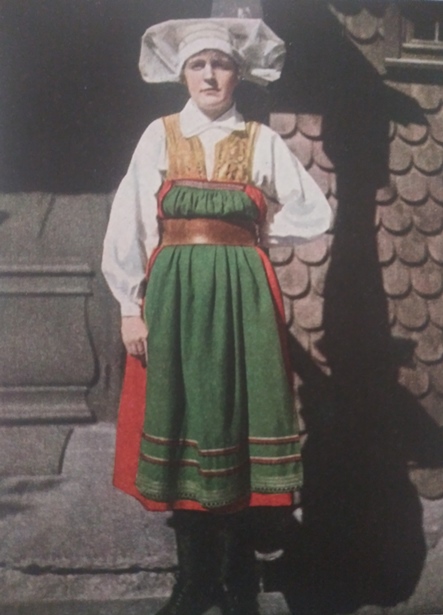
Today we pay homage to the costumes of Old Sweden. The ladies above were from Rättvik, a Swedish lakeside locality adjacent to a bunch of words that sound like the Swedish Chef said them. They were waiting for a “conveyance” to take them back home. Who says that anymore? Probably not even the people of Sweden at this point.
Next, we see another three dolls, Dals to be precise, in Boda, a locality situated in Rättvik Municipality. Already, you can notice the Swedes liked red horizontal stripes, which flatter almost none of us.
They were also fans of hats, as you can see in this next pic of a native of Södermanland, the duchy of then-Prince William. No, not that William. And no, not douchey, but duchy, which is a territory of a duke or duchess, or a dukedom. But not a dumb duke.
Speaking of fetching hats, this next trio sported three different variations. Mora’s hat, on the left, was “staidly Puritan.” Mora is a place, not her name. The middle girl, from Rättvik, wore a peaked cap with red stitching, perched atop the back of her head. The Leksand girl on the right wore a white cap only if she was married, and red if not.
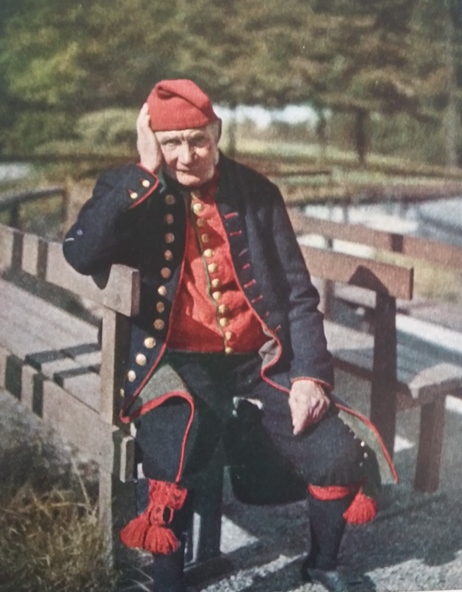
Not to be outdone, men also sported old costumes and winter sleeping caps.
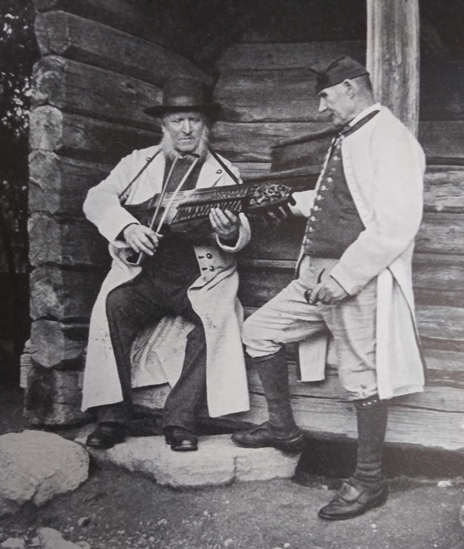
This bloke from Hälsingland is wearing something that reminds me of Rip Van Winkle. The quote below him says,
Therefore my age is as a lusty winter,
Frosty, but kindly.
– William Shakespeare
Children were not immune from donning gay apparel as well, while the women of Lake Siljan held tools.
by Wilhelm Tobien
As you can see, they could not get enough red stripes.
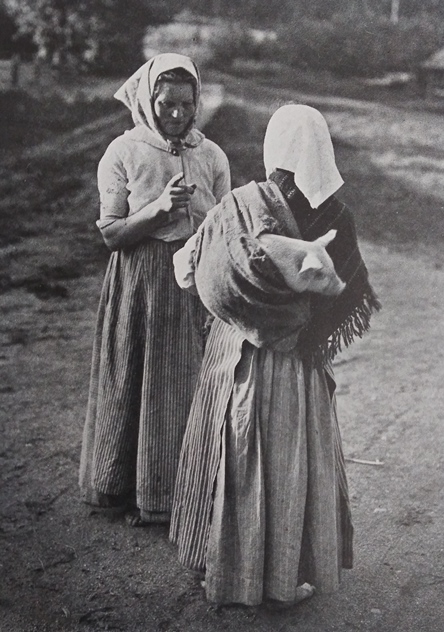
Rare were the outfits that strayed from the norm. But always, the head was covered.
Two maids stood in the doorway of an old farmhouse at Leksand, one hopeful and one bitter.
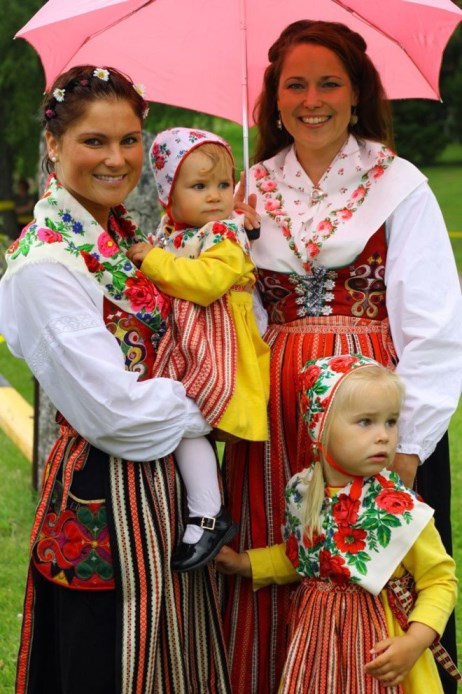
In modern-day Leksand, natives still sport traditional folk costumes as a nod to their past. Way to keep the history alive, ladies!
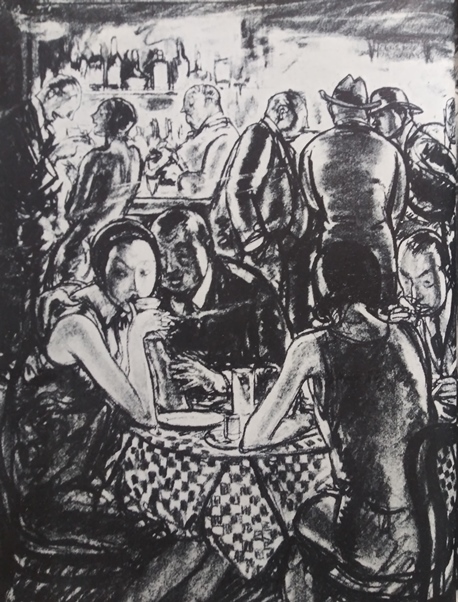
Wallace Morgan for The New Yorker, October 11, 1930
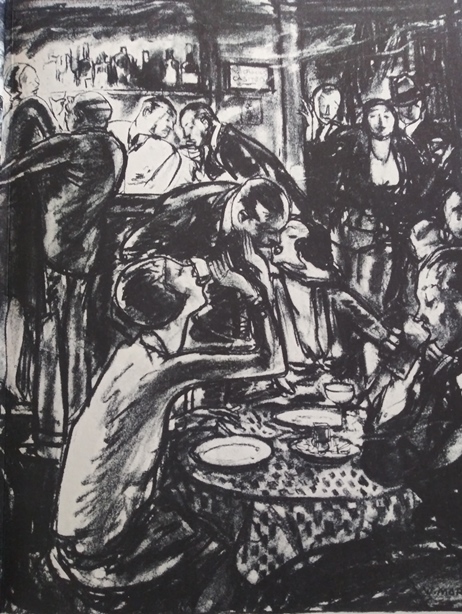
As you can see, illustrator Morgan was a master of movement, using his sketches to adeptly convey the energy and complexity of the speakeasy. Also called a blind pig or a blind tiger, a speakeasy was an illicit establishment that sold alcoholic beverages. I was today years old when I learned of the two blind terms. Now it makes sense that I went to a bar called The Blind Tiger in Shreveport 24 years ago, where I met comedian Mario Joyner, who invited my galpal and me to Harrah’s to gamble with him. But that’s another story for another time.
Contrary to the term, it was not a place where it was “easy to speak;” in fact, the opposite was true. It was a place that necessitated one speak easily or softly, as selling and consuming the bootleg booze was illegal. You can see the quiet conversations, imagine the hushed tones, of the clients, keeping it all on the downlow until sufficient intoxication raised their voices. That’s the power of the drink. We’ve all seen a gaggle of middle-aged women drinking margaritas at a Mexican restaurant. Speech is never soft.
From the last sip to a stolen kiss to gossip and entrances, Morgan was able to make the background just as engaging as the foreground.
When the comic was published, the country still had yet three years of Prohibition remaining.
But until then, speakeasies flourished. NYC claimed over 100,000 speakeasies alone. Saloons with player pianos and swinging doors made way for password-protected jazz-playing joints. Instead of aligning with the Prohibition moral compass, American women let loose with drinking, smoking, dancing, bobbing their hair, and donning shortened skirts. Make way the flapper. Gone were basic beer and liquor, as cocktails required mixers to make hootch drinkable. And once folks tasted sugary, fruity drinks, those who had never enjoyed beer and liquor found they enjoyed this new concoction. Organized crime soared. Cops couldn’t keep up with raiding and disposing. It was a losing battle. No wonder FDR repealed the 18th Amendment as soon as he was elected. The woman in the foreground clearly isn’t playing.
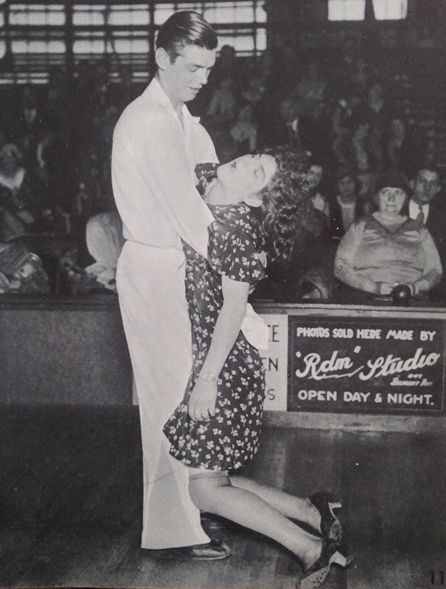
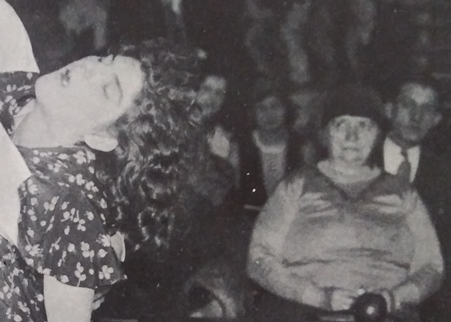
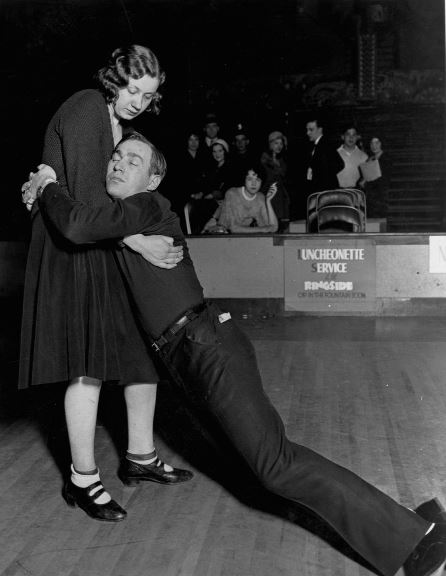
No, it wasn’t bad breath that caused Marie Micholowsky to pass clean out in her brother Frank’s arms. Believe it or not, this image was snapped at HOUR 3327 into a Chicago dance marathon. The seated woman shares my sentiment exactly. Girl, what were you thinking?
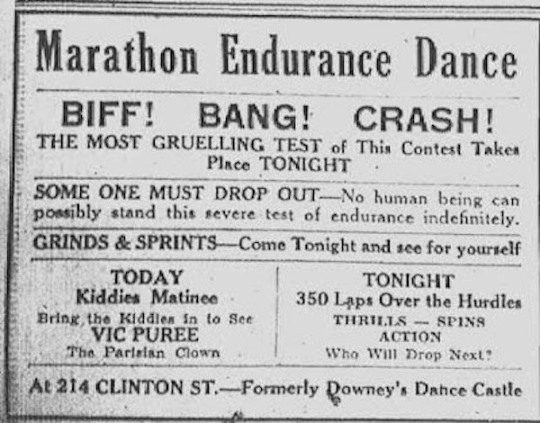
Now most of us have heard of dance marathons, especially popular during the 20s and 30s. But did you know that some lasted for weeks, even months? This particular one began on August 29, 1930 and ended in 1931. And yes, they did get intervals in which to nap. But can you imagine having started dancing TWO WEEKS AGO, only to ultimately finish next January? I guess these couples didn’t have jobs? Or families?
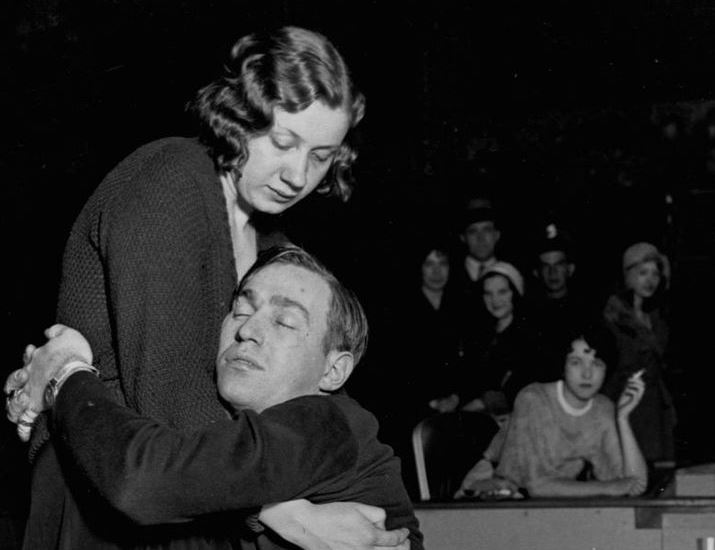
This next pair had the benefit of not being siblings in embrace, but you can see the pickle petite Anna Lawanick is in, having to support slumbering Jack Ritof, aka the failure.
Library of Congress/Corbis via Getty Images
What had begun as opportunities for the glow of youth to show its endurance and immortality eventually morphed into the exploitation of those who desperately needed the cash reward given to the last couple standing. As you can see, the onlookers (who paid an entrance fee to gawk) kept their eyes on the dance floor.
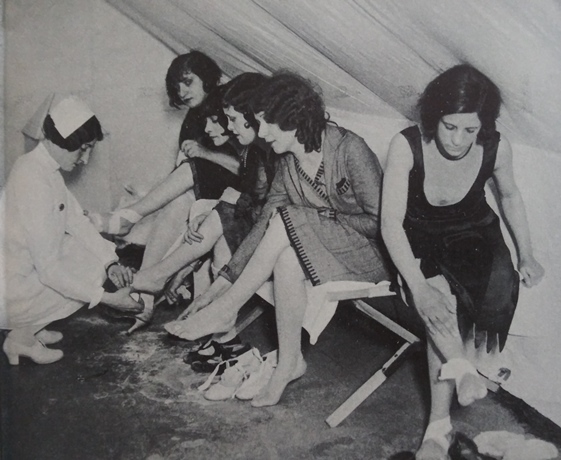
But what of the pain in their feet? Rules often allowed for one partner to visit the restroom or nap as long as the other partner continued dancing, so the feet were only briefly spared their dancing duties. The contestants below received medical attention for their tootsies during a Madison Square Garden marathon in June of 1928, where the prize was $5000, more than an average annual income.
Spectacle it was, as folks pushed themselves past the point of exhaustion, and in the case of Homer Morehouse, heart failure at the age of 27.
rawstory.com
The predecessor to today’s reality shows or movies like Hands On A Hard Body, dance marathons proved both cruel and entertaining. Ultimately, the fad passed as fads do, and Americans moved on to the next big thing.
The two ladies above are listening to the FIRST factory-built radio made for entertainment: a 1921 Westinghouse. Did you know that radios initially required headphones?
imgflip.com
A year prior, in 1920, Dr. Frank Conrad, while experimenting in a Pittsburgh barn, discovered that wireless enthusiasts enjoyed listening to the phonograph records that he put on the air, and the rest…is history! Except that we need the actual history to understand.
If he put music on “the air,” did that mean radio stations weren’t already playing music? Well, let’s ask Wikipedia. Conrad began work at Westinghouse Electrical & Manufacturing at 16 in 1900. At 23, he moved up to their test department, where he invented the circular-type watt-hour meter, over 30 million of which were in use by 1937. He would eventually be awarded over 200 patents throughout his life. But it was in 1916 that he installed a radio station in a two-story garage. It used a spark-transmitter, which could only be used to transmit Morse code. So no music.
When the US entered WWI in 1917, all civilian radio stations were silenced. But Conrad, working for Westinghouse, spent his time developing radio technology, using vacuum-tube transmitters, and inventing a wind-driven generator. Two years later, when the radio ban was lifted in October, he resumed his experimental station and was able to entertain other local amateurs by playing phonograph records.
soundcloud.com
As interest grew, he adopted a schedule of music. In 1920, Pittsburgh’s own Joseph Horne Dept Store began selling radios, aka “wireless receiving stations” to listen to “air concerts.” It didn’t take long for Westinghouse to construct its own broadcast station and sell receivers for this free entertainment.
The first radio station, KDKA, opened on November 2, 1920. Initially a tent on a roof, it soon became the indoor studio you see below (the tent kept insisting on blowing away). Draperies covered the ceiling and walls to prevent reverberation. A disk hanging below the upper end of the slanting bar was called “the enunciator” (which we now call a microphone). Early listeners used crystal detectors in tubeless receiving sets, but the development of the vacuum tube expanded the radio audience significantly.
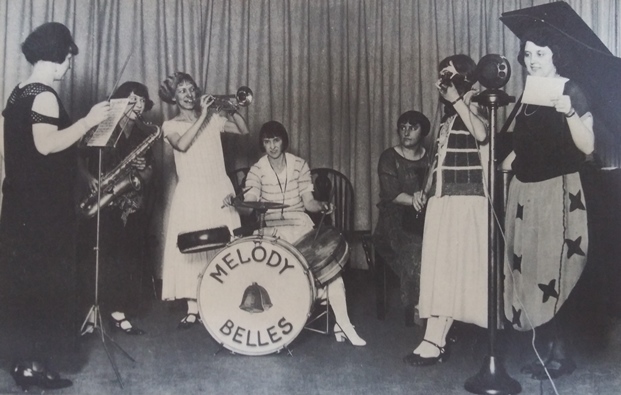
Soon entertainers were asked to provide music for radio stations.
Young people especially were excited by the new technology, and competitors soon crept in. This Crosley model was advertised at $3.75.
“Oh, boy! There’s London! Last night I had Honolulu, and the night before that Porto [sic] Rico. Here’s where I get Rome. This Crosley sure does bring ’em in. There’s nothing like a Crosley.”
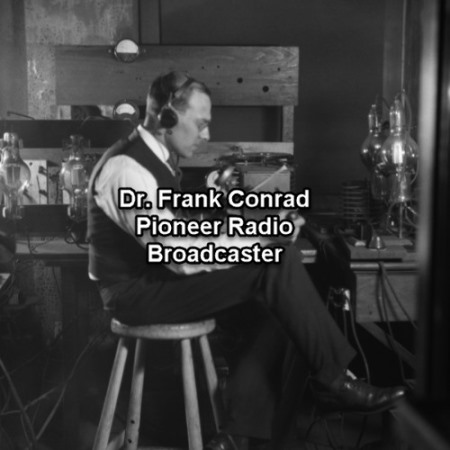
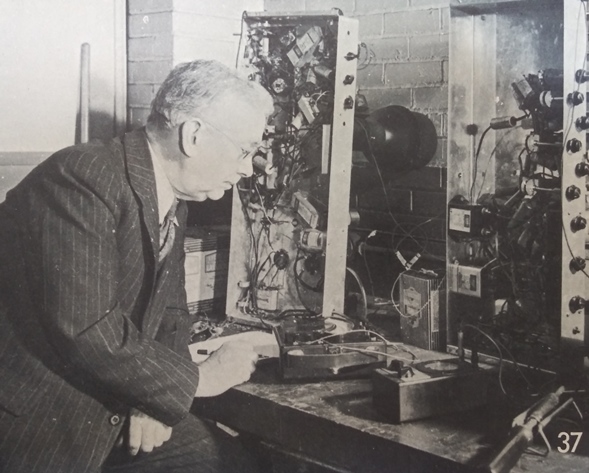
In 1928, Dr. Conrad received an honorary Doctor of Science degree from the University of Pittsburgh. Not until age 66 did he retire from Westinghouse, having spent his entire life in radio. He received many awards for his work, including the 1930 Edison Medal “for his contributions to radio broadcasting and short wave radio transmission,” and the 1936 Lamme Medal “for pioneering and basic developments in the fields of electric metering and protective services.” The next time you flick your radio on, pause for a moment and think of Dr. Conrad, shown below.
One third into September, and we’re still at 100 degrees or more each day. Last month was our second hottest August on record. It hasn’t rained this month. Or last month. Or the month before.
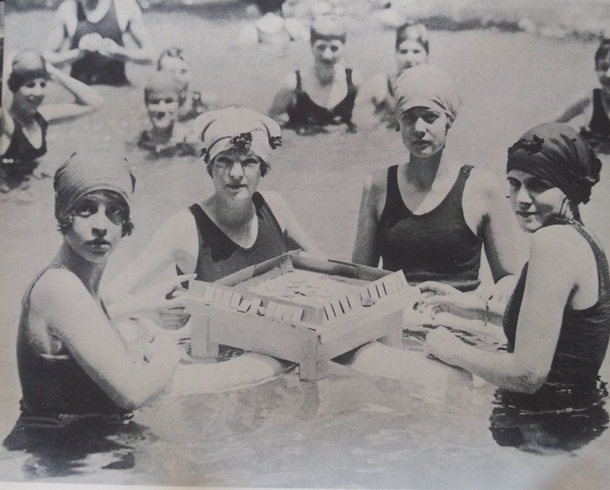
While it will remain 103 degrees in central Texas well nigh into October, the rest of y’all will soon be enjoying autumn weather. If your neighborhood pool remains open (as our does here, though never would we ever stick a pinky toe into it), I suggest you soak up the last bit of sun, carpe diem, and do not go gently into that good fall by taking advantage of the sun’s warm rays with a friendly game of Mah Jongg. Why sit in the shade of a cozy house at a card table with cocktails and salted cashews when you could stand in a public pee pavilion, trying desperately not to let the Chinese tiles fall into the water, yelling at nearby kids to leave you be, constantly looking over your shoulder to make sure you’re not in the path of an errant cannonball? These ladies at Wardman Park Pool, Washington seem absolutely ensconced.







 This bloke from Hälsingland is wearing something that reminds me of Rip Van Winkle. The quote below him says,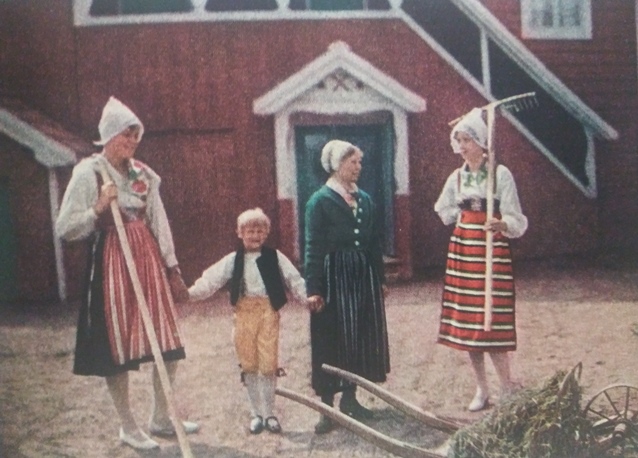















 I Don't Get It