
Actually, these owlish, oversized specs aren’t as hidd-yuss as most of the following glasses from 1985. But these Ted Lapidus ones certainly qualify.

She seems to be gritting her teeth to prevent from cursing their bulky black bamboo frame, perfect for eating kung pao shrimp.
The next model seems to have moved on to dessert.

I guess boys DO make passes at girls who wear glasses–especially if it’s Sophia Loren. She must have loved her some curlicues. And pearls. And lace.

How about supermodel Paulina, sporting patriotic fingernails?

Sorry, but those hoopy metal sunglasses are awful. Just awful. Even on Paulina.
And who among you wants their frames to be at nostril level? Not I.

These white ones might have appealed to me as a teen, but what they delivered in style, they lacked in peripheral vision. Thus the pout.

And what about these? They remind me of spreading butterfly wings. Is she in an indoor wind storm?

Well, I hope you enjoyed this trip down memory lane (and I hope you’re wearing your glasses). After all, it’s the best way to enjoy the interwebs.


In the fall of 1947, the Jawhawker published its seasonal magazine, full of pictures of musical students on campus at the University of Kansas. Here we see trumpet major Dorothy Brewer (from Olathe) showing us what she’s got.
But she wasn’t the only one.

Horns were in fashion.

But the piano never went out of style. Old mentored young.

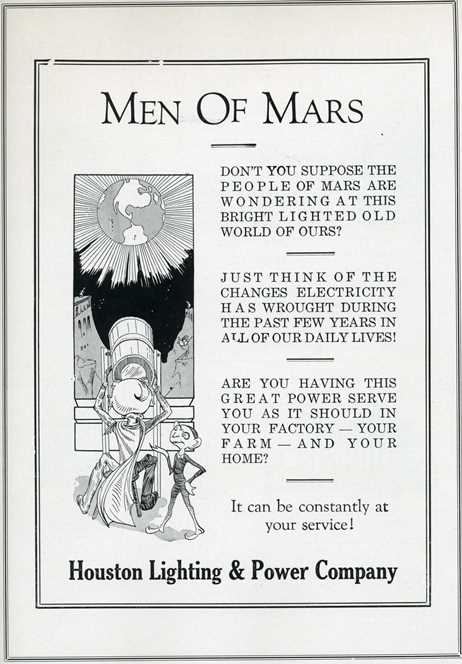
The ladies of Miller Hall gathered to tickle the ivories during this late night pajama party.
These days, however, they may look more like this.





This picture says it all. Get a load of this atrocity. Look at the angles, the depth of product, requiring a solid foot from teensy screen to drywall. Who would bother to keep this dinosaur when new technology arrived? Not me.
Some people still have their old phones (a Nokia that fits in your palm) or their old cameras (I still have my old Nikon) or maybe their old camcorders from the pre-digital world. But I don’t know anyone who kept their personal computer relics from the 80s, 90s, or even the Oughties. Now, I am certain there are plenty of computer peeps who hold on to them (and hoarders who just. can’t. let. go.), but again, I don’t know them. Beige paint on the walls isn’t even acceptable anymore; how could one stare at a beige computer?

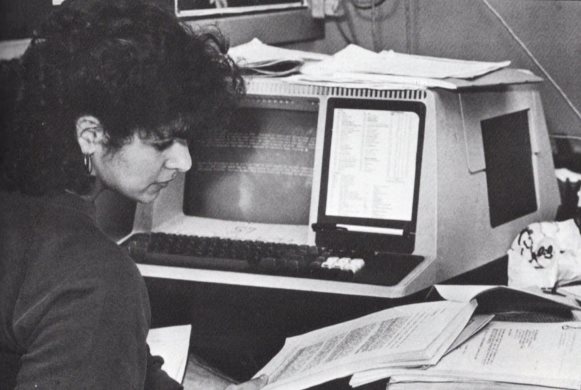
In the same 1987 Cactus yearbook, you can see this student studying at what looks to be a computer terminal. You can bet your bippy this was beige as well. No Windows. Was there a prompt screen?
The RTF (radio/tv/film) dept was cutting edge. Back then, it didn’t stand for Residential Treatment Facility. But surely some of the RTF majors I knew are now in one.
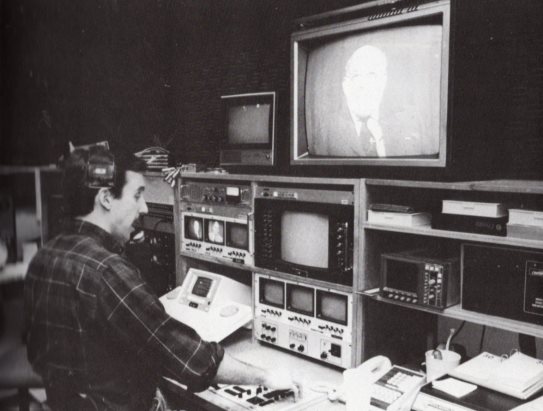
You can see how it was a precursor to today’s Communication Dept at the University of New Haven. Much snazzy, as Engrish would say.

Still, at the time, all personal computers seemed pretty rad.

With a little coaching from the Big Boss, even girls could do it.
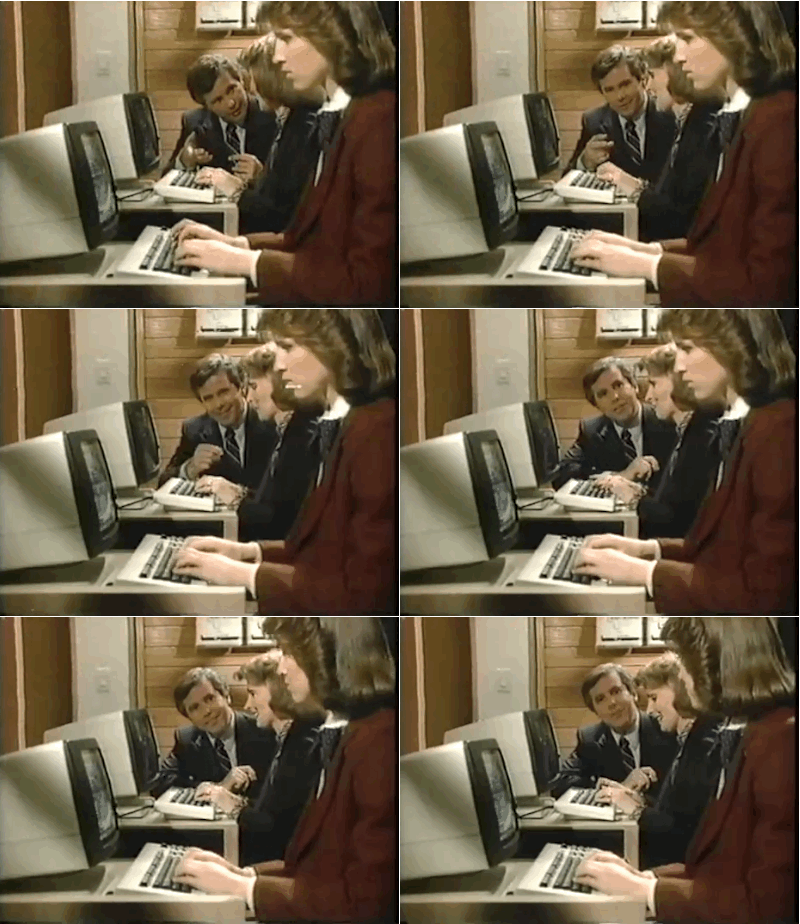
Speaking of girls, a contestant on Ellen’s show yesterday didn’t know how to identify what she was handed in the game of Millennials vs Boomers. It was a floppy disk. Even once identified, she didn’t believe Ellen. I guess Millennials don’t know a floppy from a hard. Remember the write protection notch?

Let’s all be glad for the death of the beige and the modern ease of use for a world that demands personal computer use daily (even if it’s inside your phone). Cheers to that!

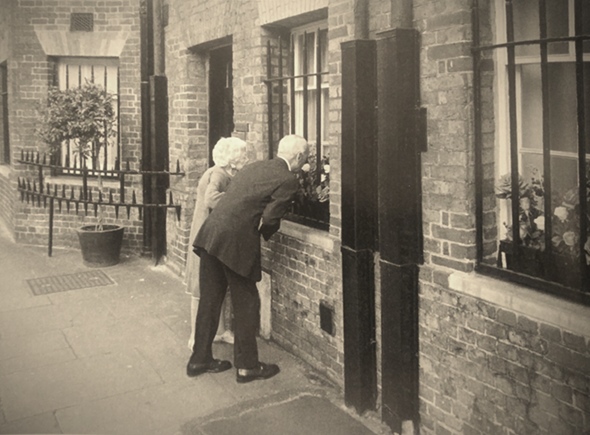
I’ve heard of stopping and smelling the roses, but I hadn’t heard this twist on it.
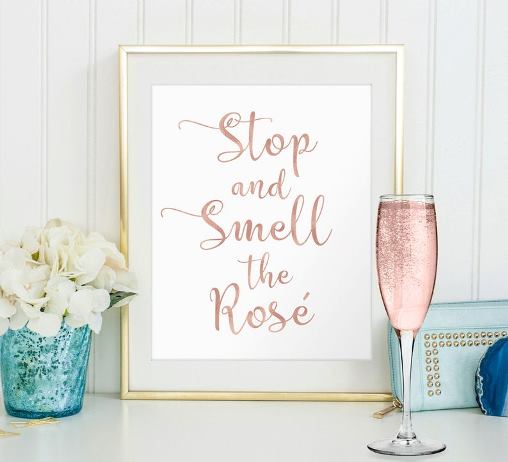
I don’t believe I’ve ever stopped to smell the rosé. Perhaps a cab sav, but not a rosé.


Evidently Hillary Duff enjoys a good rosé.

Perhaps you should pop a cork this evening! After all, it IS Wine Wednesday.


Per the late Dominick Dunne (who took this picture), Natalie Wood (with whom he often supped at Hollywood parties) had the habit of reapplying lipstick after dinner, using the blade of her knife as a mirror.


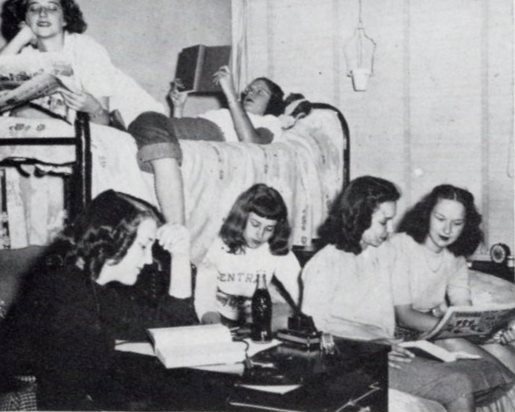
The students at Hammond High School in Alexandria, Virginia sure seemed to enjoy their folksinging. And they must have been on the cutting edge of the term, as “folk rock” wasn’t used in the U.S. music press until June of 1965 to describe The Byrds’ music.
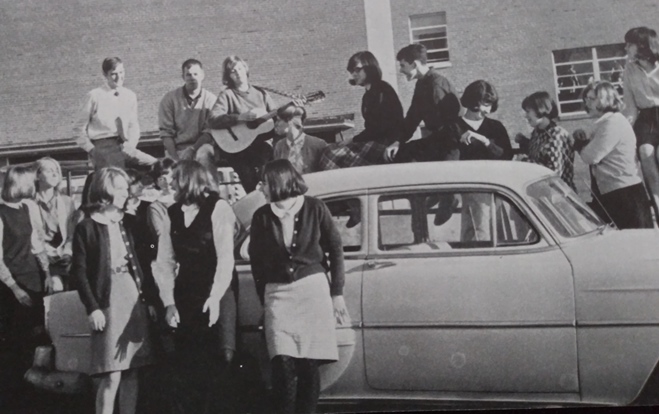
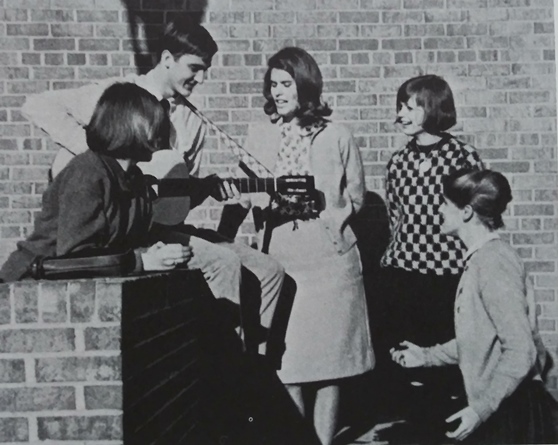
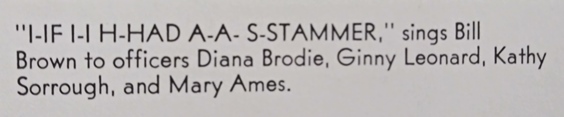
Perhaps Bill was singing Peter, Paul, and Mary. But maybe he was hammering out “Mr. Tambourine Man,” much to their delight.
Some fellows gave private sessions.

And maybe, just maybe, they might reach the critical acclaim of Joan Baez and Bob Dylan.


 I Don't Get It