Just over a year after Japan surrendered to the Allied Forces, signifying the end of WWII, much of Germany lay devastated. Potsdam Square, the Times Square of Berlin, was ashes. One of the few places left undestroyed was the Cafe Wien, jammed with Germans of all ages, drinking what LIFE described as “weak drinks, which are all the cafe can offer.” This fashionable lady, sitting on the once-fashionable avenue of Kurfürstendamm, doesn’t seem to mind.
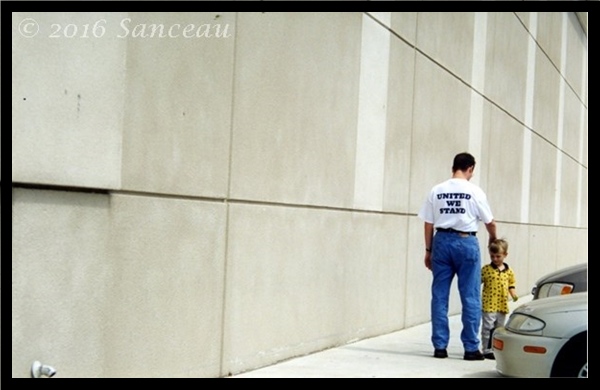
I used these images in a post from several years ago, but they are still powerful on this 15th anniversary of 9/11. For the rest of the pics, click here.
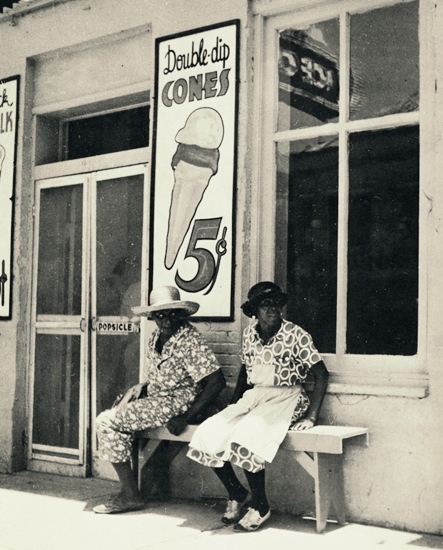
These two ladies keep their eyes peeled for cooler weather (while wearing fabulous hats and dresses) on the kind of day that warrants nickel ice cream. I know it will arrive later this month, the glorious season of fall. But I also know it won’t feel like fall until Halloween. Still, I can see it on the horizon, and what joy that brings!
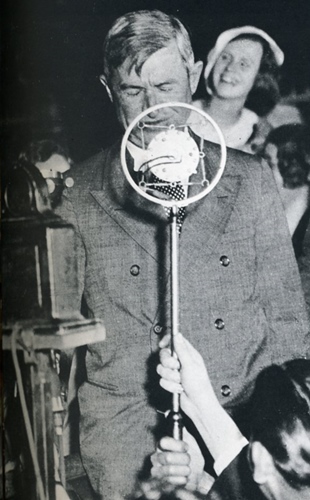
Why is FDR howling with laughter? He and son James, along with William McAdoo and advisor James Farley, are responding to the quips of Will Rogers as he introduces the new president in 1933.
“Mr. Roosevelt is a plain-spoken man. Remember that speech last night about the banks? Long adjectives and nouns–he didn’t mess with ’em at all. He knows what the country wants is relief and not rhetoric. He is the first Harvard man to know enough to drop three syllables when he has something to say. Why, compared to me, he is almost illiterate.” — May 7, 1933
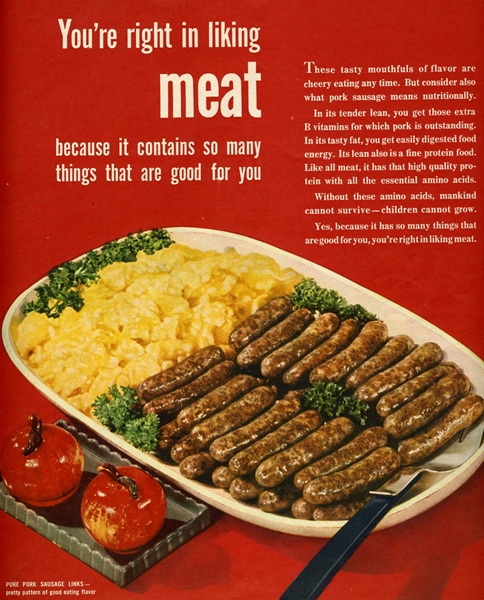
As I read that aloud, I can hear the man’s voice saying it. I wonder if you hear it, too? That typical 50s voice. “Why, Dick and Jane even give their dog, Spot, sausage and eggs every day, and he’s never felt better!”
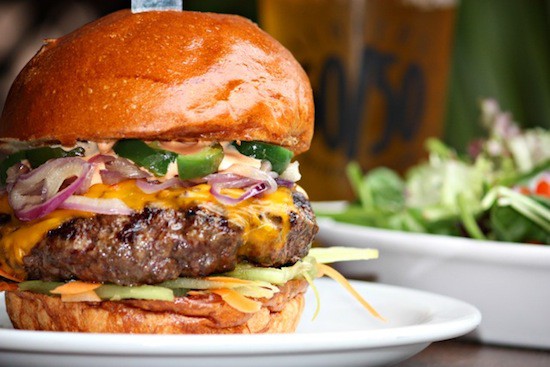
The tangy stack features seasoned ground bison (aka the American buffalo) nestled on a bed of shredded celery and carrots. All that’s topped buffalo sauce-infused sharp cheddar cheese, grilled onions and jalapeños, and then smothered with housemade buttermilk ranch and Frank’s RedHot dressing.
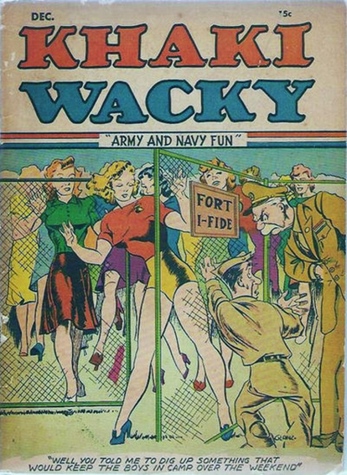
Back in the day, khaki wacky meant boy crazy. It appears that this doll has gotten hooched up on Borden’s milk and lost her inhibitions. But who could blame her? The nifty fellow on the left is so brawny and statuesque, while his bold-collared pal is sporting a buck sweater that no gal could resist.
And I’m serious about khaki wacky. It was even a series of comics.
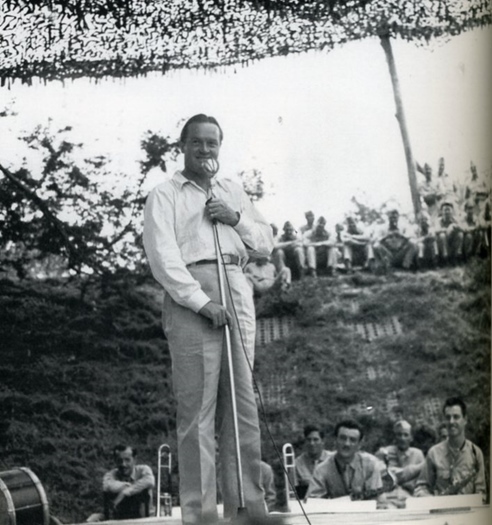
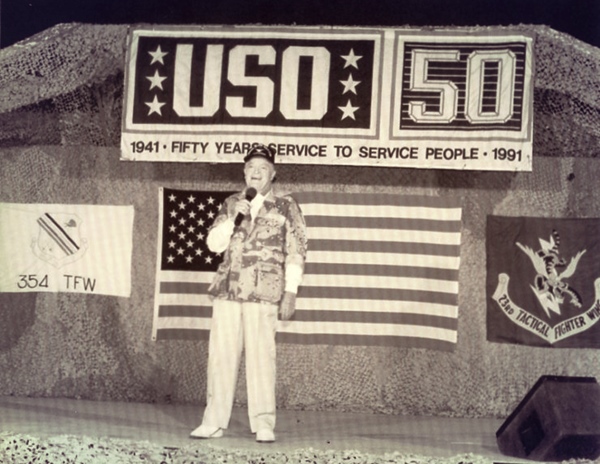
Today we look at the face of the USO, Bob Hope. Back in 1991, on the 50th anniversary of the USO, he penned this letter.
Well, American soldiers are still in the Middle East, but Bob Hope is no longer with us. However, we shall never forget the years of dedication and contribution that he gave to our men and women of the armed services.
Though his first USO trip was in 1942, his first combat-zone tour was the following year when he visited troops in North Africa. From there, he toured Italy. While in Palermo, the Germans staged an air raid on a target next to his hotel. He realized it was better to bomb on stage than to be bombed from above. General Patton suggested Hope and his group, including Frances Langford and Jerry Colonna, go to Algiers for their own safety.
One of his signature jokes ran, “You remember World War II–it was in all the papers.”
But Hope didn’t quit when WWII was won. In the following decade, he entertained troops in the Korean War.
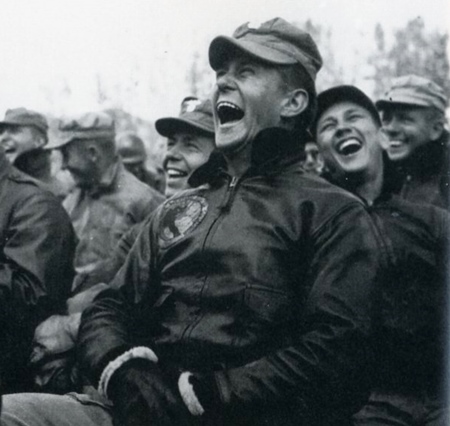
Just check out this soldier’s response to Hope’s performance in Seoul, Korea in October 1950.
But it wasn’t only able-bodied troops he entertained; Hope and his celebrity pals toured hospitals to encourage those who had been injured. He and Marilyn Maxwell spent time with Marine PFC Howard Wells in the Tokyo General Hospital.
As decades passed, Bob Hope specials were a veritable who’s who of stars. But no matter the rise and fall of his cohorts, Hope was the one constant.
With Jerry Colonna as Santa, Hope made fun of his “road to” movies in Vietnam. By then, Hope was such a well-known actor that his familiar presence was a comfort to those who’d grown up watching him.
I recall watching Bob Hope specials as a child, much like the one below from 1983.
Aging didn’t slow Hope down. During the Christmas of 1990, Hope toured the Persian Gulf with his signature stamina. If you recall, this is a man who lived to see his 100th birthday.
Throughout his 50 years of service, Hope lived up to his name, giving hope to those brave soldiers who fought to keep us free. God bless you, Bob Hope.
All images from Coffey’s “Always Home” unless otherwise specified
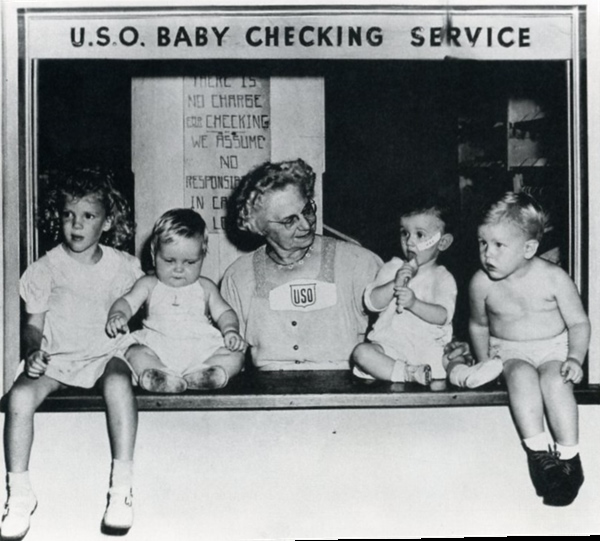
Soldiers on leave could check their children with this woman (at a somewhat precarious-looking early day care) to enjoy a night out with the wife.
Below is the YWCA Honolulu building Service Women’s Lounge for women serving in the war.
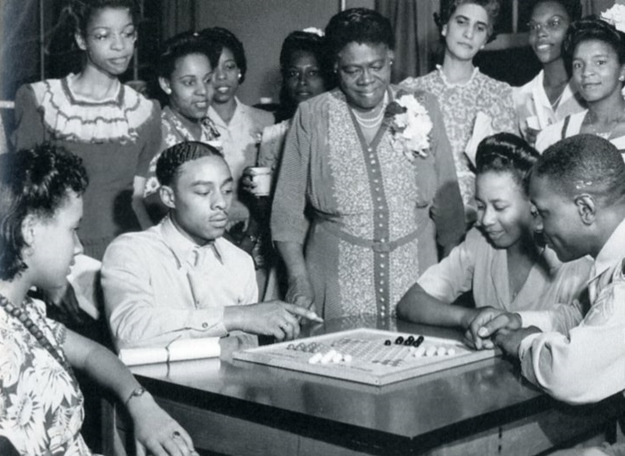
Among these nattily-dressed women is Mary McLeod Bethune, president of the National Council of Negro Women. She is supervising a USO game of Chinese checkers.
Soon, celebrities would begin to entertain the troops. The first was Joe E. Brown, whom you may recall from last month’s post, Ripped At Sixty. He was the first Hollywood star to tour front-line bases, including Alaska and the Aleutians in 1942. Sadly, that same year, his own son was lost when his A-20 Havoc crashed during pilot training.
Here Joe signs a bomb.
flashbak.com
Brown was one of only two civilians to be awarded the Bronze Star in WWII. But by far, the name most connected with the USO was Bob Hope, whom we’ll spotlight tomorrow.
With its clubs and other activities, the USO not only served the needs of America’s men and women in uniform, bu also provided an effective means of channeling civilian volunteer efforts. By the war’s end in 1945, over 1.5 million Americans had contributed their time to the USO. — Always Home:50 Years of the USO
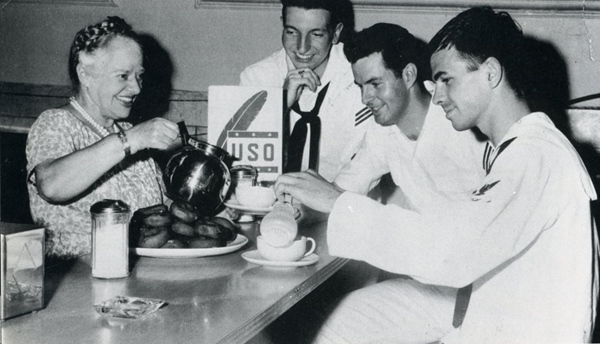
It felt good to provide a service to those who served in the war. These Navymen are enjoying coffee and doughnuts at the San Francisco USO.
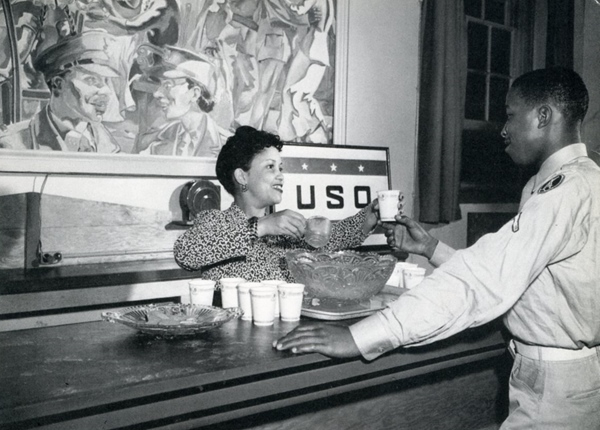
Pictured above, Mrs. Alfred Scott serves punch to a soldier in July 1943 at the Phyllis Wheatley YWCA USO.
The USO (United Service Organization) was formed 75 years ago, in February of 1941, a full ten months before the USA entered WWII. Under the shadow of Nazi aggression, the US government instated the first peacetime draft in its history. Mobilizing thousands of young men, most of whom had never left the country, proved daunting. President Franklin D. Roosevelt wanted a way to keep servicemen in touch with civilian life. Six organizations–the YMCA, the YWCA, National Catholic Community Board, National Jewish Welfare Board, the Travelers’ Aid Association, and Salvation Army–pooled their resources to form the USO.
Roosevelt insisted that these organizations handle the on-leave recreation of these men. On February 4, 1941, the USO was incorporated in New York State. Under the leadership of Chairman Thomas Dewey (yes, THAT Dewey), by the end of the year, they had raised $16 million. In 1942, Dewey ran for governor of New York, and was replaced by Prescott Bush, the father of Bush 41. He contributed greatly to the organization, and soon USO centers dotted the country at bus and railroad terminals as well as training centers.
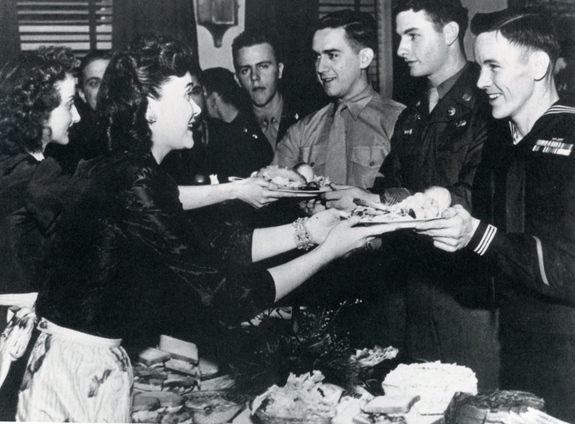
Sometimes a smile and hot meal were enough to make a soldier feel appreciated.
This image from a USO on the French Riviera lists many of the services offered to men in the armed forces.
Stay tuned for the next installment of this USO series. I can’t wait to share the images!








 Well, American soldiers are still in the Middle East, but Bob Hope is no longer with us. However, we shall never forget the years of dedication and contribution that he gave to our men and women of the armed services.







 I Don't Get It