
When The Hallmark Movie Is A Rerun

Van Wyck Expressway, Queens, NY, early 50s
Boeing 377 Stratocruiser: “A circular staircase led to a lower-deck beverage lounge, and flight attendants prepared hot meals for 50 to 100 people in a state-of-the-art gallery.”

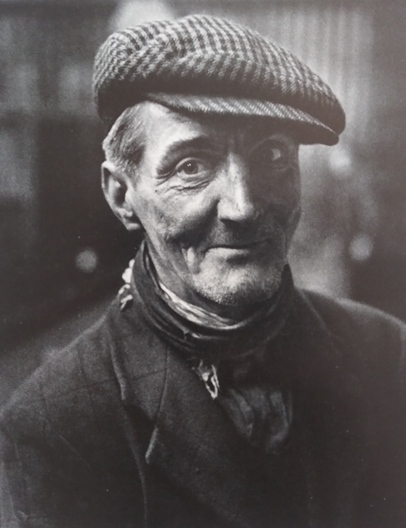
Yesterday we visited Yorkshire coalminers sipping pints in a colliery club. Today we visit them on the job. Above is a coalminer from Durham, England in 1952.
The miner with the buoyant tresses is named Dixen Bell, and he’s 300 feet down in the mine.
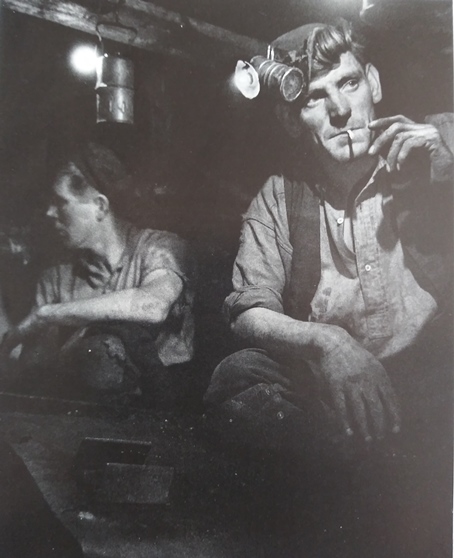
These snug fellows are working 19 inch narrow seams.

It’s hard to believe those conditions were better than those of the 1890s, such as the East Pool Mine below. Does any of that look stable?

The men of Dolcoath Mine evidently weren’t claustrophobic.
 How nice it must have been to finally emerge into fresh air!


The coalminers above are relaxing with pints in a colliery club in Yorkshire, England. Colliery is a word I’ve never used, so I had to pull out my big, red Webster’s dictionary (no offense to Merriam) and look it up. A colliery is a coal mine and all the buildings and equipment which are connected with it. This building in particular served ale. And I couldn’t help but find the resemblance of this man (and his collapsed smirk) to a certain mid-century actor.
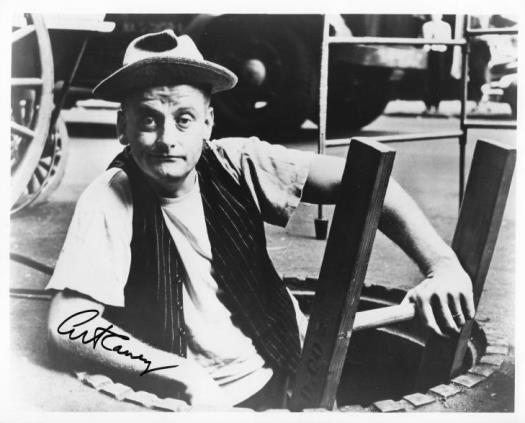
Do you see it? NORTON!
Ed Norton liked a good drink.

Enjoy this peek inside the post-war colliery and think about these men, how exhausted they must have been, lungs full of coal dust, and how they gathered to blow off steam.

Per the late Dominick Dunne (who took this picture), Natalie Wood (with whom he often supped at Hollywood parties) had the habit of reapplying lipstick after dinner, using the blade of her knife as a mirror.

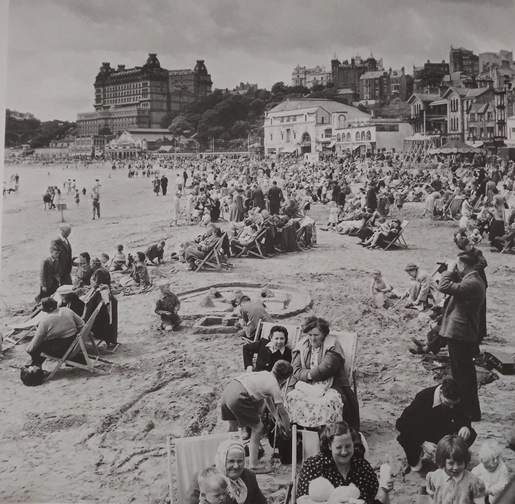
On The South Bay Beach, 1952, Thurston Hopkins
At this point, WWII was in the books, and the era of photography had changed as well. More formal portraiture had made way for commonplace settings, examining the ordinary, such as these folks at the beach.
I can’t say that personally, I’ve ever seen people wearing winter clothes to a beach, much less a business suit. Even the children building sandcastles are wearing long-sleeved, button-down shirts. I guess the day was made more for being outdoors than for a brisk swim. I love these expressive matronly faces, but I also wonder if it was hard to procure sunglasses at the time. Surely, they could have used some!
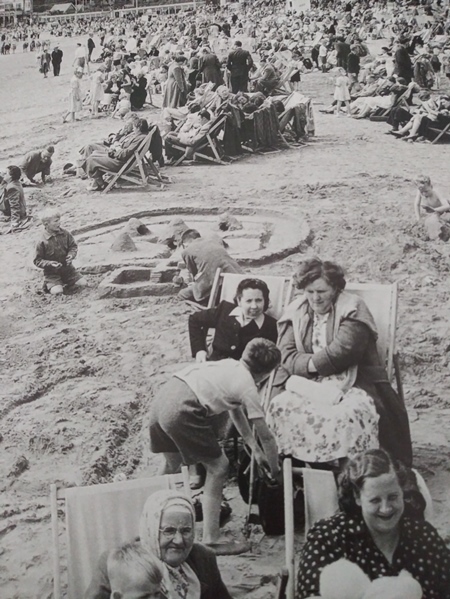
In the background lies the luxury hotel called The Grand. When it opened in 1867, it was the largest hotel and the largest brick structure in all of Europe! Now, to the Americans, that’s ancient. But over there, I suppose 1867 was just a couple blinks ago–and it certainly doesn’t conjure up memories of a post-Civil War era for them.

Myself, I don’t care for hotels–for the midnight slamming doors, kids running up and down halls, the thin walls, the questionable cleanliness (especially the bed quilts), the half-ply toilet paper, the items I have found on carpet, including both metal tacks and bullets at a certain Hyatt. But I can appreciate the architecture. And while this hotel has faced all kinds of health issues, from cases of gastroenteritis to Norwalk virus to dangerous levels of bleach in the water, the most interesting tidbit is as follows:
In September 2006, the management installed extra netting and spikes on the exterior of the building to deter nesting seagulls. The birds, which are regarded as a nuisance in parts of the town, had been disturbing guests with mating calls. Their droppings were also responsible for a significant proportion of the hotel’s cleaning expenses. (Scarborough Evening News)
“He produced a handkerchief—crisply folded—and handed it to her. She took it with silent astonishment. She’d never before known anyone who carried a handkerchief.”
― City of Bones (2007)
A handkerchief. It does seem a romantic (however outdated) notion, as far being used for anything under than a natty pocket square. And should a damsel have the need for dabbing her tears, a clean handkerchief might come in hand.
However, the reality is less romantic.
“Nothing, however, bemused the Indians more than the European habit of blowing their noses into a fine handkerchief, folding it carefully, and placing it back in their pockets as if it were a treasured memento.” ― At Home: A Short History of Private Life
Surely we can all agree on that. I believe that my grandfather carried a handkerchief on his person, but he was also known to sneeze 7 to 8 times in a row. As a child, that was one tradition we could always expect at Christmas: to count grandpa’s sneezes as he went along.
Today, as Cassandra Clare, pointed out, almost no one uses them for blow, but merely for show. We live in a disposable world full of affordable soft Kleenex; I have a box within reach right now, as well as in four other rooms in our home.
Growing up in Austin during Willie Nelson’s outlaw years, my first introduction to handkerchiefs was the classic red paisley one he wore as a bandana, and which you still often find gathered around a blue heeler’s neck in the country. But in their day, handkerchiefs were more than just a square for hygienic purposes. They also served as art.
So today, I share some images from “Handkerchiefs: Volume 2.” We start with one fit to hand a lass in need.
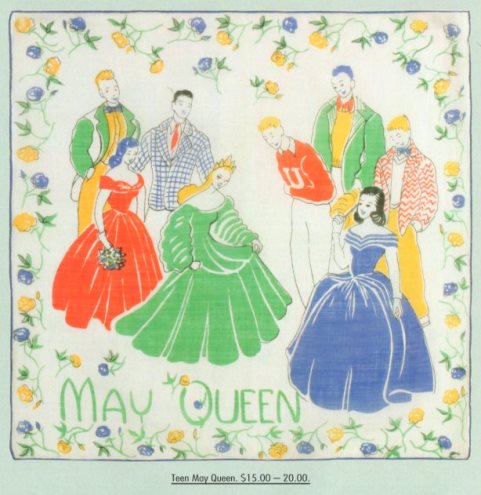
This one’s in French!
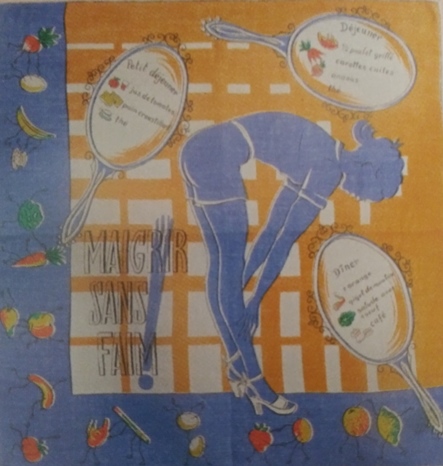
Some were geared toward hobbies.
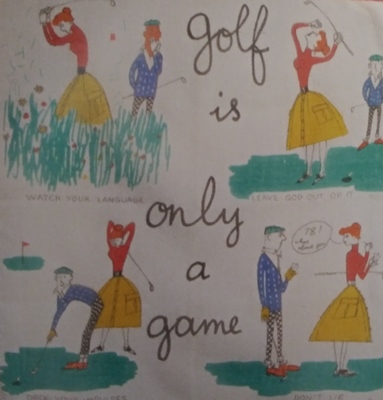
Or motivation.
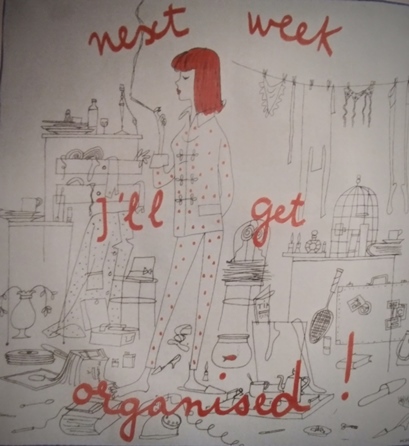
Animals of all kinds made the grade.
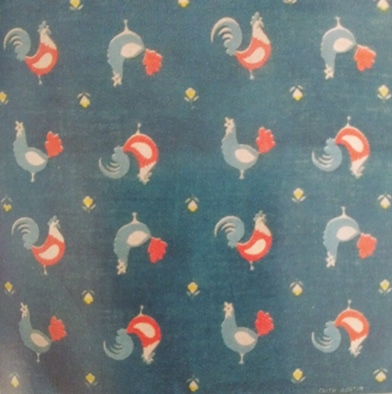
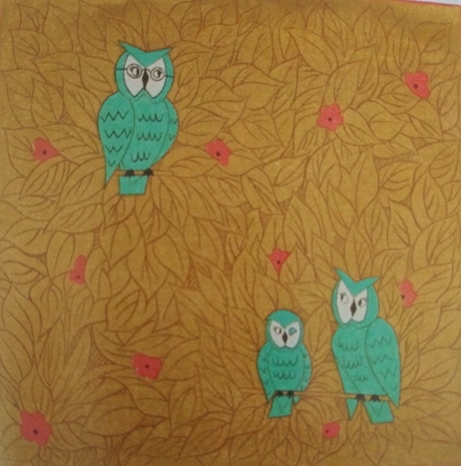


Even our amphibian friends!

The cotton served as canvas for all sorts of swinging scenes.


And some were downright detailed. This might have even served as a Father’s Day gift. Don’t forget: it’s this Sunday!
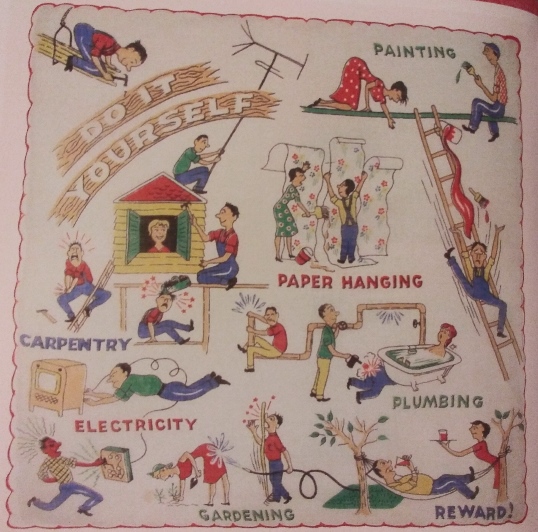

And sometimes, you get a helpmeet! (yep, that’s a word)

While I admit that Sophia Loren is a beautiful woman (no question), this image doesn’t sit well with me. It’s not just the fact that the hair is reminiscent of Klute hair (go Google that on your own time); it’s that this photo is credited as being taken in 1960. It doesn’t seem consistent with the moment. Think of Marilyn Monroe in 1960. This was not the style. Plus, it’s ew.
The classic Sophia has voluminous dark hair and thick eyeliner and a bosom for days.

If she’s supposed to be dressed in day-laboring peasant clothes, we’re not buying it. Her stare is regal, almost confrontational. Her skin is supple and dark, her posture solid.
Early blond bleach job Sophia is lovely (and ever-voluptuous), but nearly unrecognizable.

The internet is full of Sophia images with her arms raised, hairy armpits on display. Is that the Italian way? I’ll spare you those, as well as the classic Jayne Mansfield side-eye.
So instead, I’ll leave you with this playful one.

And this chiropractor’s nightmare.
Or fantasy, depending on your perspective.

We’ve all seen the celebs walk the red carpet, then pause to give this look.
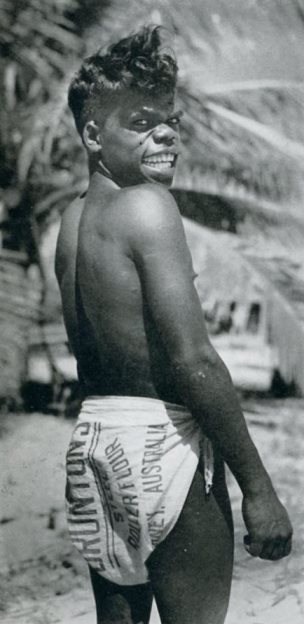
Granted, they weren’t wearing a calico flour sack like Nemukwunga the Umbakumban. Aborigines living in Groote Eylandt used the sacks as loincloths when modesty was forced upon them. But who could blame them? Flour sacks used to come in all kinds of fun prints!
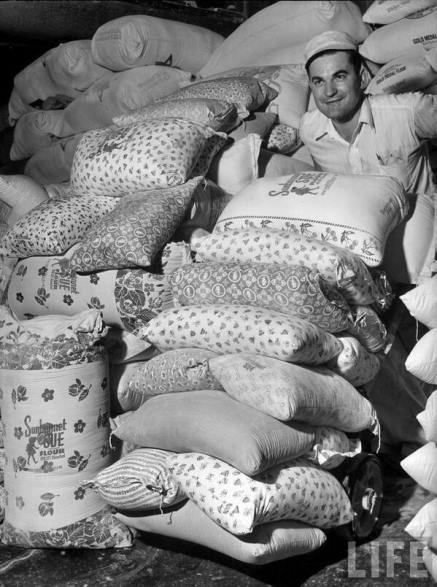
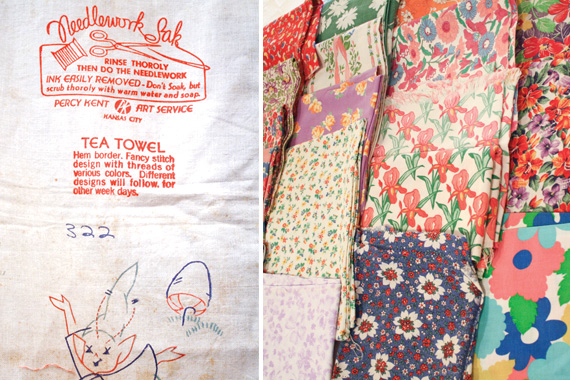
During the lean years of the Depression, folks would re-purpose the sacks into dresses, shirts, and tea towels.
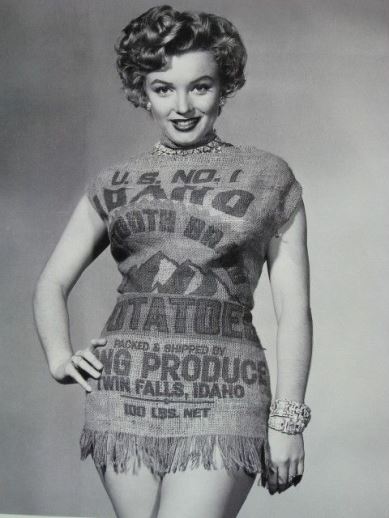
Of course, some people wear sacks better than others.
And how about those shoes, ladies? I assume the men don’t see them.
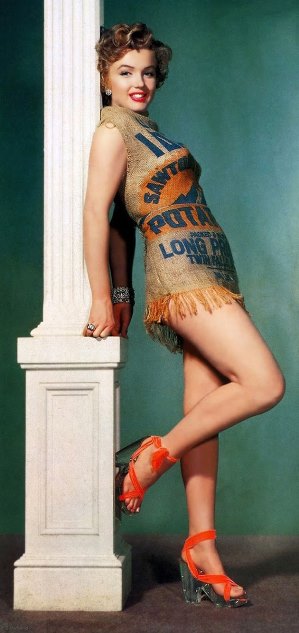
Fabulous.
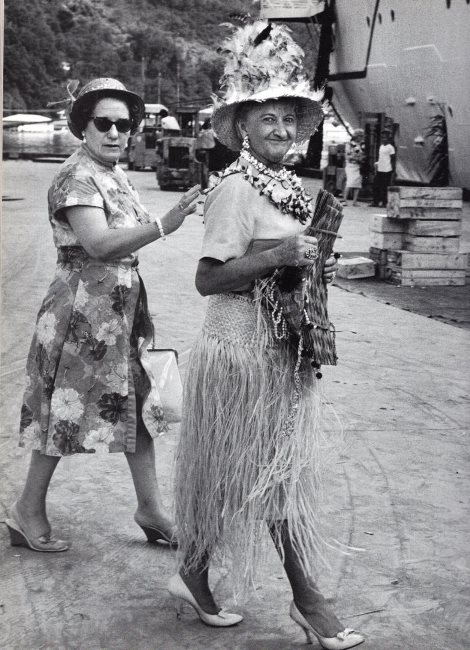
I didn’t even know we had a territory in Samoa, but that’s not surprising, is it? We even have a flag there, a mish-mash of Samoan/USA colors, but it’s odd, truth be told.
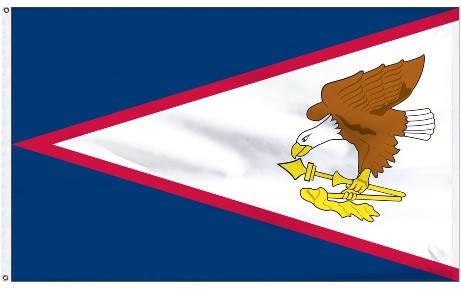
It looks like a cheap decal or a page in a first grade coloring book. I get the symbolism of the bald eagle (he looks determined), but as to why he’s clutching a war club and fly-whisk, you got me. They’ve kept this flag longer than I’ve been alive, so I guess it’s all good over there.
The population is about the size of my Austin-suburb city, so surely they have a Starbuck’s and a TJ Maxx and all that’s needed in life. As usual, it makes me want to bust out with songs from “South Pacific.” Isn’t it lovely?

 I Don't Get It