
Live More Happily


On the set of East of Eden, Burl Ives and James Dean demonstrate their skills on the bagpipe and recorder, a daring combination. Actually, Ives isn’t playing the bagpipes because he’s too busy smoking a pipe and looking at Dean like maybe he ought to teach him to button his shirt all the way up but what’s the point because Dean is going to go and get himself killed in a car crash the same year the movie is released (1955)so who cares about his shirt anyway?
By the way, Dean’s nomination for Best Actor in a Leading Role was the first official posthumous acting nomination in Academy Awards history. Ives actually lived another 40 years after the movie was released, eventually dying from oral cancer caused from…smoking pipes, you guessed it.

Even from this side view, you can imagine what a target the sun makes on his back. It says, “Check out Mr. Snazzy.” No bully would dare shove him in a locker.
Today’s designers could never compete with Wally’s smooth graphic Spirograph shirt of yore. So they resort to comedy.

Look! It’s a cat inside an Aztec sun, shooting lasers out of its eyes, which makes it Caturday. What? Maybe you have to be stoned to get it.
Or they abandon the Aztec sun to reflect something vaguely spiritual and Native American, like this sun/moon/horn/dreamcatcher tee on a trendily-tatted twentysomething. Now we know where she stores her rubberbands.

Wait, those are bracelets.
Now these boxers are pretty cute. I have to hand it to them. Cartoon suns keep it light.
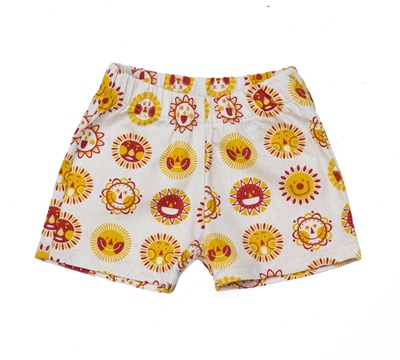
Just remember–boxers are temporary: tattoos are forever. Even the tattoo seems steamed about it.

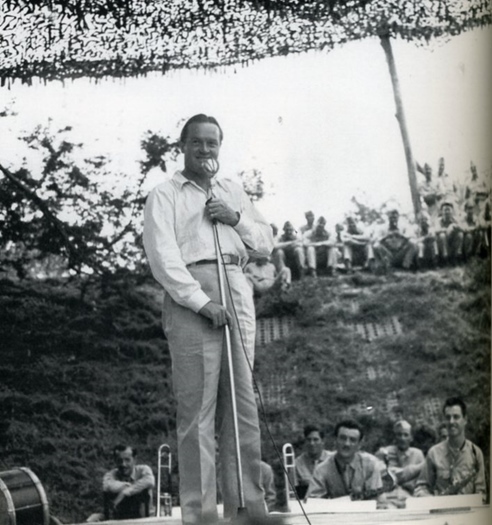
Today we look at the face of the USO, Bob Hope. Back in 1991, on the 50th anniversary of the USO, he penned this letter.
 Well, American soldiers are still in the Middle East, but Bob Hope is no longer with us. However, we shall never forget the years of dedication and contribution that he gave to our men and women of the armed services.
Though his first USO trip was in 1942, his first combat-zone tour was the following year when he visited troops in North Africa. From there, he toured Italy. While in Palermo, the Germans staged an air raid on a target next to his hotel. He realized it was better to bomb on stage than to be bombed from above. General Patton suggested Hope and his group, including Frances Langford and Jerry Colonna, go to Algiers for their own safety.
One of his signature jokes ran, “You remember World War II–it was in all the papers.”
But Hope didn’t quit when WWII was won. In the following decade, he entertained troops in the Korean War.

Just check out this soldier’s response to Hope’s performance in Seoul, Korea in October 1950.
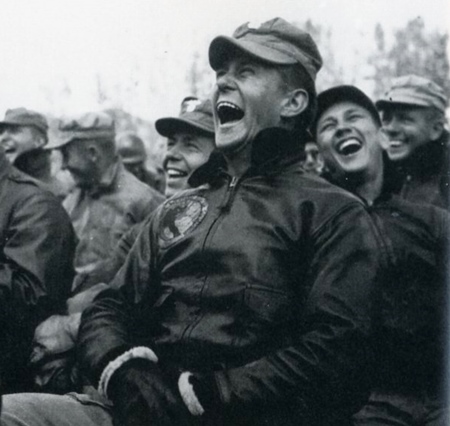
But it wasn’t only able-bodied troops he entertained; Hope and his celebrity pals toured hospitals to encourage those who had been injured. He and Marilyn Maxwell spent time with Marine PFC Howard Wells in the Tokyo General Hospital.

As decades passed, Bob Hope specials were a veritable who’s who of stars. But no matter the rise and fall of his cohorts, Hope was the one constant.
With Jerry Colonna as Santa, Hope made fun of his “road to” movies in Vietnam. By then, Hope was such a well-known actor that his familiar presence was a comfort to those who’d grown up watching him.

I recall watching Bob Hope specials as a child, much like the one below from 1983.

Aging didn’t slow Hope down. During the Christmas of 1990, Hope toured the Persian Gulf with his signature stamina. If you recall, this is a man who lived to see his 100th birthday.
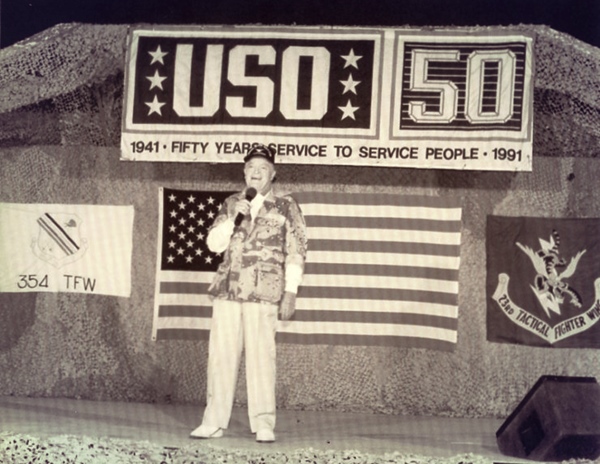
Throughout his 50 years of service, Hope lived up to his name, giving hope to those brave soldiers who fought to keep us free. God bless you, Bob Hope.
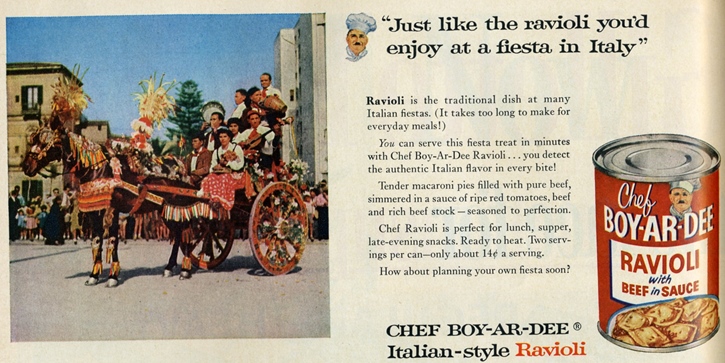

I don’t know about you, but when I eat ravioli, I don my Italian sombrero and play a round of Italian music with my maracas.


Come on. White men can jump would have been too easy. I dated a guy in college who was very proud of his vertical; he could high-five popcorn ceilings like nobody’s business. But he had nothing on this coach, who seems to have jumped up to groin level with the nearby player. Assistant varsity coach Bill Henneberry looks about 20 years old, not much older than the students at San Francisco’s Sacred Heart High School. And that’s part of why he made it happen.
According to jumpshigher.com,
If you’re between 17 and 30 and in a somewhat fitter than average population, here are some numbers to shoot for.
Average Vertical Leap of NCAA Div. 1 Football player: 29-31 inches.
Average Vertical Leap of NCAA Div. 1 Basketball player: 27-30 inchesMeanwhile, Michael Jordan had a reported 48″ vertical, but that’s still short of the amazing Kadour Ziani, the world record holder at 60″ vertical (though a lot of places say 56″).
Now maybe you’re not fit or between 17 and 30, but coach Henneberry was. Just look at this lift.
 That’s some enthusiasm over blocking an extra point kick.

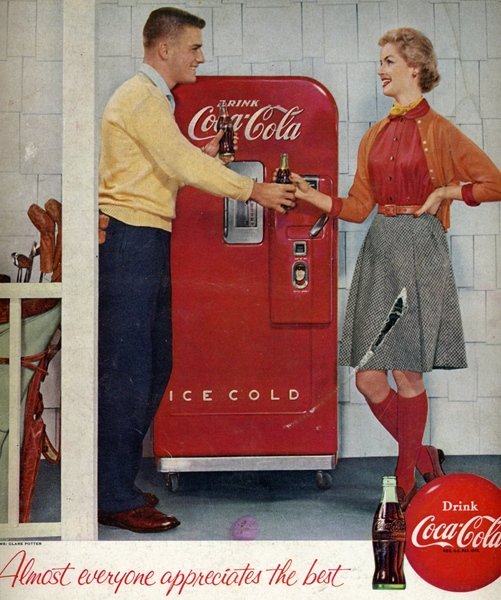

Actually, it was during this very year of 1955 that Coca-Cola expanded its packaging from the standard 6.5-ounce contour bottle to include 10-, 12- and 26-ounce contour bottles in the U.S., giving consumers packaging options to meet their needs. My need for a Coke would never be 6.5. That’s like going to a Mexican restaurant and eating one chip with salsa.
This pinterest pic is trying to make the point that Coke adds belly fat.

I drink Coke. I have belly fat. But I also have no discipline and an overpowering sweet tooth, coupled with an inability to disobey Sprite Boy (who was only used in Coke ads, and had been discontinued by the time Sprite came on the market in 1961).
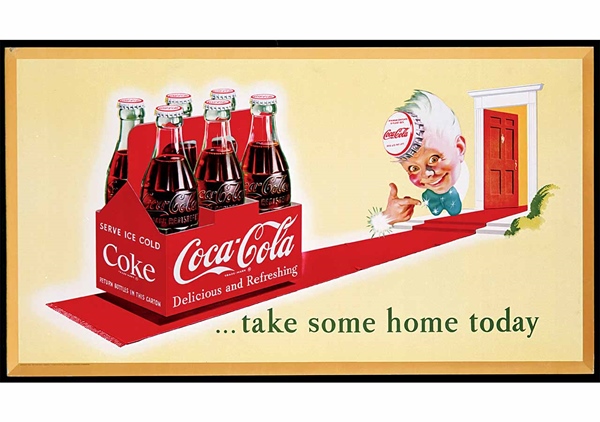
So guess what? I’m taking some home today.
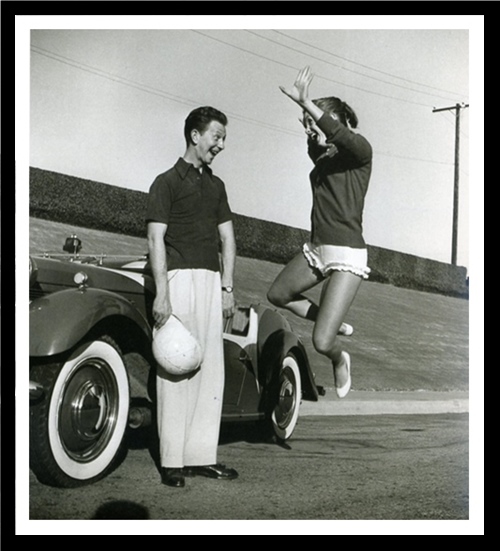
Here they are, goofing around on I Love Melvin…

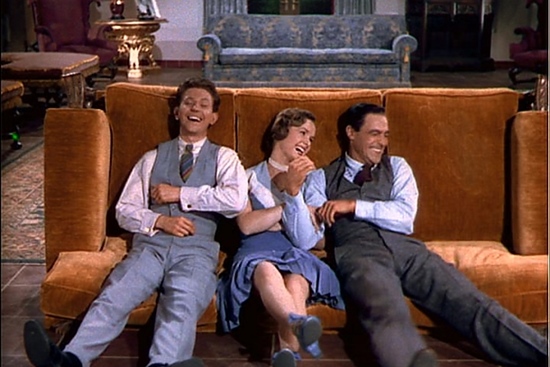
…and laughing with Gene Kelly (whose birthday was yesterday) on the classic Singin’ In The Rain…
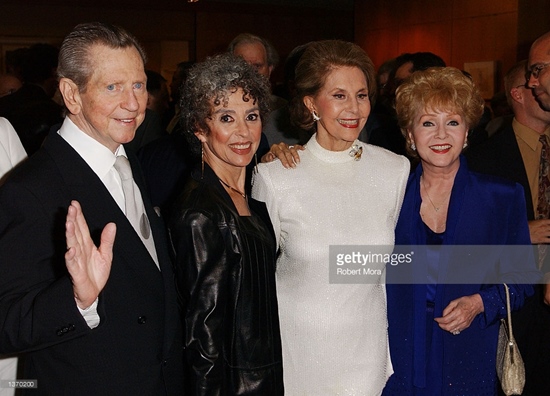
…and 50 years later at the anniversary of the movie, with Rita Moreno and Cyd Charisse.
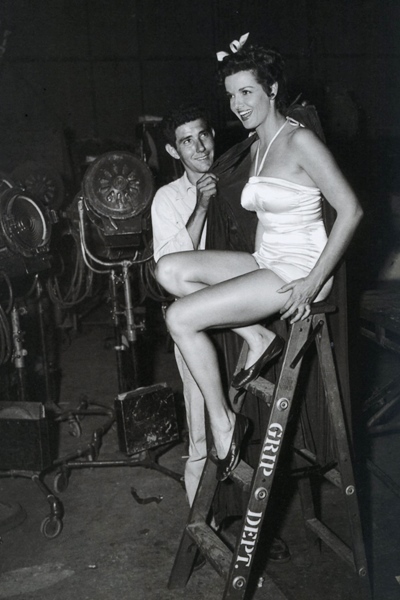
According to gorillafilmonline.com, the grip is the person in charge of setting up equipment to support the camera, and on some sets, support lighting equipment (but not the actual lights. Never touch the actual lights). It’s a physically demanding job where experience is invaluable.
The grips set up all the rigging which allow the camera to move about within a set in a way that captures the shot as the director wants it, so this can involve working on camera dollies, cranes, tracks and other camera setups. When a grip does his job well, the camera movement through the scenes will be seamless, so much so that you don’t even think about it, meaning you don’t think about the grips.
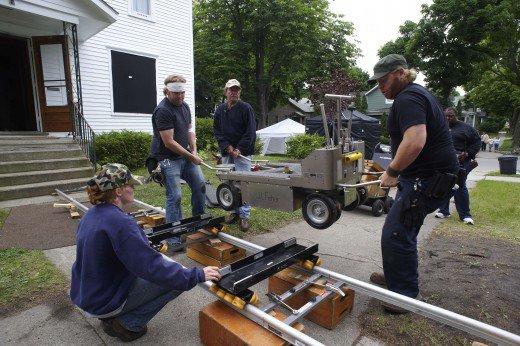
The grips below are moving a camera dolly onto a track. I hope they have a chiropractor on set. Or at least a masseuse and a couple ice packs.
Reelrundown.com states that the term “grip ” dates from the days of silent movies when cameras were hand-cranked. The cranking action would make the camera wobble, and so the camera operator would call for anyone with a “good grip” to grab the camera tripod legs and physically steady the camera.

 I Don't Get It