Rare is the moment I get a yearbook pic without documenting the source. All I know about this source is that it was mid-60s and probably in Texas. In any event, I love the font on the Cork Room sign above. What I don’t get is why the other sign appears to say DROGS, not DRUGS.
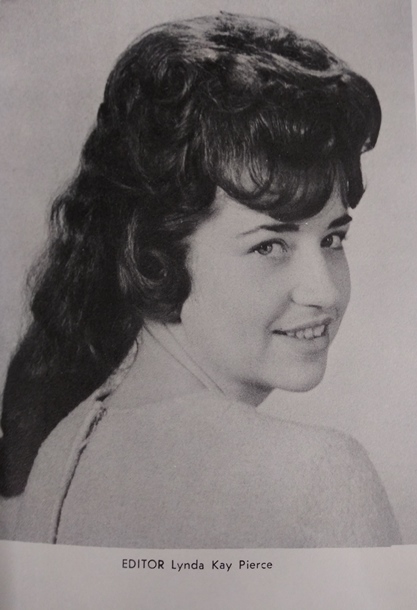
But it wasn’t drugs that made this ‘do. Only black magic and sorcery could have enabled Lynda to achieve these “Kentucky Waterfall” tresses. Lynda shoots and scores on volume!
This last one looks shows an era-specific soundboard with a not-so era-specific blond haircut. Must have seemed cutting edge at the time.
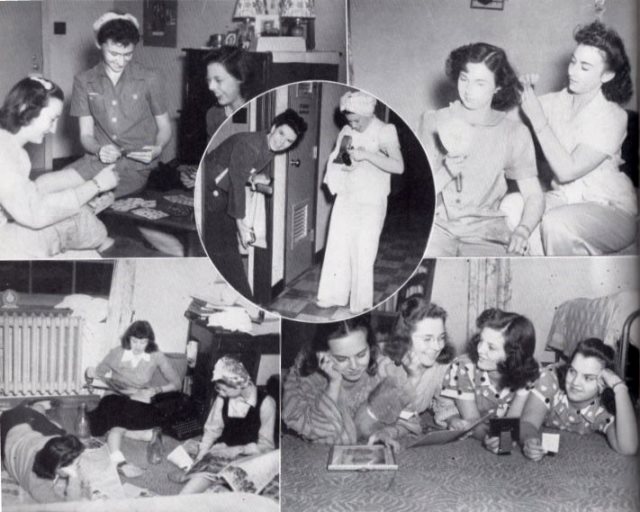
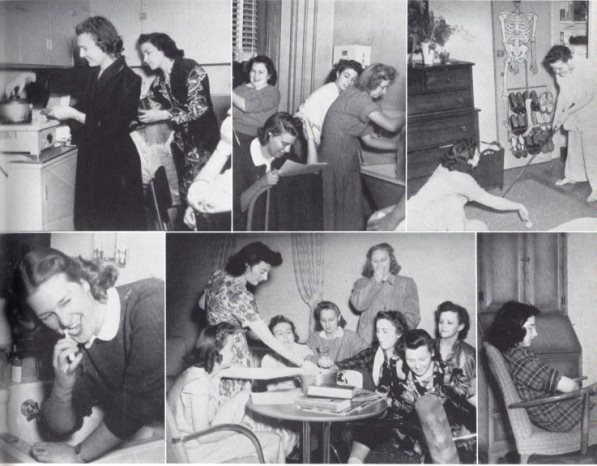
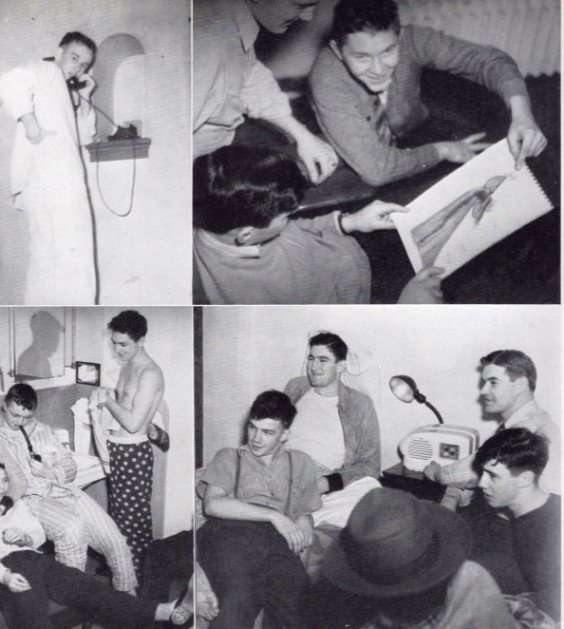
This is how I imagine it feels to be on a dating site, trying to find matches. The actual explanation goes as such:
A picnic at the California Alligator Farm in the 1920s, located in the Lincoln Heights neighborhood of Los Angeles between 1907 and 1953. The farm had 20 ponds for the trained alligators where patrons could mingle freely with them. Visitors were told not to “throw stones at the alligators, spit on, punch or molest them in any way.”
Every year in the United States, over 300,000 people with appendicitis have their appendix surgically removed. While over 11 million cases are reported annually, deaths lie somewhere around 50,000. Still seems like a huge number and a bad way to go, right? The percentage of deaths was much higher before this fabulously-stached bald man in the middle, Charles McBurney, came up with what is called “McBurney’s Incision.” Rather than cutting through the abdominal walls, he made a diagonal incision that split the appendix to expose it.
In this 1900 pic, the surgeon is assisted by both staff and students. No surgical or scrub caps here. But at least most of them are wearing gloves! The interwebs says only 7-14% of us will ever have appendicitis. Personally, I don’t know anyone who has had it (or at least made mention of it). What about you? Do you have your appendix? Have you lost anything else? Some wisdom teeth? I got rid of my tonsils at age 22.
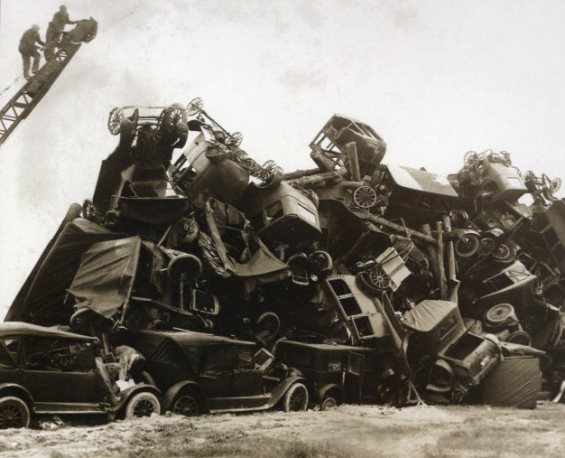
90 years ago, the US was already overrun with 40 million cars (ompare that to the 276 million registered vehicles today). Many of those were on their last leg. Chicago car dealers promoted Used Car Week by stacking jalopies nearly 50 feet high on an island in Lake Michigan, where they torched them. 100,000 folks gathered to watch the flames of 200 cars fill the air.
I don’t know if you’ve ever smelled one of these, but they don’t smell pleasant.
I got a new yearbook today, y’all. It’s a 1955 University of Miami. This shot was taken from UM’s 124 piece member band trip to El Salvador. It captures the response of El Salvadorans as the UM band helped celebrate the nation’s independence as “ambassadors of goodwill.”
This yearbook is RIPE, though, y’all. Frankly, I wouldn’t be surprised if you can smell the stale cigarette smoke wafting off the pages of this thing. It made my pants reak, just touching my lap. I think she can smell it.
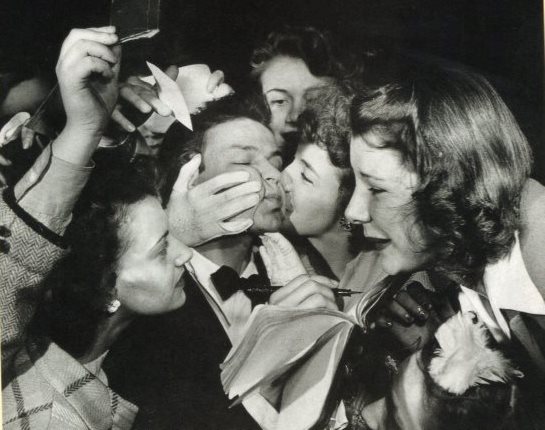
Ladies use to LOSE THEIR MINDS over Frank Sinatra back when Old Blue Eyes was a lithe young crooner. Swooning bobby-soxers did not concern themselves with invading his personal space, as you can see in this 1943 image. I can’t imagine interrupting a celebrity to ask for an autograph or a selfie; I find that incredibly tacky and self-serving. So the thought of planting a kiss on The Chairman of the Board, basically attacking his face, disturbs me.
Dept of Health & Human Services, Susan Langenhennig
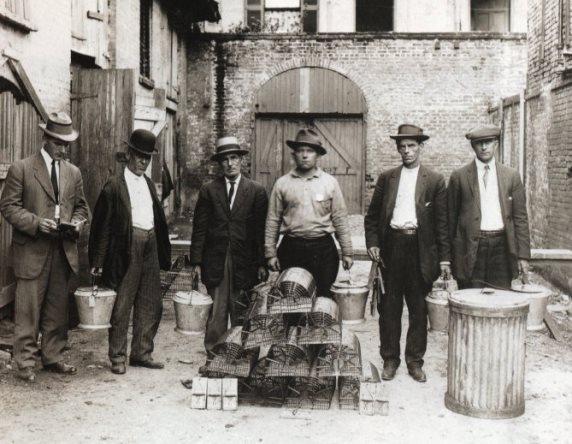
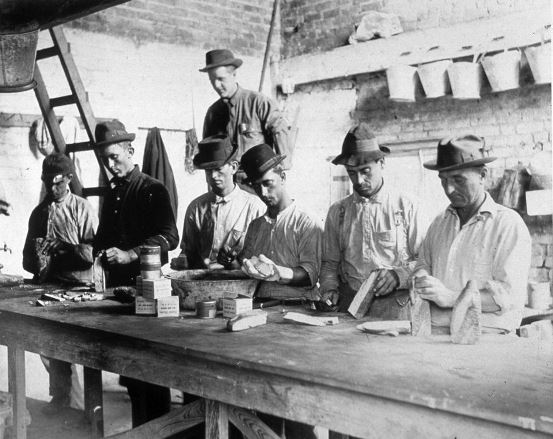
1914, New Orleans. The Public Health Service, created in 1902, helped suppress an outbreak of bubonic plague by mobilizing this team of rat-catchers to eradicate the filthy beasts which spread the disease. Seems like backbreaking work to me, one that would not necessitate a hat and tie.
Per nola.com,
An army of 380 workers swept across the city to carry out the campaign. In a single week, they inspected 6,500 railcars and 4,200 buildings, fumigated 101 ships, trapped 20,000 rodents, laid nearly 300,000 poison baits and discovered 17 infected rats.
Using good scientific protocols, workers recorded data for each trapped rat, and when a laboratory analysis identified an infected specimen, its point of origin was subjected to a scorched-earth campaign of fumigation, burning, and in some cases, complete leveling.. Tactics like these went on daily, citywide, for months.
Ground Zero in the geography of rats proved to be the Stuyvesant Docks, where that first infected specimen had been found two years earlier. Here, mechanical conveyors transferred Midwestern grain among railroad cars, ships and elevators. Coupled with the warm fresh water of the nearby Mississippi River and ample nesting opportunities, the Stuyvesant elevators were a veritable rat nirvana. The campaign made them into a rat graveyard.
Susan Langenhennig, workers preparing rat poison
Death to the Black Death!
Bonus rat fun fact: Cagney never actually said, “You dirty rat.”















 I Don't Get It