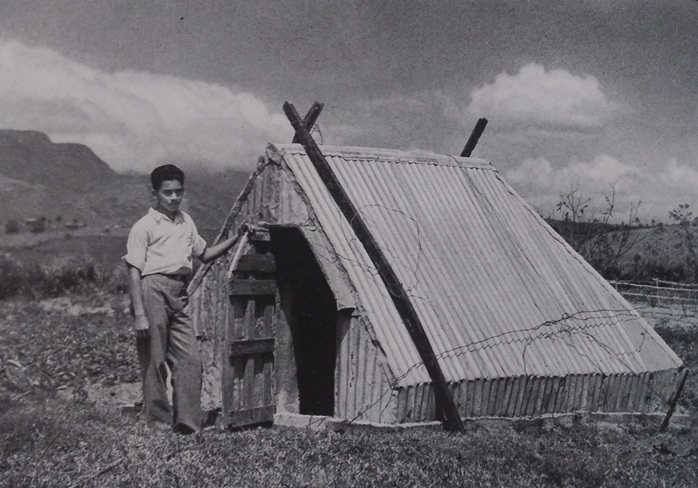
Sure, it looks ragtag and uncomfortable. But this 1939 stout shelter provided great protection from hurricane winds. Located near Caguas, the corrugated iron roof was secured with wire and crossed railroad ties to anchor it down.
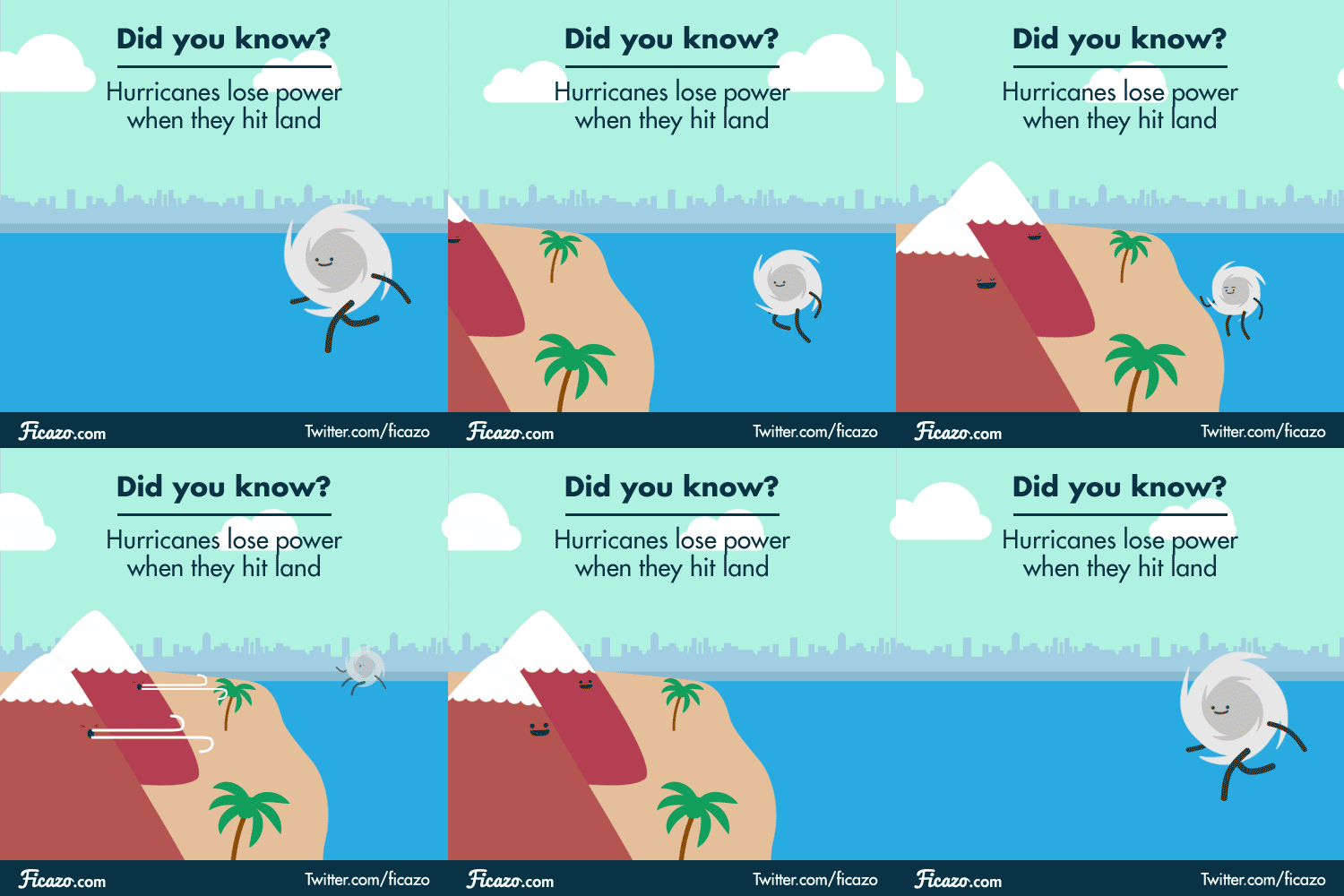
Sure, it looks ragtag and uncomfortable. But this 1939 stout shelter provided great protection from hurricane winds. Located near Caguas, the corrugated iron roof was secured with wire and crossed railroad ties to anchor it down.
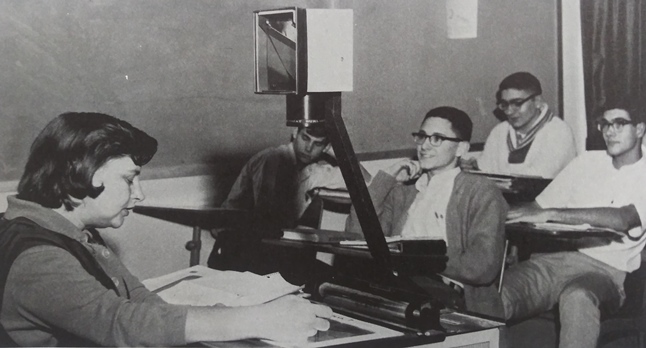
Ah, 1965. Overhead projectors and horn-rimmed (NOT “horn rim”) glasses graced every classroom. And even then, the rims were not made of actual horn or tortoiseshell, but of plastic. All the better to see you with, my dear.
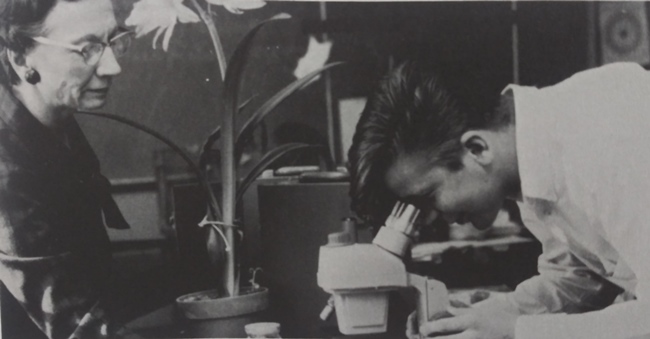
Some technology was old-school, like this microscope being used by a lad with a healthy head of Elvisian locks.
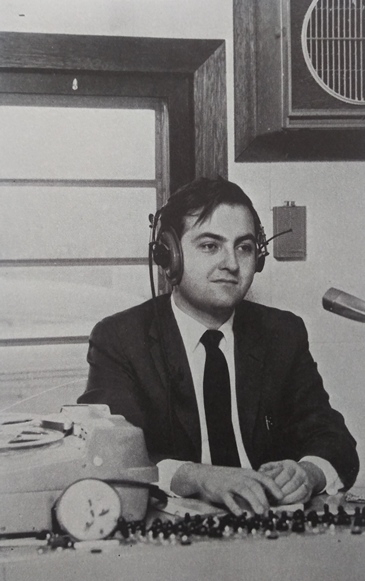
But new advancements had been made for this first year of German language lab. Bonus points if you can tell me what all those little chess-piece-looking things are.
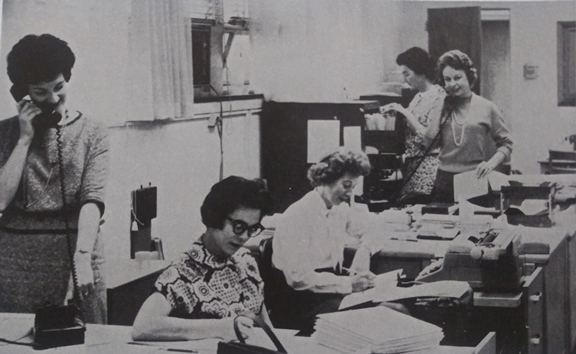
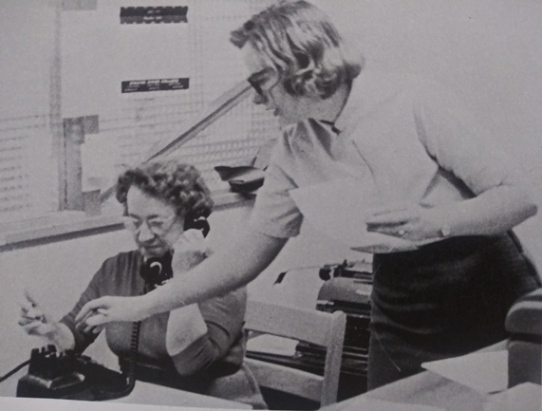
Corded phones were still the only choice for office secretaries.
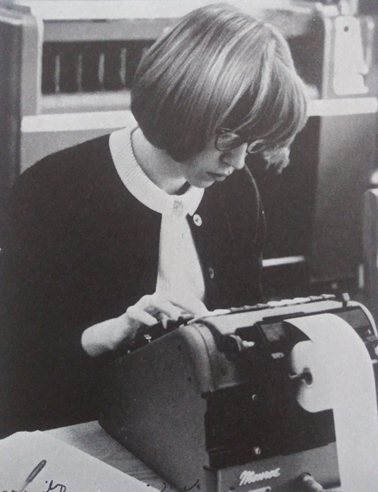
And there was this thing for numbers. Watch those bangs, sister.
Home Ec was called “industrial arts” at this particular high school.
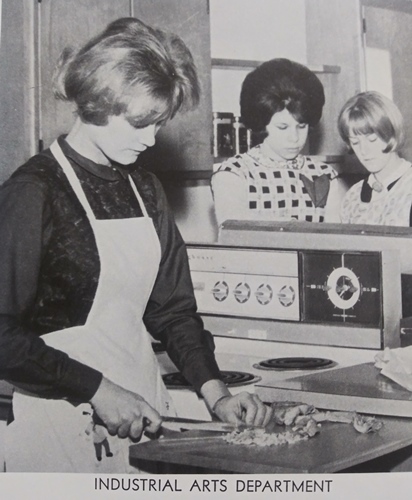
While what we term regular “art” was still funded and practiced. Swell job, Peg!
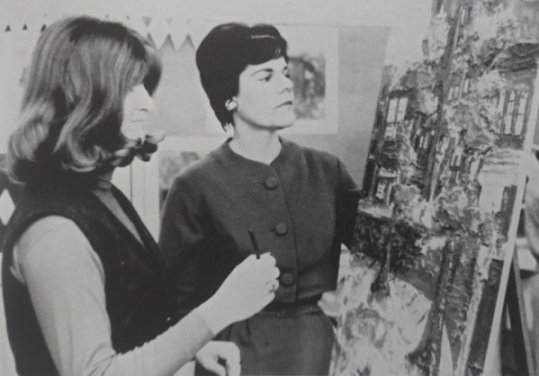
Shop was called “Distributive Education.”
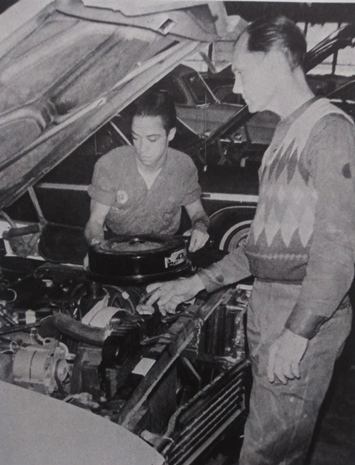
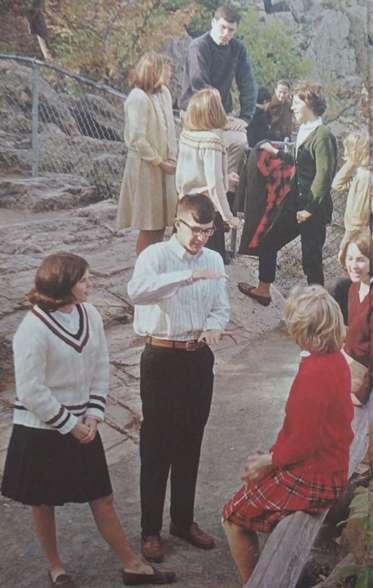
This was called “horseplay” and not cause for litigation.
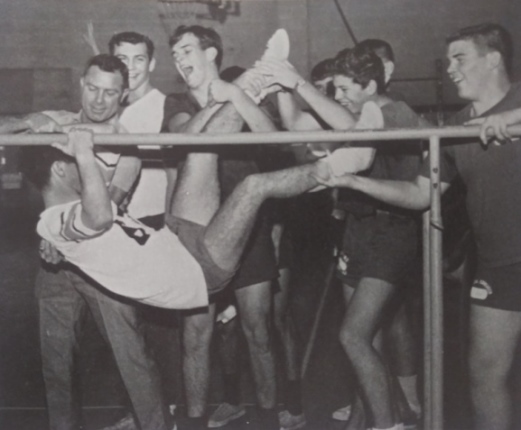
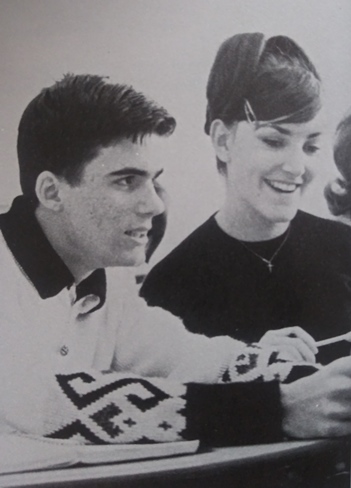
Flirting was alive and well.
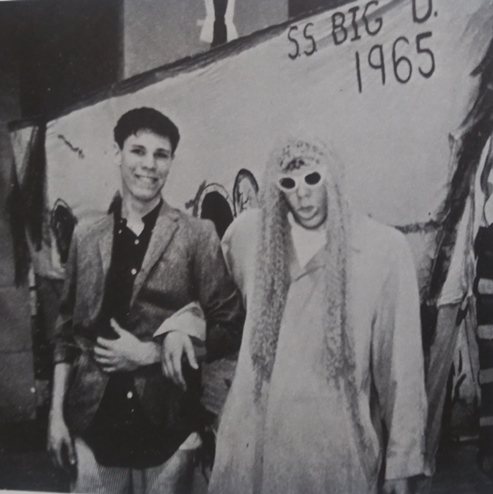
And teen silliness prevailed at the Junior-Senior Dance. What a lovely pair!
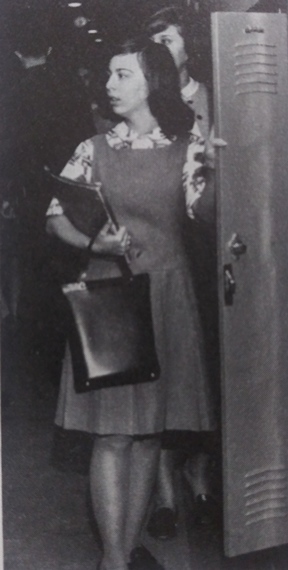
Now if I could only remember my locker combination…
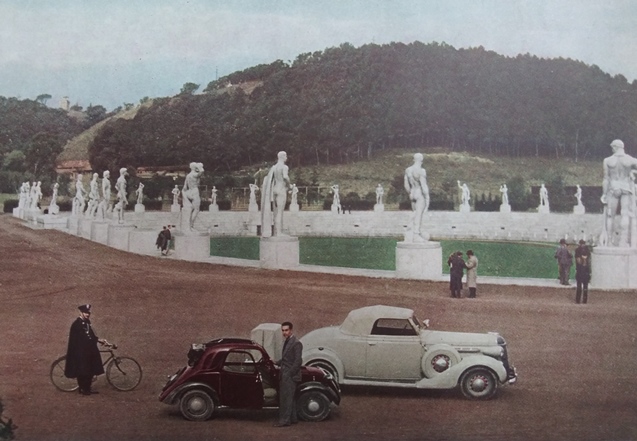
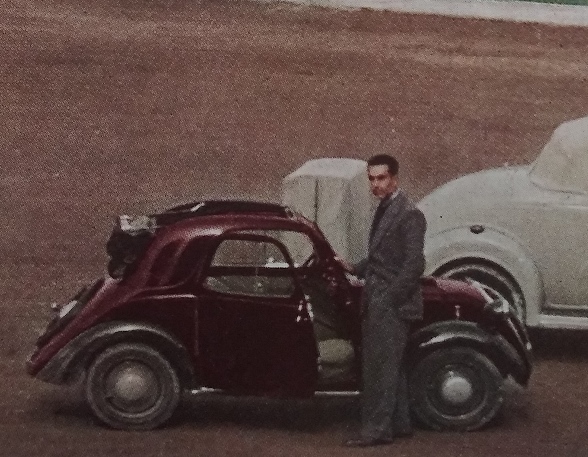
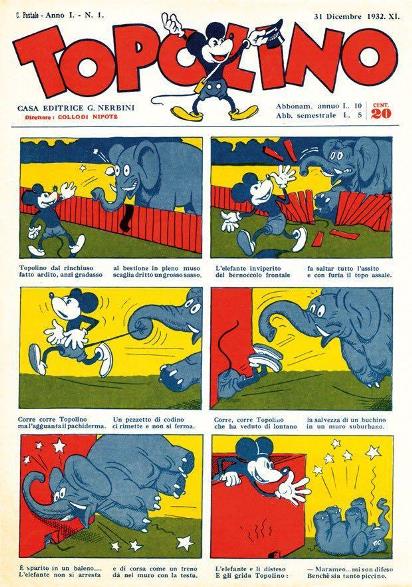
That little red Fiat 500 was a first-year Model A (produced from 1936 to 1948), the smallest car in the world at the time. Italians (like those in this shot in Rome’s Mussolini Stadium) dubbed the midget coupe Topolino (“little mouse” in Italian).
Topolino was also the name of this very famous mouse. Yep, that’s their name for Mickey.

But evidently, cartoons didn’t set well with Fascists back when that photo was taken. Per theguardian.com, “Comics were seen as a vehicle for the values of the Anglo-Saxon democracies … and Mickey Mouse was the last of the American cartoon heroes to be banned because he was a particular favourite with Mussolini’s children; they were among the very few Italians who were able to defy their father with impunity.”
The controlling craziness went so far as to forbid use of “speech balloons” in any comics at all. Who knew the life of a Fascist cartoonist was so hard?
For your further edification, according to hellogiggles.com, Donald Duck goes by “Paolino Paperino” (not pepperoni), Daisy Duck by “Paperina,” and Goofy is “Pippo,” yet for some reason Pluto is still Pluto and Minnie still Minni (close enough).
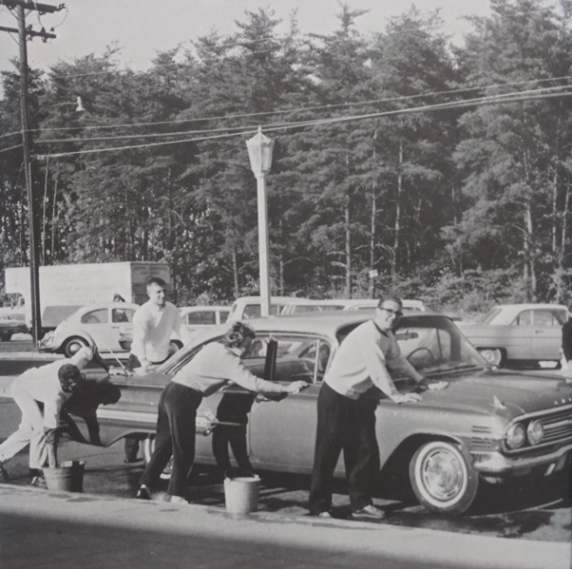

The principal of Virginia’s Hammond High makes his request known to the lunch lady, who seems exceedingly inspired by the proposition. She cannot wait to tell the others, who have nothing else to do but concoct new dipping sauces.
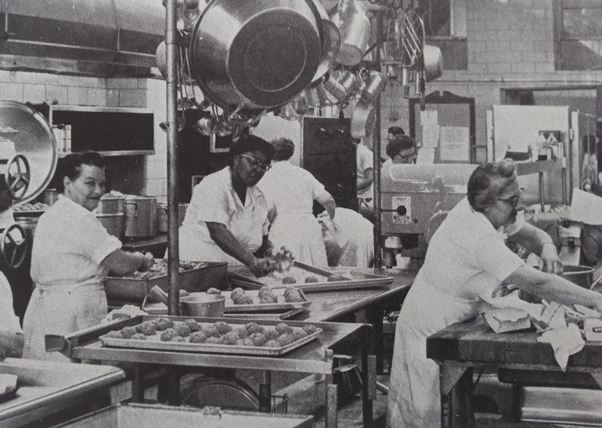
This is what a high school kitchen looked like way back in 1965. No shortage of rolls.
When everyone ate gluten, you could eat rolls and bread at the same meal. Did you ever eat Bond bread?
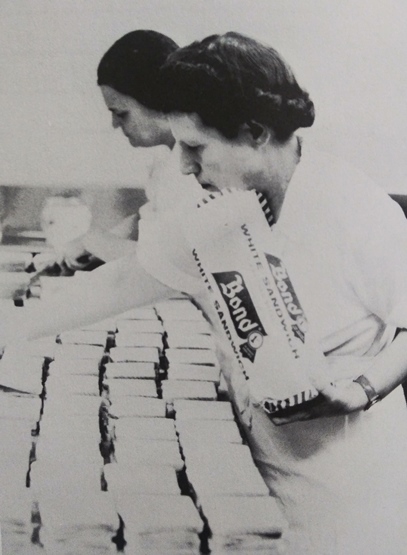
And lest you think sweet-chili-and-pickle sauce sounds less than palatable, take a gander at this image.

Sometimes presentation is EVERYTHING.
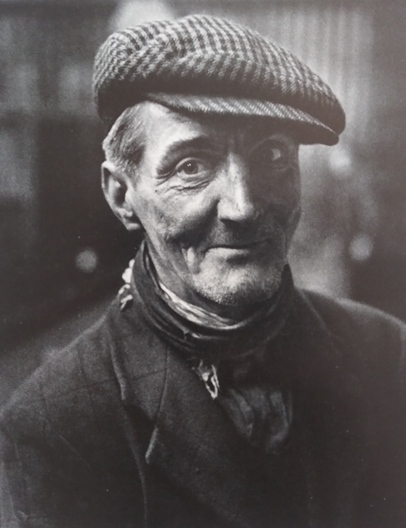
Yesterday we visited Yorkshire coalminers sipping pints in a colliery club. Today we visit them on the job. Above is a coalminer from Durham, England in 1952.
The miner with the buoyant tresses is named Dixen Bell, and he’s 300 feet down in the mine.
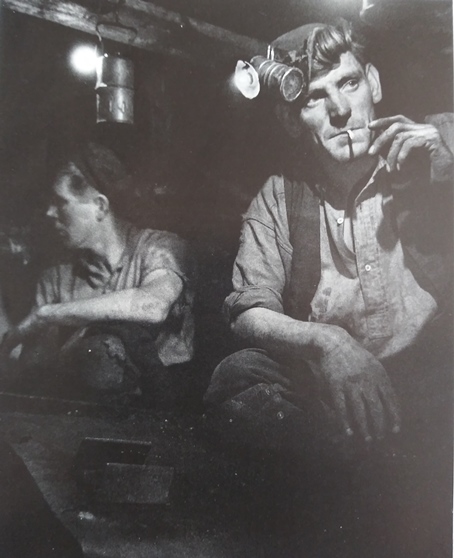
These snug fellows are working 19 inch narrow seams.

It’s hard to believe those conditions were better than those of the 1890s, such as the East Pool Mine below. Does any of that look stable?
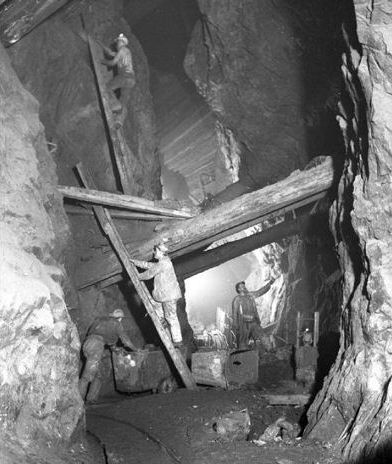
The men of Dolcoath Mine evidently weren’t claustrophobic.
 How nice it must have been to finally emerge into fresh air!
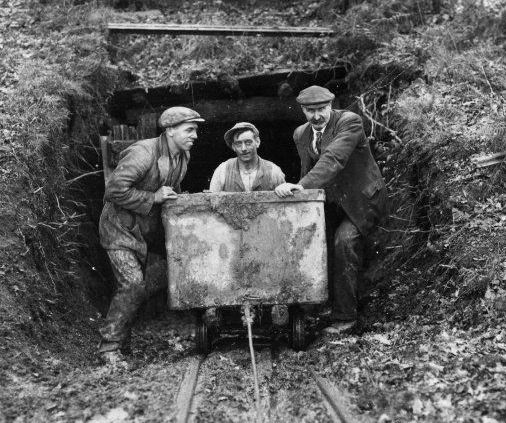

The coalminers above are relaxing with pints in a colliery club in Yorkshire, England. Colliery is a word I’ve never used, so I had to pull out my big, red Webster’s dictionary (no offense to Merriam) and look it up. A colliery is a coal mine and all the buildings and equipment which are connected with it. This building in particular served ale. And I couldn’t help but find the resemblance of this man (and his collapsed smirk) to a certain mid-century actor.
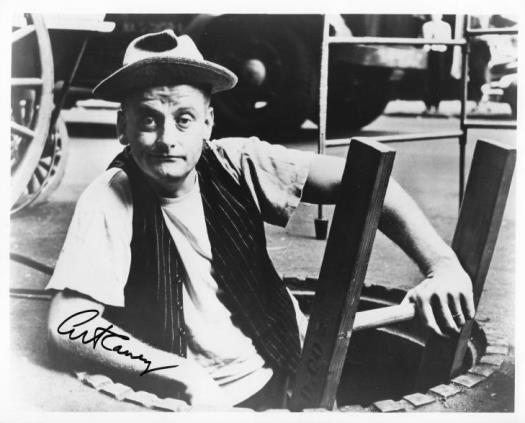
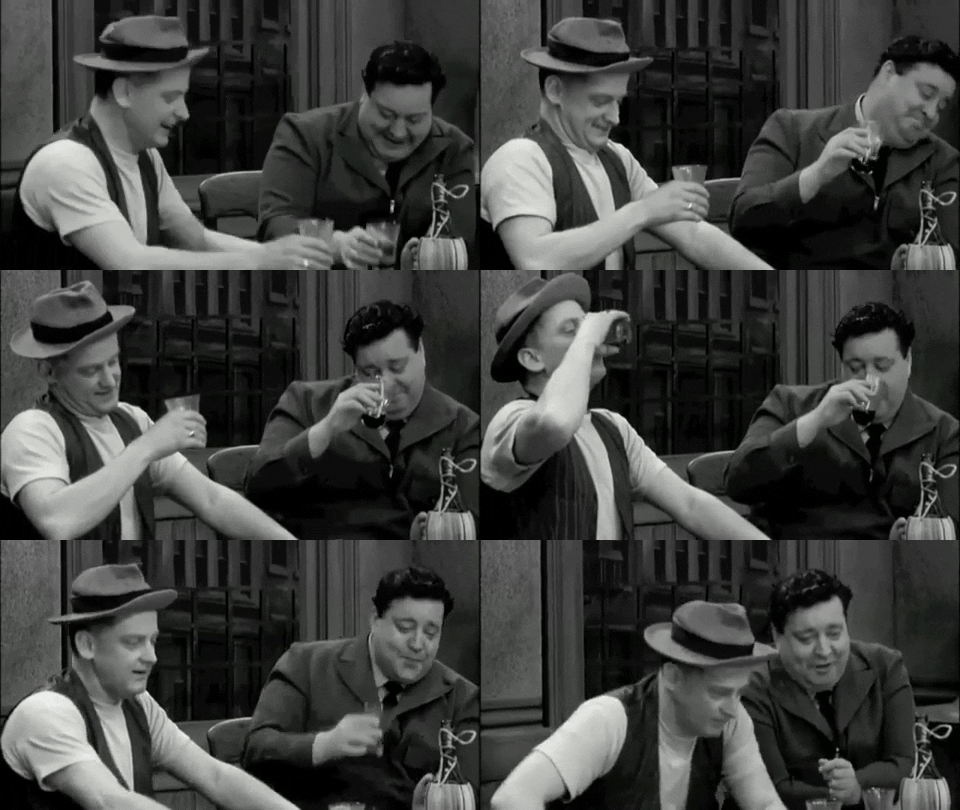
Do you see it? NORTON!
Ed Norton liked a good drink.
Enjoy this peek inside the post-war colliery and think about these men, how exhausted they must have been, lungs full of coal dust, and how they gathered to blow off steam.


Before craft beer, choices were limited. And Budweiser did its best to make it seem like Bud was the life of the party, replete with black tie formal and an orchestra. The movement conveyed in the dancing, the yellow glow around the conductor, the bubbles in the bottle, the lovely amber and skyscraper greys all made for a most tasty ad. Even the face of the lady in the right foreground seems to be aimed straight at you.

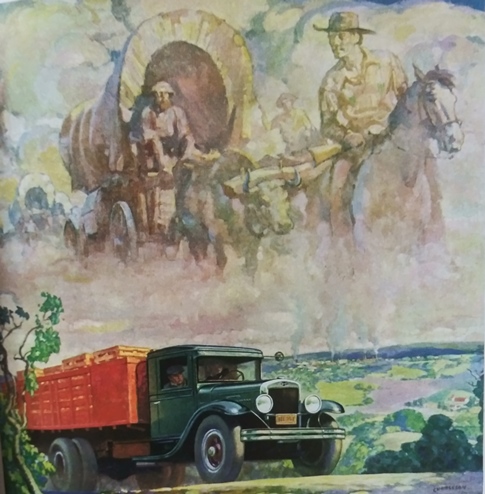
International Motor Trucks weren’t a party, but they were a part of history, as depicted in this colorful ad of a covered wagon, cattle, and pioneers.
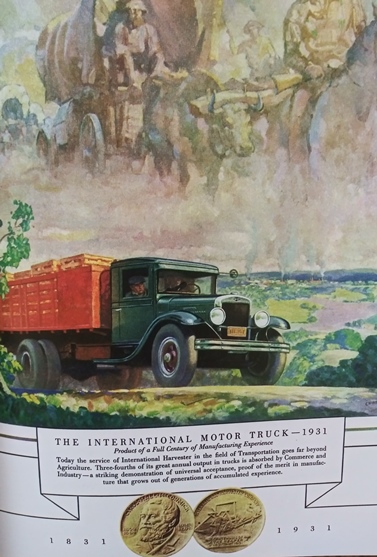
The curves of the green vehicle pop against the sharp red lines in its truckbed. It makes my eyes happy.
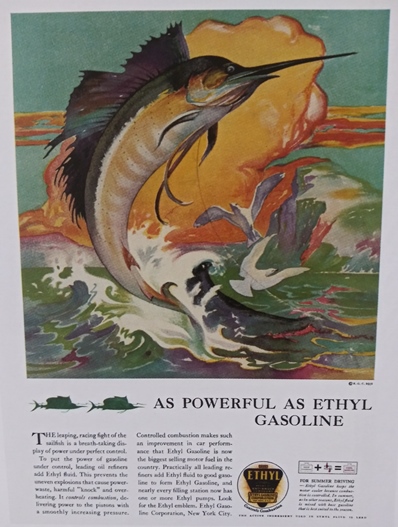
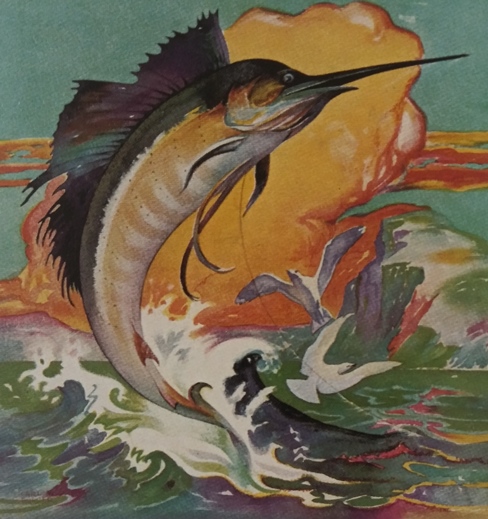
This last 1931 image may seem mismatched. A sailfish selling ethyl gasoline? Well, it’s all about power. But to me, it’s all about movement. The splashing water, the open wings of the seagulls, the almost melting yellow sun behind it. That doesn’t even make any sense, but I like it.
Aren’t the colors fun?
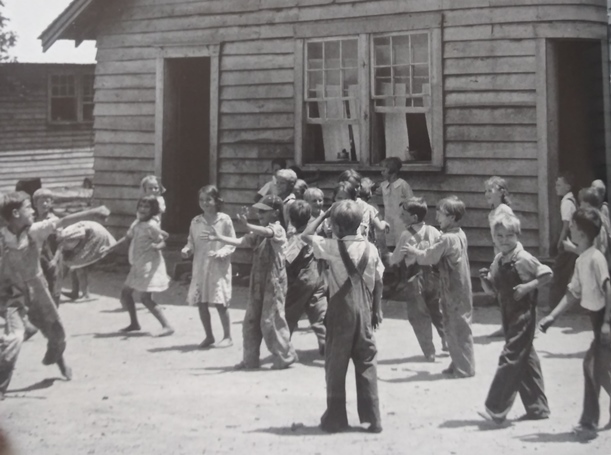
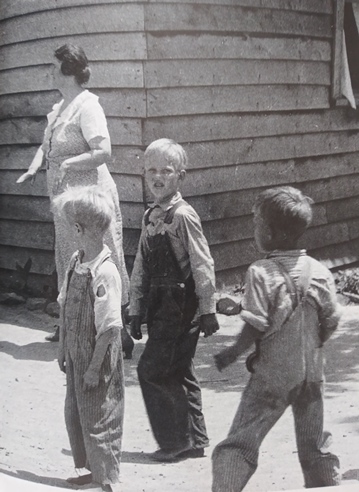
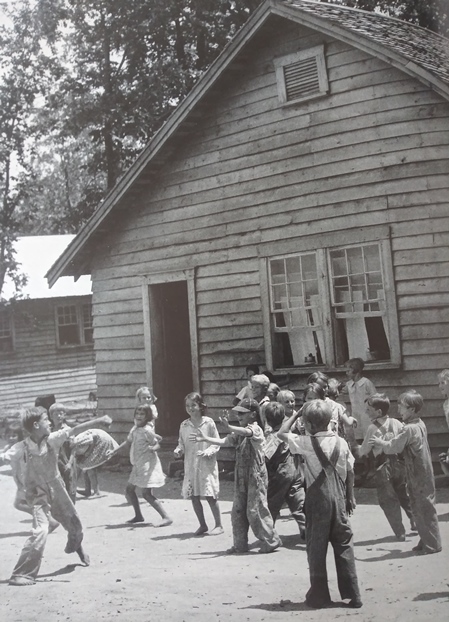
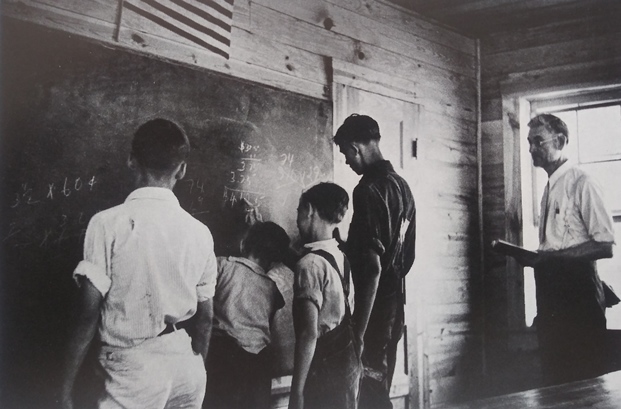
Scottsboro, Alabama, 1936 by the great Carl Mydans for Farm Security Administration
 I Don't Get It