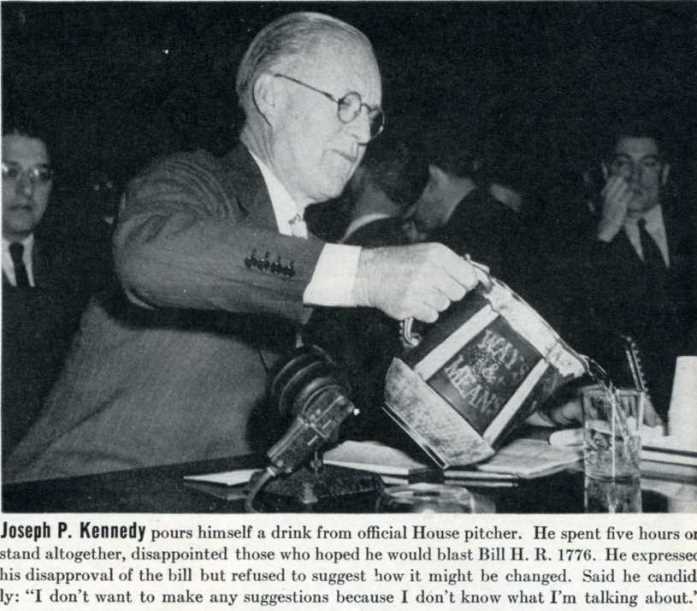
In this image from a February 1941 LIFE, the original Joseph Patrick Kennedy Sr chooses to stay hydrated during a meeting of the House of Representatives. At the time, he was serving as the United States Ambassador to the United Kingdom. During the Battle of Britain in November 1940, a pessimistic Kennedy expressed concern that “Democracy is finished in England,” which annoyed President Roosevelt. Not only would it prove untrue, but it contradicted sentiment by Churchill, who notoriously stated, “Never never never give up.” By the time this picture was published, Kennedy had resigned his position.
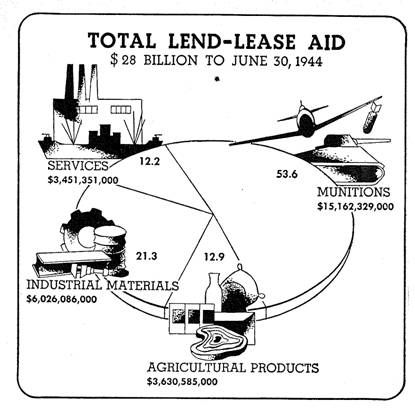
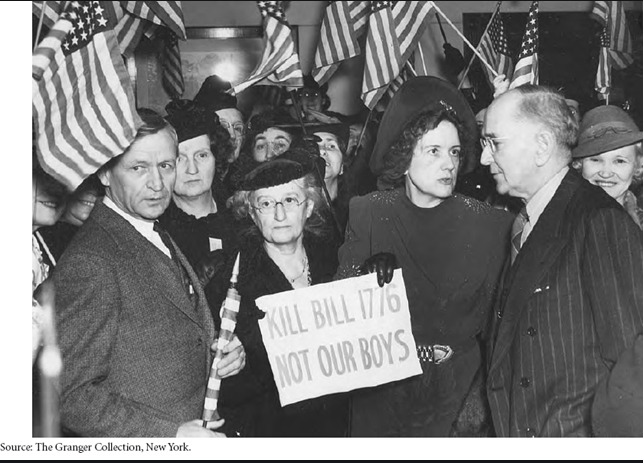
H.R. 1776 was also known as the Lend-Lease Act. Per visitthecapitol.gov:
In 1941 Congress passed a bill allowing the president to provide assistance to nations whose defense was considered vital to the security of the United States. Known as the Lend-Lease Act, it became the principal means for providing U.S. aid to key Americans allies, especially Great Britain, during World War II. The act permitted the president to “loan” war materiel such as ammunition, tanks, and airplanes to allies without expectation of repayment. Though the United States would not declare war until December 8, 1941, the Lend-Lease Act effectively ended U.S. neutrality.
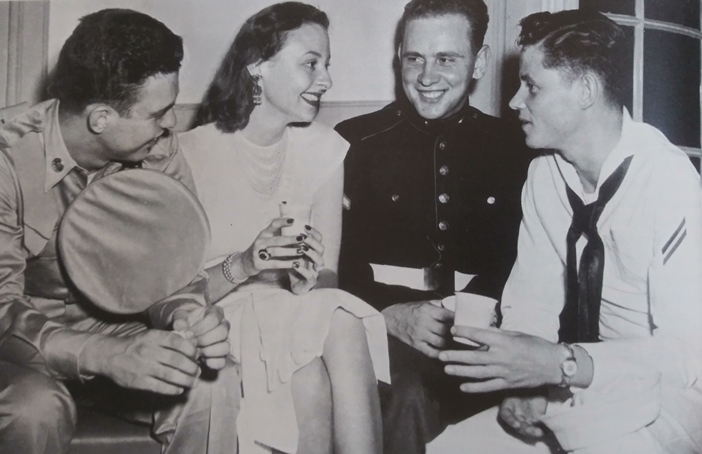
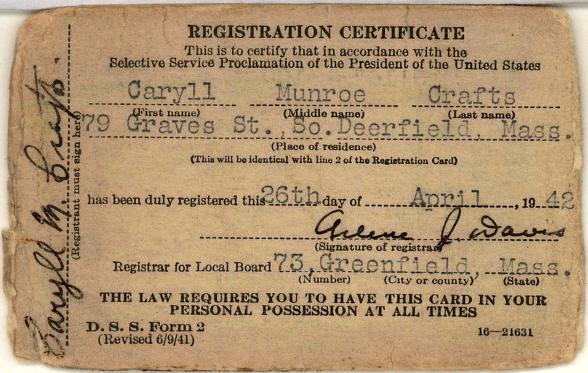
Actually, this woman was a draft service worker during WWII. Men 18-65 and were required to register and keep the card on them at all times. Men age 18-45 were subject to military service. From 1940 until 1947 – when the wartime selective service act expired – over 10,000,000 men were inducted.
(c) Pocumtuck Valley Memorial Association, Deerfield MA.
This cartoon in the Saturday Evening Post depicted a draft board scraping the bottom of the barrel.
During WWII, the not-yet-vanquished German army occupied the north of France, including the port of Cherbourg, which they heavily fortified against seaborne assault. As the only deep water port in the region, it was particularly desirable, so American troops encircled the city in June of 1944 in the Battle of Cherbourg, and handed the Germans their asses five days later, when they surrendered. The fighting left the city in a compromised state. However, in only a month, cargo ships known as Liberty Ships began to arrive, and it became the busiest port in the entire world, with twice the traffic of New York, until the war ended. It has since merged with an adjacent city to become Cherbourg-Octeville.* In this image, we see American soldiers in Cherbourg who appear to have stumbled upon some German wine stores. I’ll drink to that.
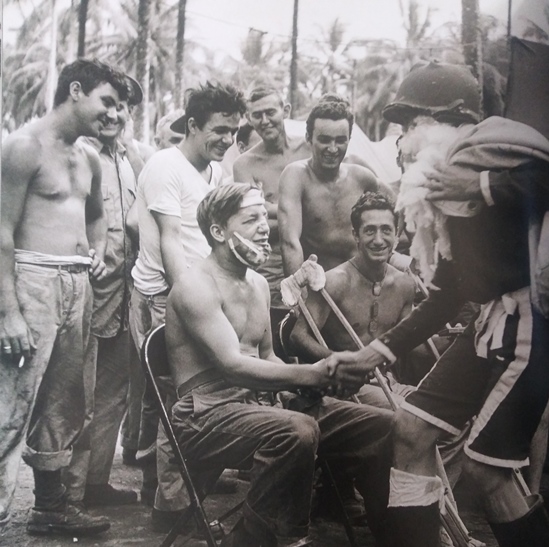
Christmas Day didn’t feel very wintry to these WWII soldiers in the South Pacific. Santa braved the 90 degrees to dispense Red Cross gifts to Army and Marine hospitals and bring some holiday cheer to those missing their families back home.
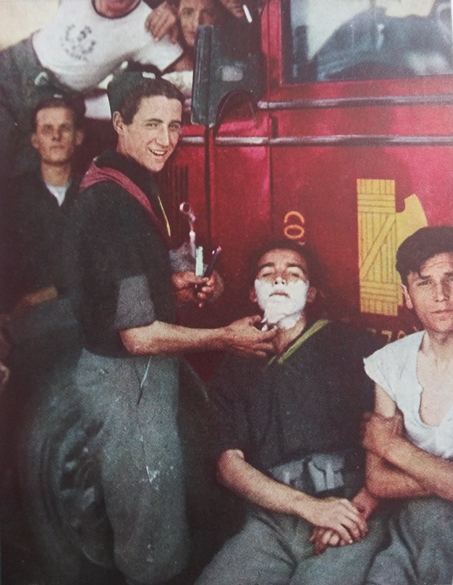
It’s 1936, and these members of the Young Fascists are killing time and facial hair while hanging at comrade camp in Rome. At the time, Mussolini was head of the police state of Italy as its Fascist leader. Fascism is generally a one-party, anti-democratic, often racist dictatorship, so you can imagine the experiences these lads had living under such a regime. Note the painted Fascist badge on the truck above, derived from ancient Rome’s fasces, or symbol of authority, a bundle of rods with a protruding axe blade. Mussolini was evidently the axe.
slideplayer.com
Mussolini made his intentions clear from the start, before he became Il Duce.
When dealing with such a race as Slavic—inferior and barbarian—we must not pursue the carrot, but the stick policy … We should not be afraid of new victims … The Italian border should run across the Brenner Pass, Monte Nevoso and the Dinaric Alps … I would say we can easily sacrifice 500,000 barbaric Slavs for 50,000 Italians …
–Benito Mussolini, speech held in Pula, 20 September 1920
He intended to brainwash the minds of the young men below. Here, they are doing a drill at a camp, to which they came from all over Italy, for a review by Mussolini himself, as part of the organization’s sixth anniversary in October of 1936.
Mussolini equated high birthrates in Africa and Asia as a threat to the “white race,” which led him to ask, “Are the blacks and yellows at the door?” to be followed up with “Yes, they are!”
Below, Romans swarm the Piazza Venezia, so that Premier Mussolini can review the Fascist University Groups, wearing bright neckerchiefs, from his headquarters. The review commemorated the 14th anniversary of the Fascist March on Rome, when Il Duce came to power.
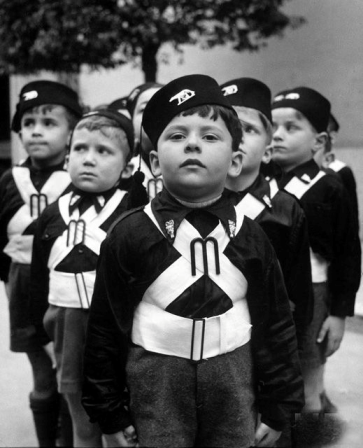
Opera Nazionale Balilla (ONB) was an Italian Fascist youth organization functioning between 1926 and 1937, which took its name from Balilla, the nickname of Giovan Battista Perasso, a Genoese boy who, according to local legend, started the revolt of 1746 against the Habsburg forces that occupied the city in the War of the Austrian Succession by throwing a stone at an Austrian soldier.
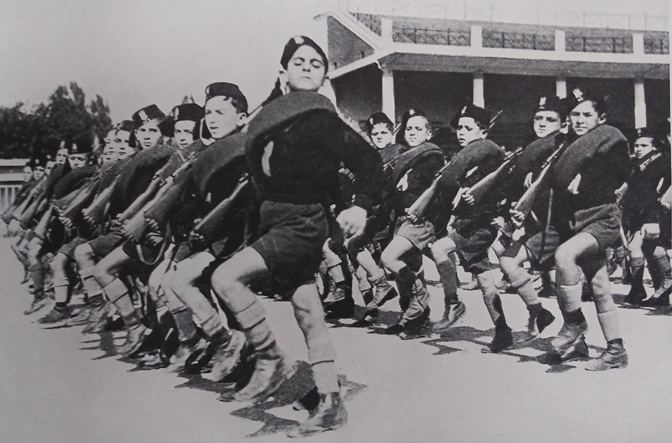
These Balillas, aka “boy blackshirts” emulate the posture of Il Duce, with squared shoulders, chins high, quickstepping with toy rifles and blanket rolls during a review.
Acme
Even the very young were indoctrinated.
wikipedia
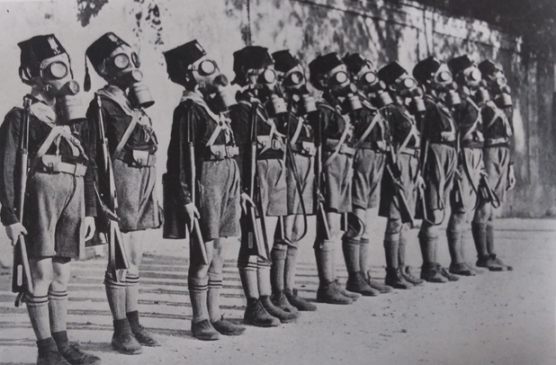
Italian boys donned uniforms at six and received real weapons in their 18th year on the anniversary of Rome’s birth, April 21. These youngsters are doing a drill with gas masks and miniature rifles.
photo by Acme
Fortunately, Italian partisans executed Mussolini two days before Hitler committed suicide, dumped his corpse in the Piazzale Loreto, let folks kick and spit on him, then hung him upside-down from the roof of an Esso gas station. Civilians were then allowed to stone him. Woot.















 I Don't Get It