Dept of Health & Human Services, Susan Langenhennig
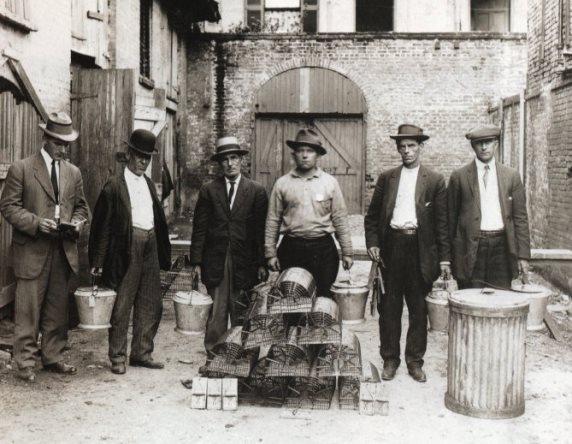
1914, New Orleans. The Public Health Service, created in 1902, helped suppress an outbreak of bubonic plague by mobilizing this team of rat-catchers to eradicate the filthy beasts which spread the disease. Seems like backbreaking work to me, one that would not necessitate a hat and tie.
Per nola.com,
An army of 380 workers swept across the city to carry out the campaign. In a single week, they inspected 6,500 railcars and 4,200 buildings, fumigated 101 ships, trapped 20,000 rodents, laid nearly 300,000 poison baits and discovered 17 infected rats.
Using good scientific protocols, workers recorded data for each trapped rat, and when a laboratory analysis identified an infected specimen, its point of origin was subjected to a scorched-earth campaign of fumigation, burning, and in some cases, complete leveling.. Tactics like these went on daily, citywide, for months.
Ground Zero in the geography of rats proved to be the Stuyvesant Docks, where that first infected specimen had been found two years earlier. Here, mechanical conveyors transferred Midwestern grain among railroad cars, ships and elevators. Coupled with the warm fresh water of the nearby Mississippi River and ample nesting opportunities, the Stuyvesant elevators were a veritable rat nirvana. The campaign made them into a rat graveyard.
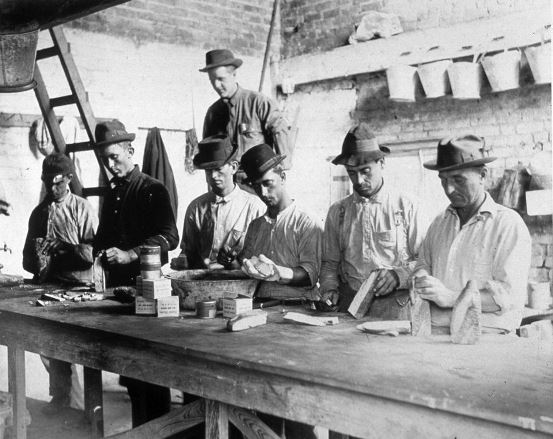
Susan Langenhennig, workers preparing rat poison
Death to the Black Death!
Bonus rat fun fact: Cagney never actually said, “You dirty rat.”
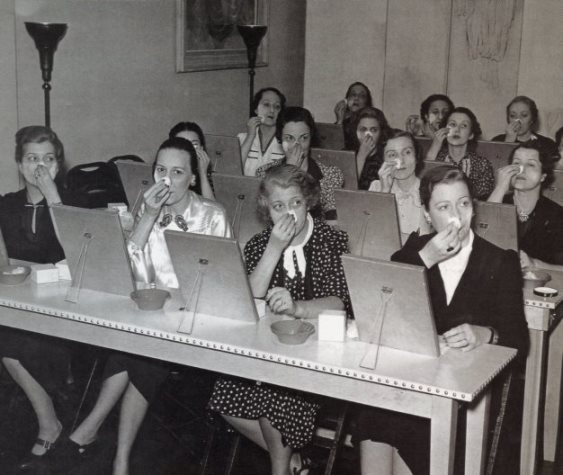
No, these women aren’t sick; they’re aspiring “counter girls.” You know, the ones at department stores, trying to sell you overpriced cosmetics. These ladies are just a few of the 2,500 women that took Helena Rubinstein’s 1941 one-week “epidermal consultant” training course. Here, they are learning the art of dabbing a powder puff.
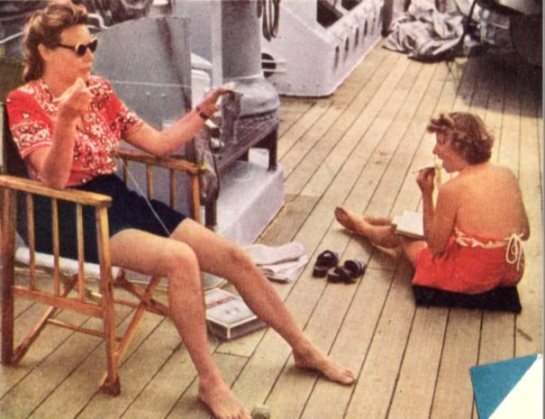
“Dandified first mate” are the words printed in the magazine, and you can see why. He’s getting the full diva treatment. Stephen Johnson receives a shave by Louise Stewart, and gets his nails done by Meg Young. Arthur Johnson (far right) turned 12 that day, and faced a rather odd visual of impending manhood.
Aboard the same Brigantine Yankee‘s deck, more grooming takes place, as Miss Booth gives Alan Pierce a haircut out in the fresh sunshine.
Meanwhile, Miss Stewart knits, and Mrs. Johnson eats her banana.
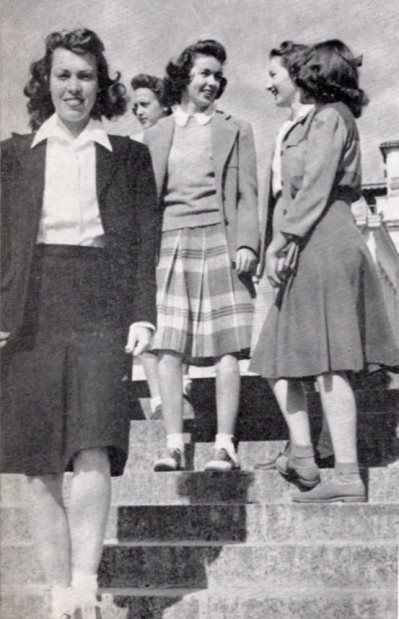
Bert Nelson, Ramona Larson, and Rosella Lillehaug enjoyed a typical high school day in Hettinger, North Dakota in 1953, although methinks they’re dressed for bowling league night. Pedal pushers, saddle shoes, and white button-downs–could they be any cuter?
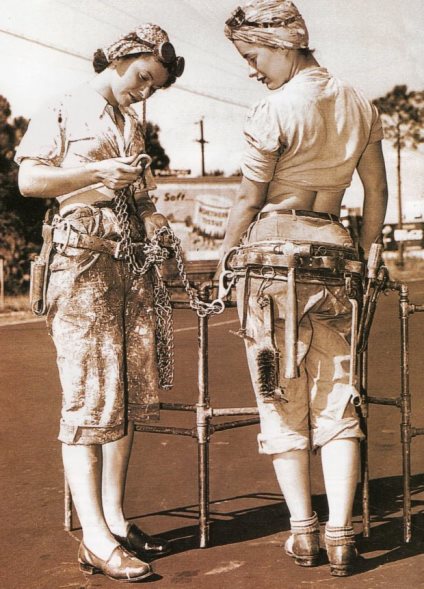
With so many men overseas during WWII, women filled the vacancies in a number of jobs, including painting power poles for Florida Power and Light. In Reminisce: Pictures from the Past, the husband of Virginia Kompe (right) explains how Virginia and her sister, Shirley, spent the winter of late ’44 into early ’45 “raising ladders and hoisting the housings for the bases of the poles. They also served as grunts for the linemen.”
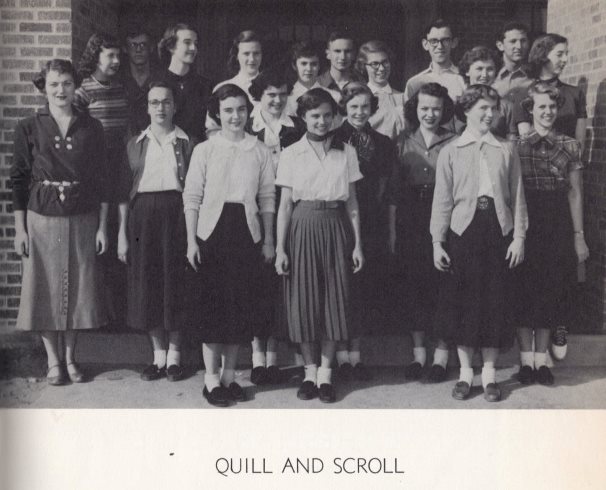
I bet the Quill and Scroll clubs died out about the same time as loafers and bobby socks. In this 1952 Midland High School portrait, it appears that only the teacher was allowed to wear strappy shoes. The girl on the far right seems to have bucked the trend and gone with saddle oxfords.
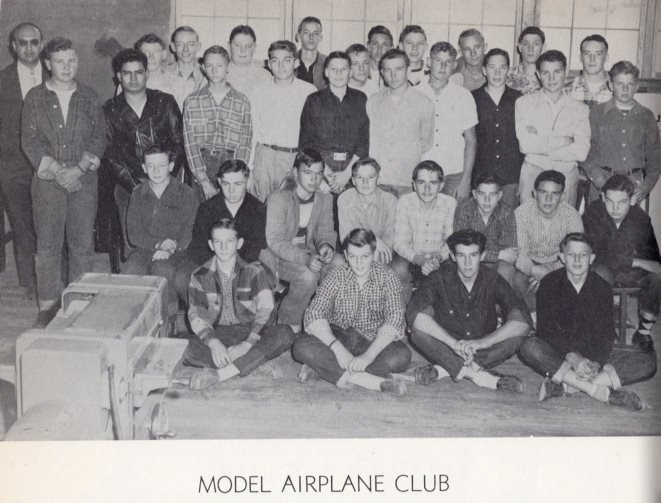
Among the many clubs at this high school was the Model Airplane Club. I doubt that one’s around anymore either.
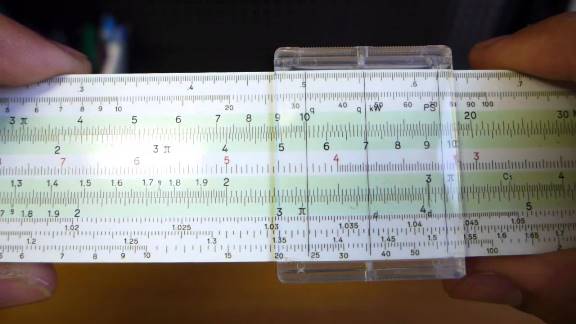
Without a doubt, no one under 40 has ever heard the term “slide rule” or seen one in the wild.
You could use them for math questions before calculators were readily available.
youtube
Have you ever used a slide rule?
How about the Pan American Club? What did they do in there?
I see flags of many nations.
But by far the oddest thing about clubs in this yearbook was the illustration preceding them.
We didn’t have these kind of clubs in my high school. A saloon with dancing ladies?
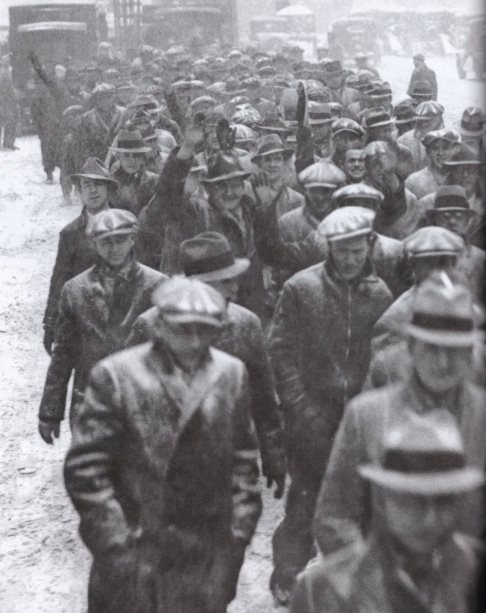
These unemployed men were marching on Boston City Hall in the cold February of 1934. Who knew that in just 8 short years, some could be employed in the armed forces, fighting Axis powers?
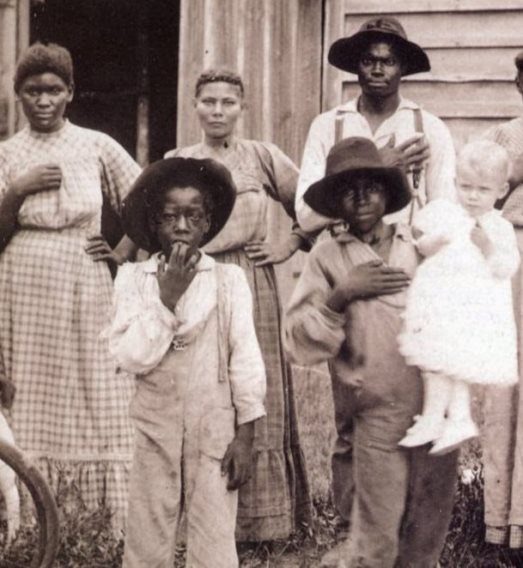
Nope, this isn’t slavery. It’s 1910, nearly half a century after the end of the Civil War, smack dab in the middle of the Jim Crow era (laws enforcing racial segregation in the South between the end of Reconstruction in 1877 and the beginning of the civil rights movement in the 1950s). Though they aren’t physically segregated in this shot (one farmhand even holds the baby), the economic, educational, and emotional implications are there.
This portrait shows a Florida tobacco farmer with his farmhands. I’m not sure as to why most of the farmhands have their hands over their hearts, pledging allegiance style, but you can see that the whole family is included, from the son to the baby to the dog.
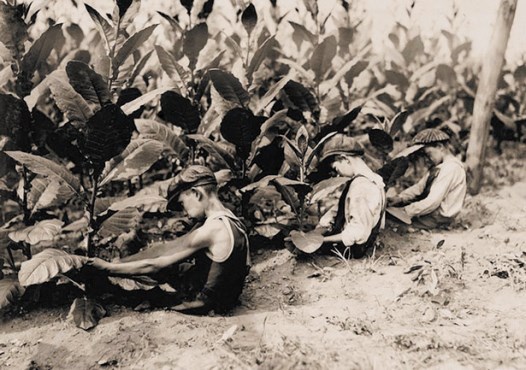
As you can see, tobacco farming doesn’t look too fun.
These children are topping (removing the budding part of the tobacco plant which will, if not removed, flower and produce seeds) and suckering (controlling sucker growth by removing the budding part of the tobacco plant which would otherwise flower and produce seeds) tobacco plants much further north in Buckland, Connecticut, about the same time as the earlier image was taken. Grueling indeed.
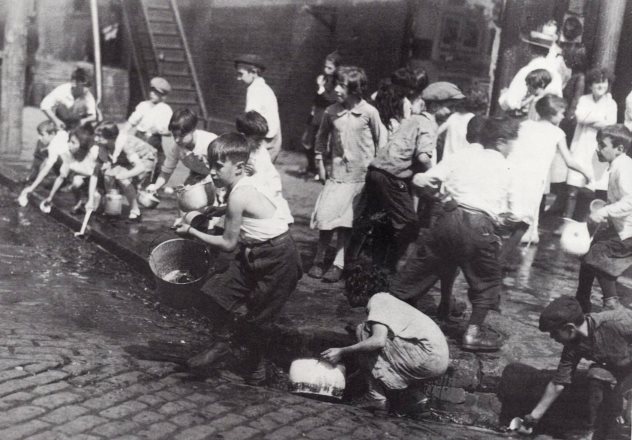
I don’t know what’s more disturbing; that federal agents dumped barrels of wine into the gutter, or that neighborhood kids are frantically trying to salvage it. I’ve never been a believer in the five-second rule. Once an item makes contact with filth, it is instantly defiled. And no amount of assuring me that “alcohol kills the germs” would convince me. But that’s 1926 for you.
In the next image, federal agents are actively pouring whiskey down a sewer, per the 18th Amendment, passed 99 years ago, come Wednesday. Such a waste.
Corbis-BettmannThe Century by Jennings and Brewster











 I Don't Get It