




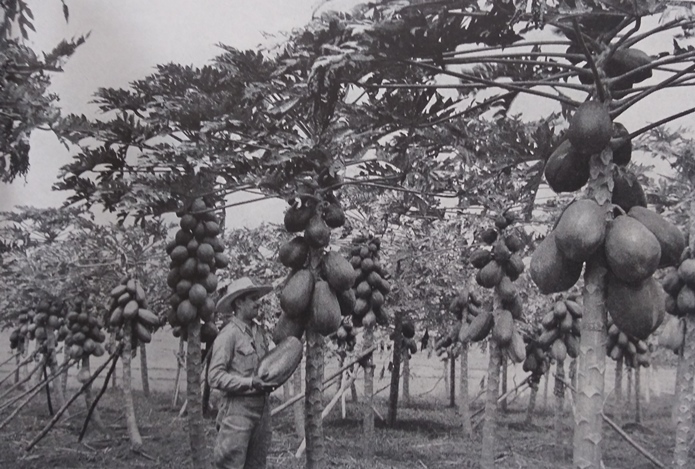
With grapefruits and papayas, I am familiar. But breadfruit? Never heard of it, never seen it, never scrolled past it on a menu. Evidently, you can roast and fry it. Have any of you ever tasted breadfruit?

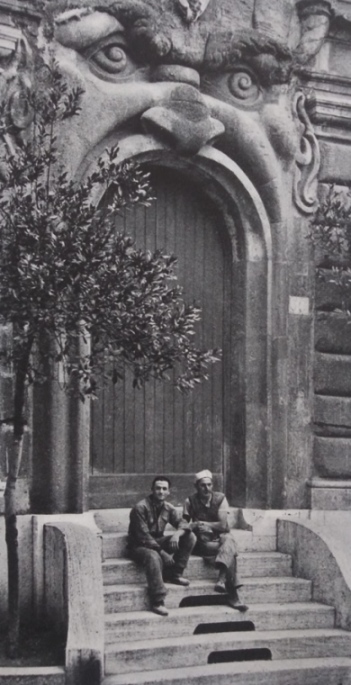
The stuff of nightmares. A workman wearing a newspaper hat and his pal chill at the steps of the Palazzo Zuccari, a 16th century building in Rome. It houses the Bibliotheca Hertziana – Max Planck Institute for Art History, a German research institute that isn’t even in Germany.
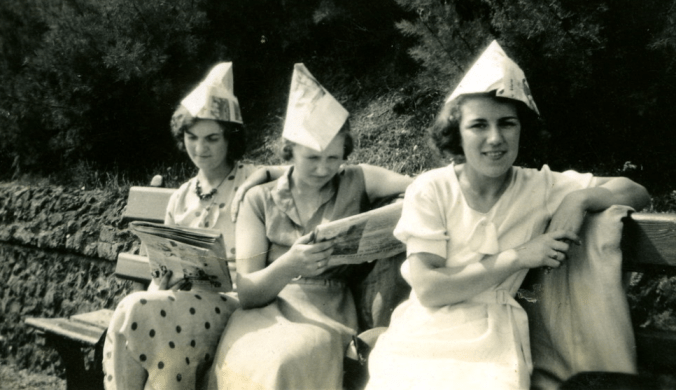
Evidently, newspaper hats were a thing. They would be great in central Texas because we have no wind and no rain, so they would never blow away. And if your phone ran out of juice, you could just grab your hat and read Garfield.
As you can see, the ghastly ghoul door remains nearly unchanged after 82 years, right down to the steps. With no visible door handle, I wonder how one enters.


In 1935, Italy invaded Ethiopia, tipping off the Second Italo-Ethiopian War. To bolster gold reserves, the Italian government, under Mussolini, made a plea to its citizens to exchange all of their wedding rings and jewelry and even false teeth for these stacks of iron bands. Fascist officers in Rome supervised the exchange.
But what’s crazier than that is that Italian-Americans helped with the effort as well. Per shoeleatherhistoryproject.com, Mussolini proponent Father Andrew J. Kelly, pastor of St. Anthony’s Church in Hartford’s Italian east end in Connecticut, convinced 500 Hartford women to give up their gold bands at a blessing ceremony on Sunday, May 24, 1936. “The substitution of iron for gold wedding rings by Italian wives,” the priest said, “symbolizes… the unanimity of Italian sentiment in favor of its government.”

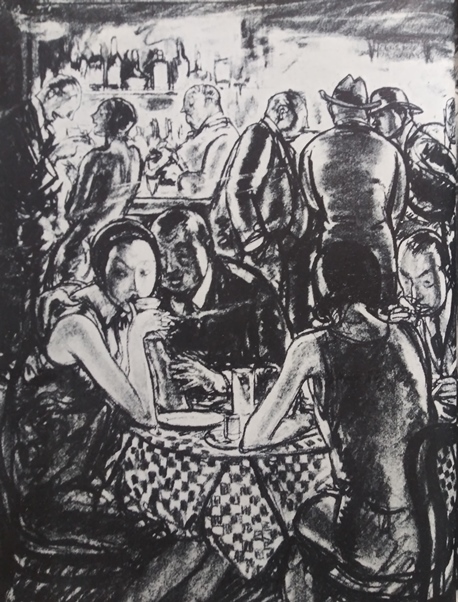
As you can see, illustrator Morgan was a master of movement, using his sketches to adeptly convey the energy and complexity of the speakeasy. Also called a blind pig or a blind tiger, a speakeasy was an illicit establishment that sold alcoholic beverages. I was today years old when I learned of the two blind terms. Now it makes sense that I went to a bar called The Blind Tiger in Shreveport 24 years ago, where I met comedian Mario Joyner, who invited my galpal and me to Harrah’s to gamble with him. But that’s another story for another time.
Contrary to the term, it was not a place where it was “easy to speak;” in fact, the opposite was true. It was a place that necessitated one speak easily or softly, as selling and consuming the bootleg booze was illegal. You can see the quiet conversations, imagine the hushed tones, of the clients, keeping it all on the downlow until sufficient intoxication raised their voices. That’s the power of the drink. We’ve all seen a gaggle of middle-aged women drinking margaritas at a Mexican restaurant. Speech is never soft.
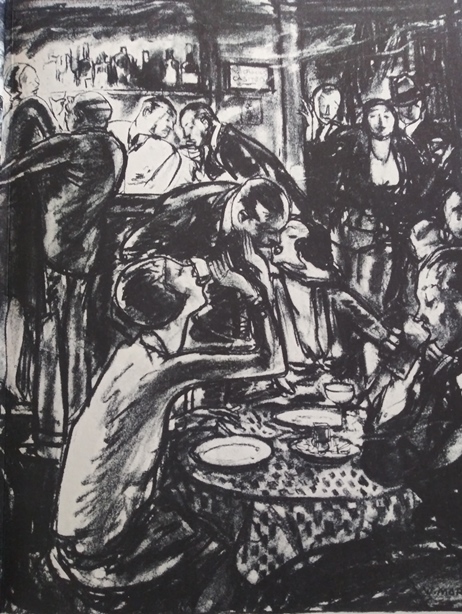
From the last sip to a stolen kiss to gossip and entrances, Morgan was able to make the background just as engaging as the foreground.
When the comic was published, the country still had yet three years of Prohibition remaining.

But until then, speakeasies flourished. NYC claimed over 100,000 speakeasies alone. Saloons with player pianos and swinging doors made way for password-protected jazz-playing joints. Instead of aligning with the Prohibition moral compass, American women let loose with drinking, smoking, dancing, bobbing their hair, and donning shortened skirts. Make way the flapper. Gone were basic beer and liquor, as cocktails required mixers to make hootch drinkable. And once folks tasted sugary, fruity drinks, those who had never enjoyed beer and liquor found they enjoyed this new concoction. Organized crime soared. Cops couldn’t keep up with raiding and disposing. It was a losing battle. No wonder FDR repealed the 18th Amendment as soon as he was elected. The woman in the foreground clearly isn’t playing.

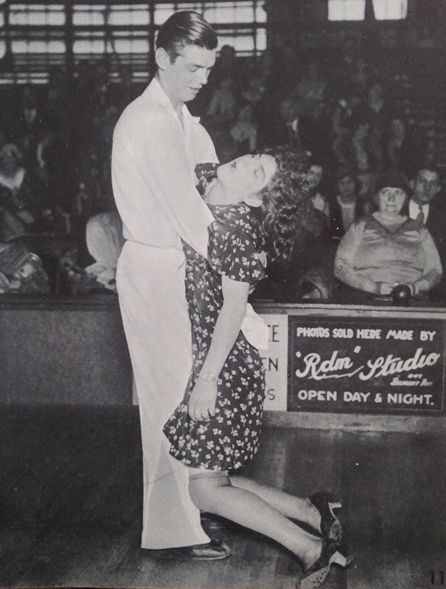
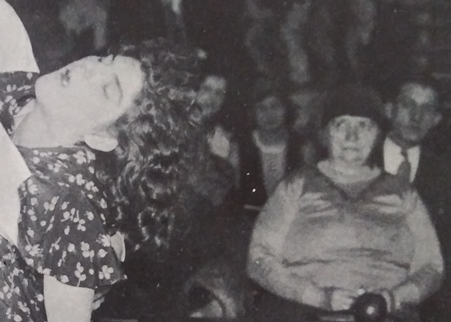
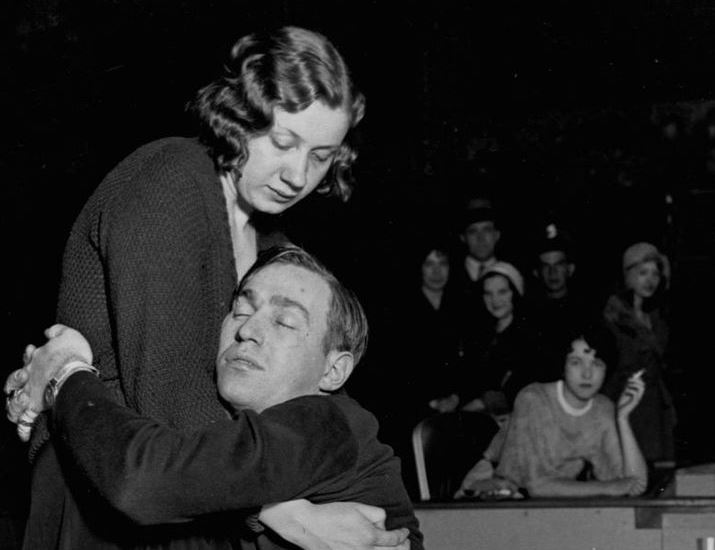
No, it wasn’t bad breath that caused Marie Micholowsky to pass clean out in her brother Frank’s arms. Believe it or not, this image was snapped at HOUR 3327 into a Chicago dance marathon. The seated woman shares my sentiment exactly. Girl, what were you thinking?
Now most of us have heard of dance marathons, especially popular during the 20s and 30s. But did you know that some lasted for weeks, even months? This particular one began on August 29, 1930 and ended in 1931. And yes, they did get intervals in which to nap. But can you imagine having started dancing TWO WEEKS AGO, only to ultimately finish next January? I guess these couples didn’t have jobs? Or families?
This next pair had the benefit of not being siblings in embrace, but you can see the pickle petite Anna Lawanick is in, having to support slumbering Jack Ritof, aka the failure.
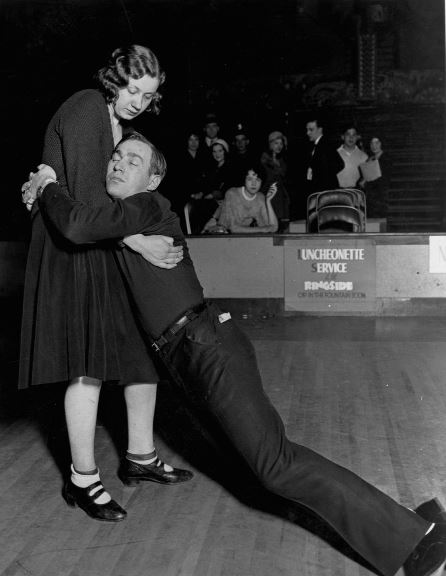
What had begun as opportunities for the glow of youth to show its endurance and immortality eventually morphed into the exploitation of those who desperately needed the cash reward given to the last couple standing. As you can see, the onlookers (who paid an entrance fee to gawk) kept their eyes on the dance floor.
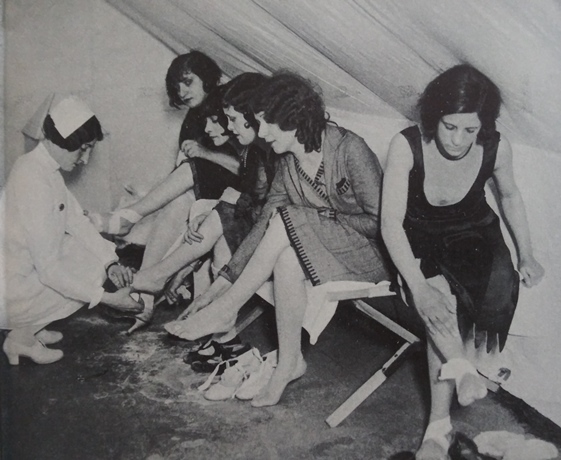
But what of the pain in their feet? Rules often allowed for one partner to visit the restroom or nap as long as the other partner continued dancing, so the feet were only briefly spared their dancing duties. The contestants below received medical attention for their tootsies during a Madison Square Garden marathon in June of 1928, where the prize was $5000, more than an average annual income.
Spectacle it was, as folks pushed themselves past the point of exhaustion, and in the case of Homer Morehouse, heart failure at the age of 27.
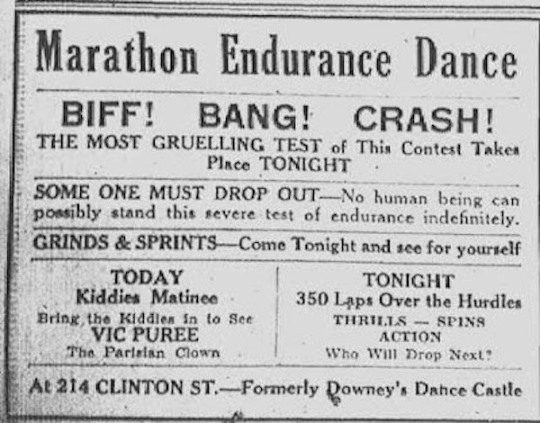
The predecessor to today’s reality shows or movies like Hands On A Hard Body, dance marathons proved both cruel and entertaining. Ultimately, the fad passed as fads do, and Americans moved on to the next big thing.
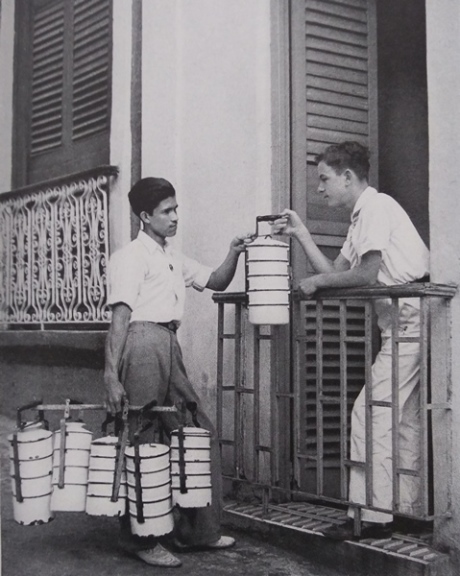
Curbside cans: a five decker lunch of rice, beans, fish, fresh vegetables, and dessert. Sounds great. But how does Gilberto get his cans back?
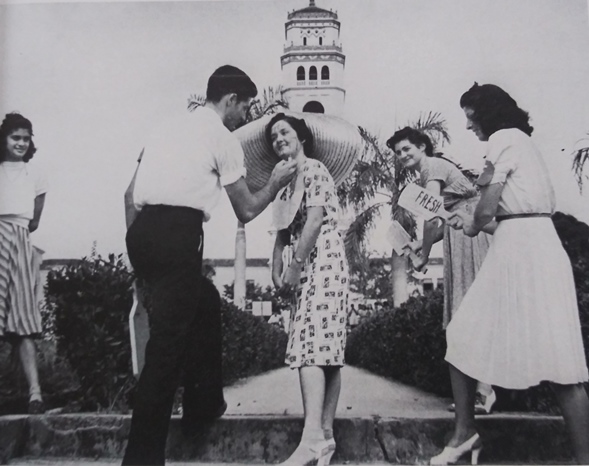
Setting: First day of school, fall 1939, at the University of Puerto Rico in Rio Piedras.
Plot: Same old song and dance. Upperclassmen defile face of newbie frosh. Onlookers smile. Well-dressed people spank each other with paddles.
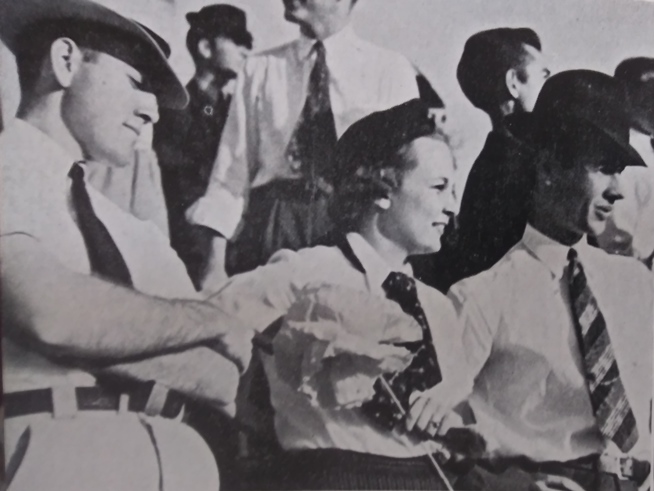
Y’all, I just don’t get it. I don’t get hazing. I didn’t do the Greek scene. I would never have allowed myself to be humiliated like that. But golly, it’s in every single one of my yearbooks. The tradition continues!
People have always been cruel, since the first brothers to exist, Cain and Abel, became murderer and murderee. Honestly, murderee rolls off the tongue better than victim. Why don’t we say that instead? Anyhoo, the point is that violence always has been and always will be, and praying for world peace (which Andie McDowell’s foolish character did in Scrooged) is like trying to boil the ocean, as they say.
Fun fact to temper bitterness: That looming tower is the FDR Tower, which contains a carillon of 25 bells. What’s a carillon? A set of bells.
The tower still stands today (unless Dorian takes it out).
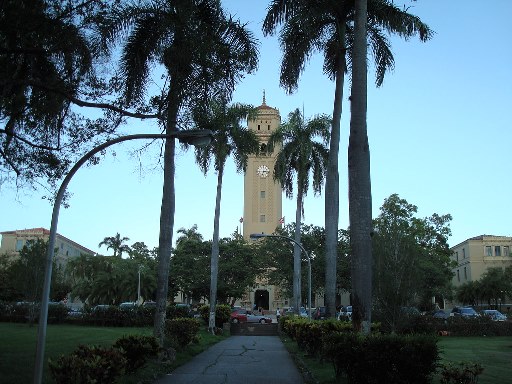
It commemorates then-president Franklin D. Roosevelt, and will remain named after him until future generations decide they don’t agree with something he did–at which point, it will either be renamed in honor of a more PC and palatable figure–or toppled altogether in the name of retribution.

Sure, it looks ragtag and uncomfortable. But this 1939 stout shelter provided great protection from hurricane winds. Located near Caguas, the corrugated iron roof was secured with wire and crossed railroad ties to anchor it down.
 I Don't Get It