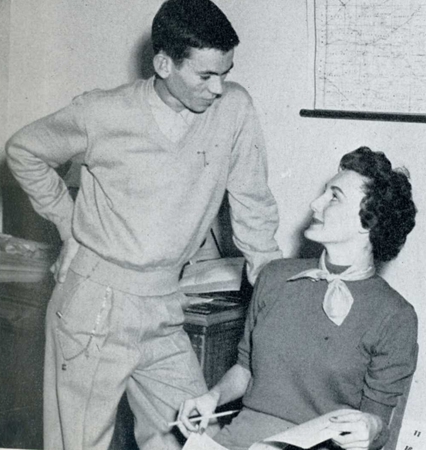
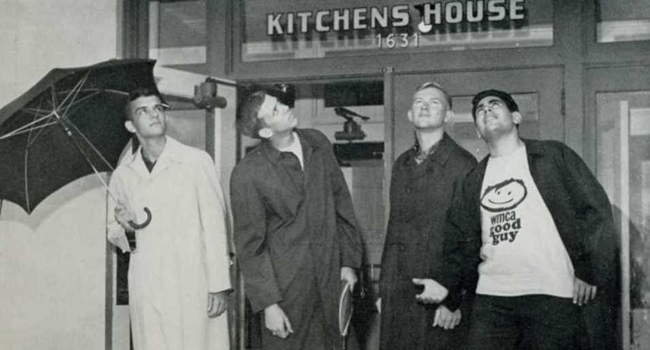
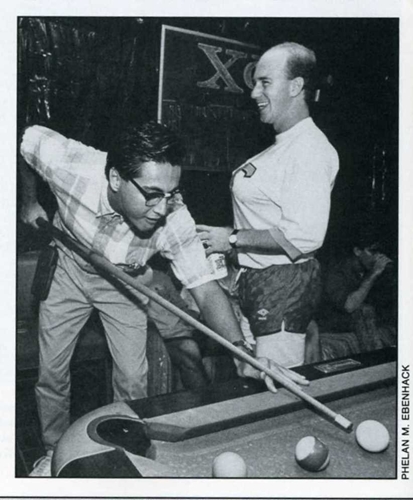
I love the expressions on these college kids.
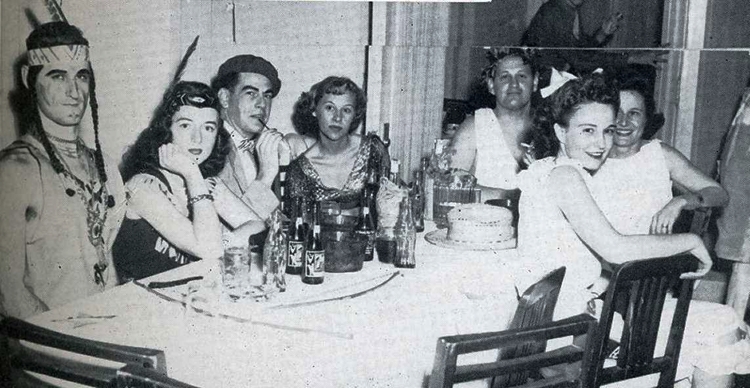
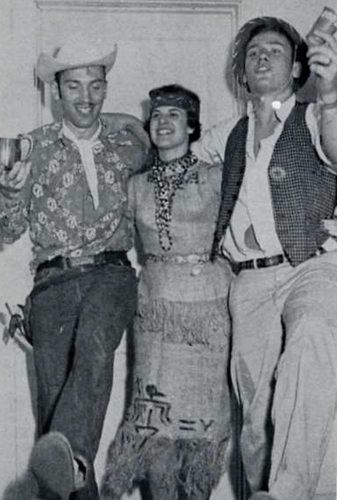
This party’s theme appears to be tropical.
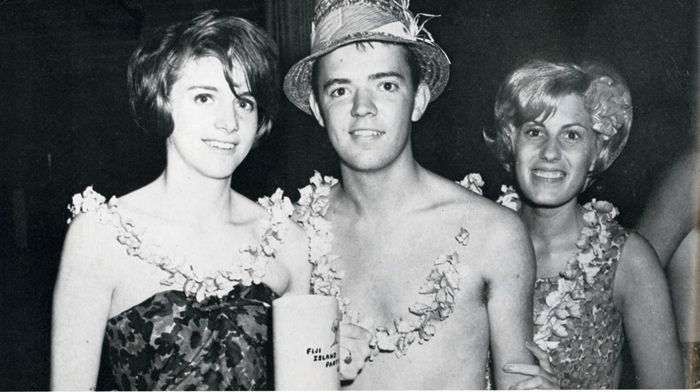
Granted, Faith Hill wasn’t born yet, but she sure looks kin to that lady on the right.


Fat chance you’ll get crowned Mr. or Miss Howdy, but no harm in trying. 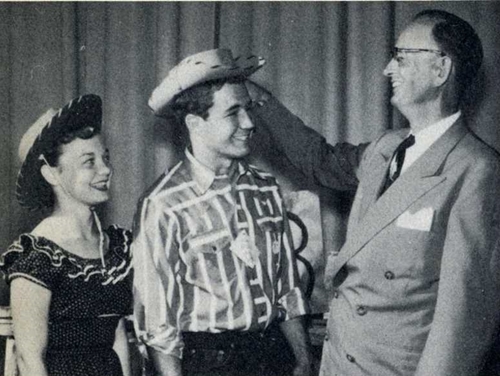

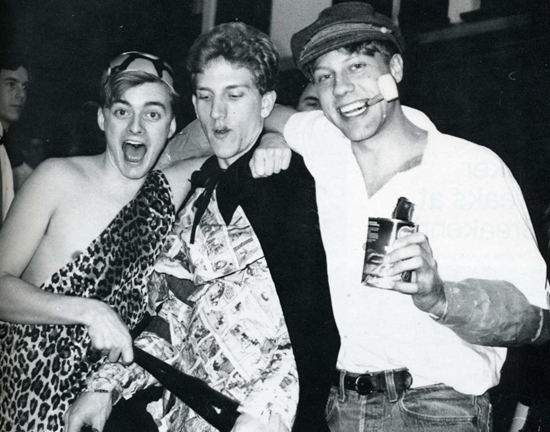
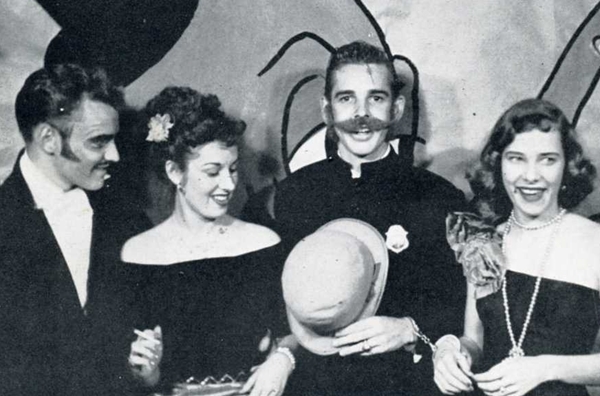
Tarzan, a funny pages vampire (?), and a big-forearmed Popeye
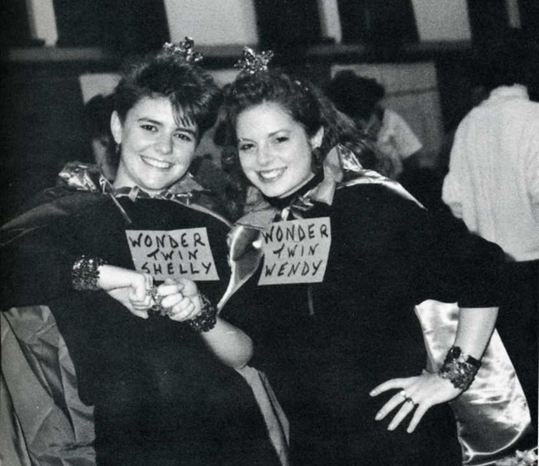
Wonder Twin powers: activate! Form of: Shelly and Wendy!
And this next one? Well, I sure hope it was Halloween. Otherwise, there’s too much estrogen in his chicken nuggets.


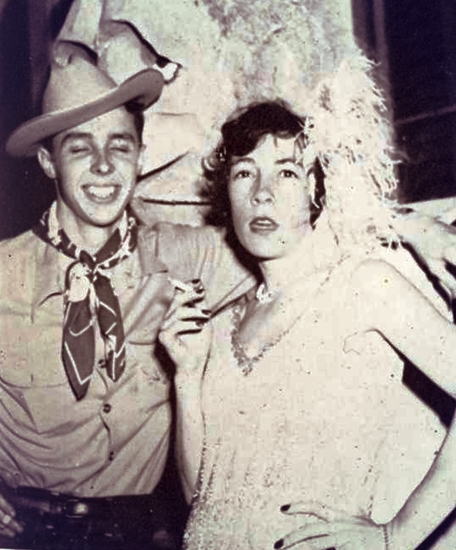
The posture and expression of this 1949 flapper throwback suggest she knows more secrets of the night than her cowboy companion. Sassy with those plumes in her hair!
Below could be an actual 1941 Halloween function. I spy Indians Native Americans, a swami, baby dolls…

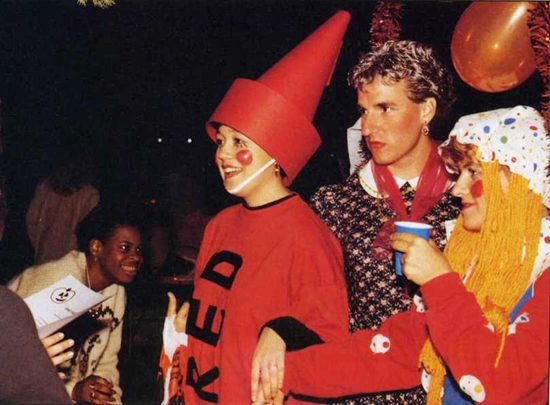
Send in the clowns in 1960.
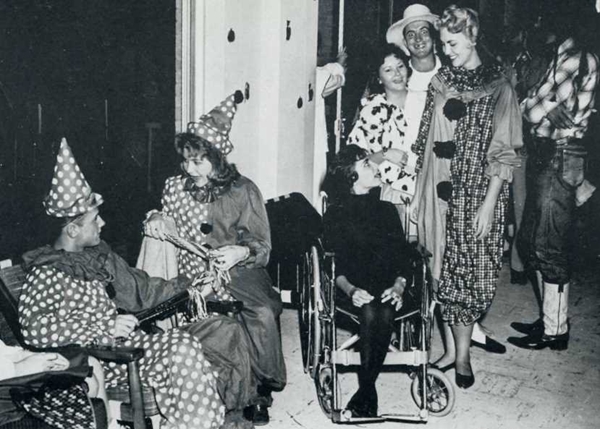
That’s a lot of polka dots!

It’s a pretty common occurrence to find pictures like this of Sadie Hawkins Dances in my 1940s-1950s yearbooks. Tattered clothing, corn cob pipes, and overalls with only one arm on the shoulder were de rigueur. Guests often posed on haystacks such as those above.
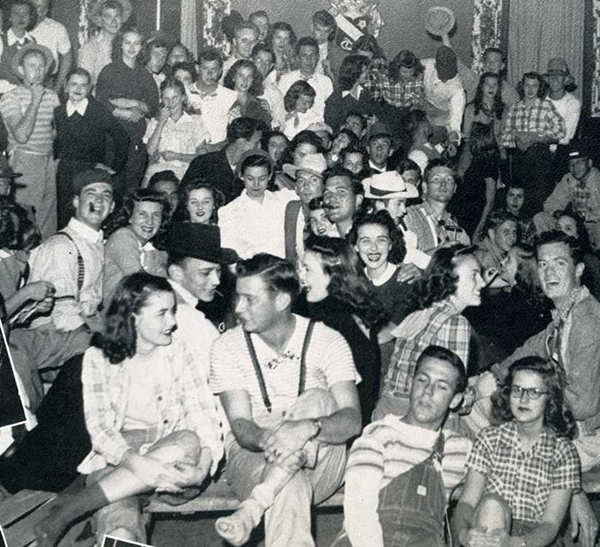
The Sadie Hawkins dance is named after the Li’l Abner homely comic strip character Sadie Hawkins, created by cartoonist Al Capp. In the strip, the unmarried women of Dogpatch, a hillbilly mountain village, got to chase the bachelors and “marry up” with the ones they caught. The event was introduced in the daily strip, which ran on November 15, 1937.

Consequently, Sadie Hawkins dances are traditionally held in November, with the first official one being held on November 9, 1938. Within a year, hundreds of schools followed suit. By 1952, the event was reportedly celebrated at 40,000 known venues. If nothing else, it empowered women to do the asking–and perhaps face rejection.
In the comic, the voluptuous Daisy Mae has the hots for the dense and simple-minded 6’3″ Abner, hardly “l’il” at all.

Participants at the dances often wore tattered clothing or plaid shirts.
 In the next photo, you can see that not much had changed as far as attire in the 25 years since its original inception and this 1964 Sadie Hawkins Dance.
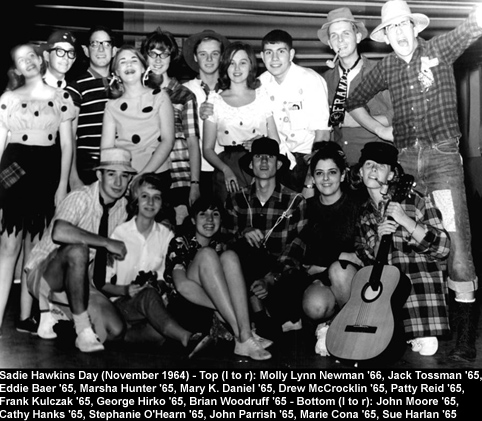
What about you? Did you ever attend a Sadie Hawkins Dance? Did people dress up like the L’il Abner characters, or was it purely a girls-ask-boys affair?
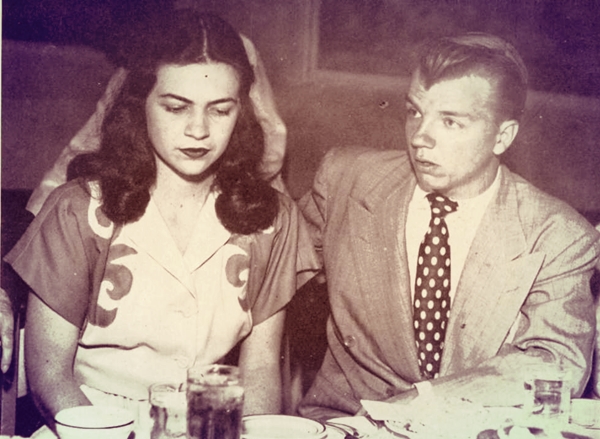

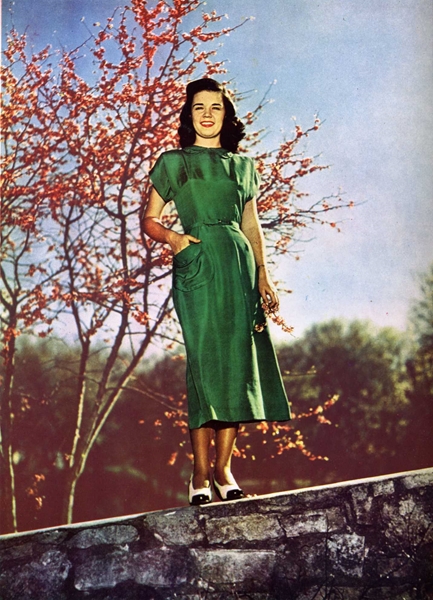
The fabulous Martha Cartwright, 1949’s Sweetheart of the University of Texas, chats with poor-man’s Gregory Peck, clearly not ready for this jelly. Woman at right seems to concur. So not ready for that jelly.
Any beauty queen worth her mettle knows you have to bring in spring with some drama. Martha liked to walk the rock wall in her kelly green frock. Supermodel, work.
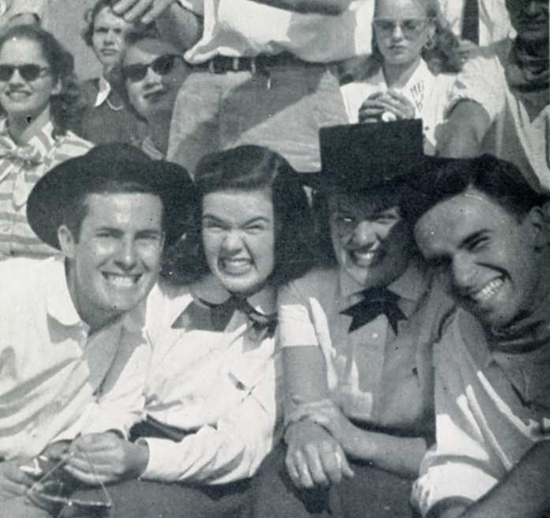
Thankfully, she still had time to clown around at the SMU game with Ace, Phyllis, and John. What a ham!

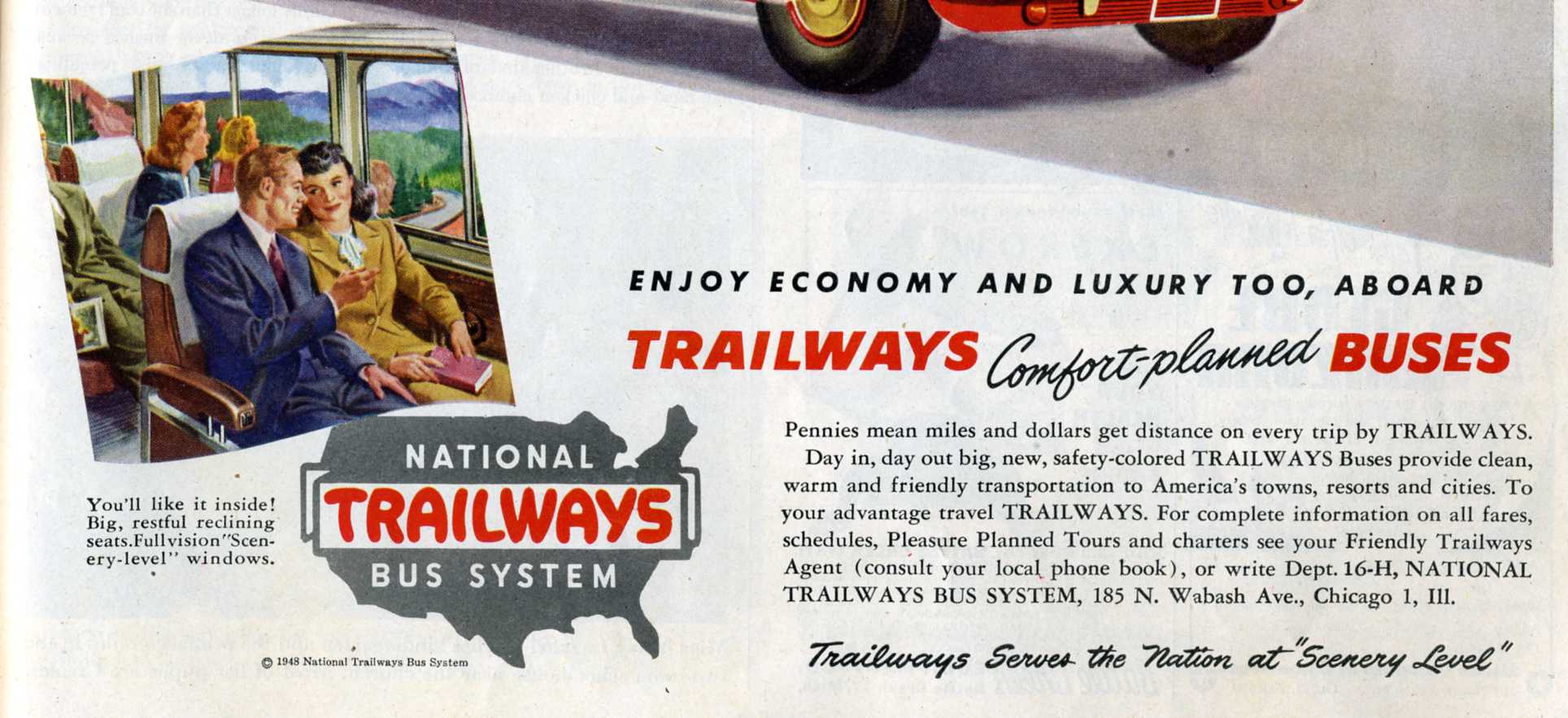
Have you ever seen a finer looking bus than this? Look at this condiment-colored sexy beast, truckin’ along in majestic Heinz 57 and Grey Poupon paint job. Get down with your bad self, Trailways Bus!

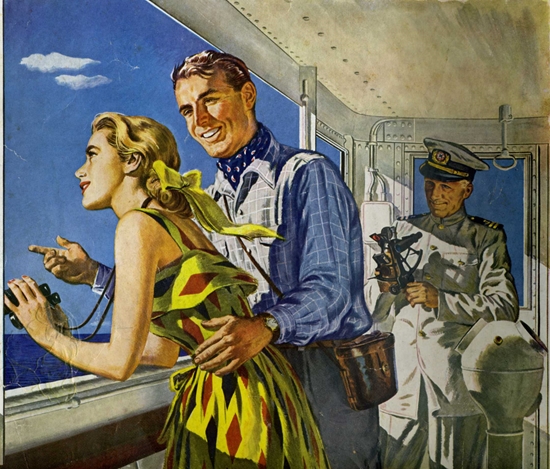
Even the captain can sense it, although his smirk seems to endorse it, rather than condemn it. I doubt Captain Stubing would have approved.
The 1949 ad is for Lurline cruises, part of the Matson Lines. Nope, never heard of them. But isn’t the artwork lovely? Lurline sounds like the name of a girl in a gabardine dress, brewing sweet tea on a window sill, if you ask me. You can bet the narrow-waisted girl in the chartreuse dress here was not named Lurline. Lurlines do not go on cruises with older men. Or do they?
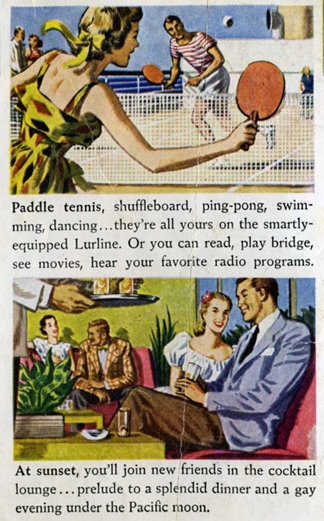
This all sounds inviting: shuffleboard, dancing, listening to a radio because there were no televisions on board, having a gay evening under the Pacific moon. Maybe she does know what she’s doing after all.
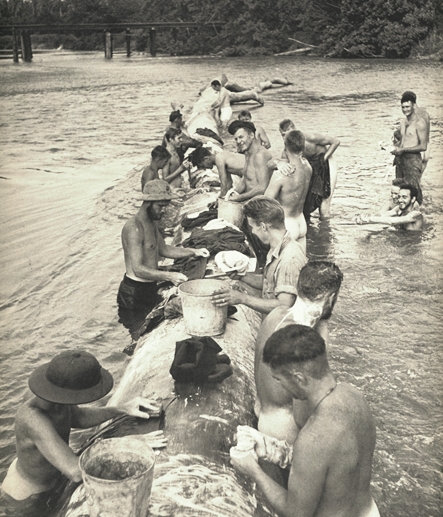
Leathernecks on Guadalcanal use a fallen tree as a makeshift laundromat, scrubbing jungle dirt out of their battle fatigues.
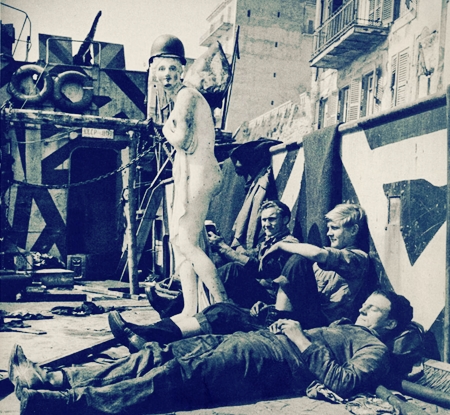
Soldiers rest in the shadow of a marble trophy from Anzio, Italy, donning a regulation tin hat.

An English Red Cross lady offers coffee and donuts to a G.I. and his captain.
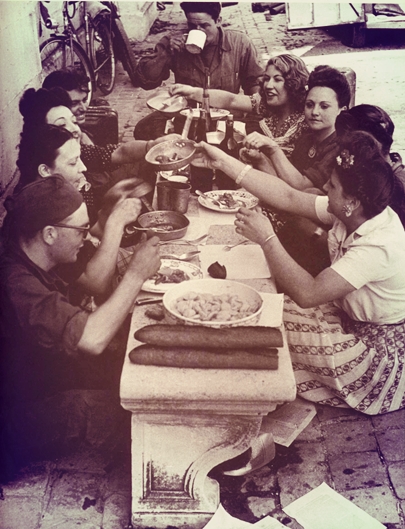
Finally in Paris, U.S. infantrymen share an al fresco meal with celebrating townsfolk.
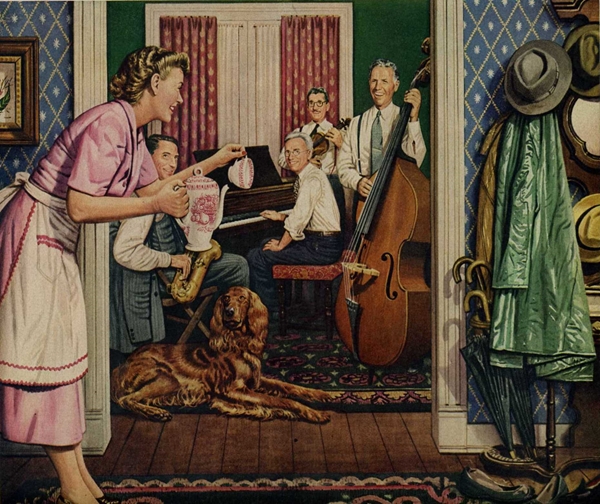 The menfolk are jamming out in the parlor, the Irish Setter is setting, the rain is falling outside. Isn’t it time for coffee?


 I Don't Get It