The Moment Lisa Decided She Wanted To Be A Teacher

Time to get the H out of Dodge.
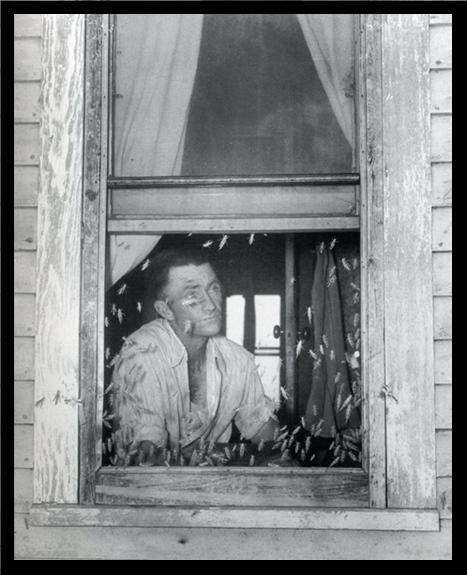
A New Mexico man sits in a stupor, as some of the millions of grasshoppers that invaded the land swarm his window.
Said Sam Arguello of Union County, New Mexico in 1938:
You’d pull on the reins and the horse would slide on the grasshoppers. And that’s a fact. That’s not make-believe. I went through it. I know it.
If it wasn’t grasshoppers, it was erosion. 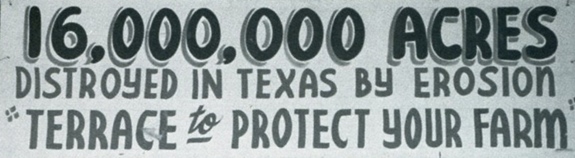
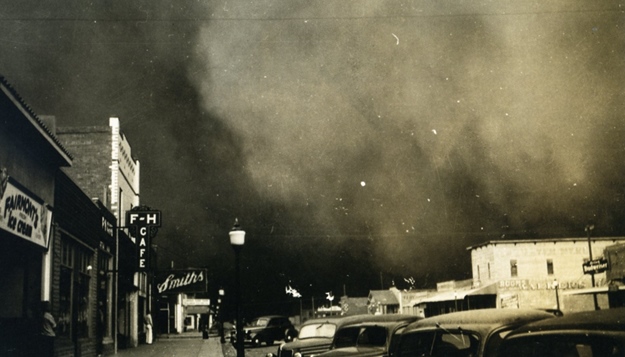
And with erosion, came the dust. Below a black blizzard hits Elkhart, Kansas on May 21, 1937.
FDR encouraged these Boise City farmers to stay put, offering the promise of help and hope. Said Timothy Egan, “Here’s a land that God Himself seems to have given up on, getting the backhand of nature.”
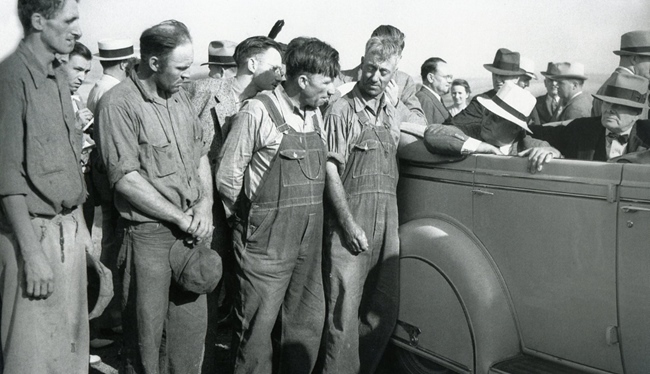
But many could not heed his words. The Dust Bowl exodus was the largest migration in American history. According to www.pbs.org, by 1940, 2.5 million people had moved out of the Plains states; of those, 200,000 moved to California.
This Texas family loaded up their goat and hit the road, Jack.
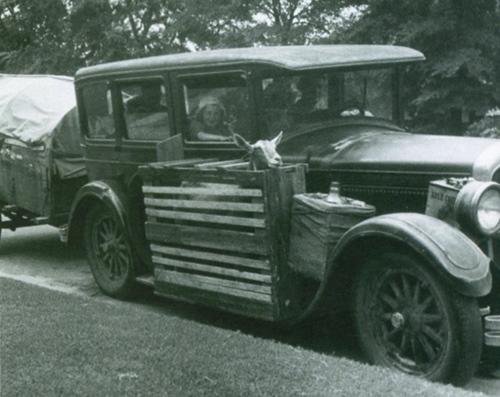
Complications would arise, but this Texan father was able to repair the back axle while his family waited in the shade of a tarp.
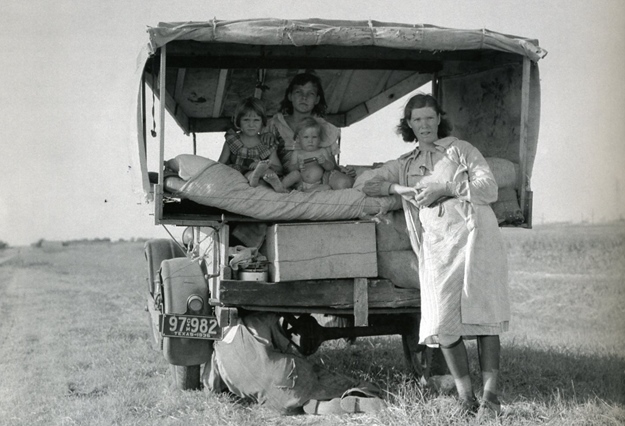
Eventually, the drought let up, and precipitation returned. By the end of 1939, the Dust Bowl had shrunk to 1/5 its previous size. By 1940, the drought was officially over, and many farmers harvested their first profitable crop since 1930.
According to Lorene Delay White in The Dust Bowl: An Illustrated History:
Now one will ever know what it meant to us to have it rain. That’s what we prayed for, what we yearned for, was the rain that came that would soak in to the ground and let us raise a crop and eventually stop the dust.
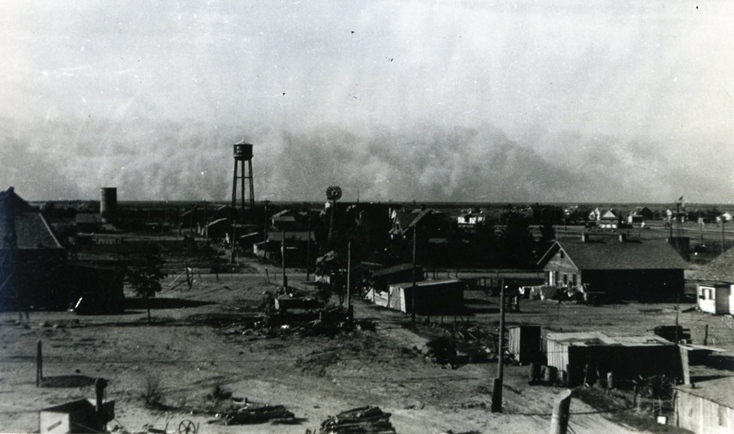
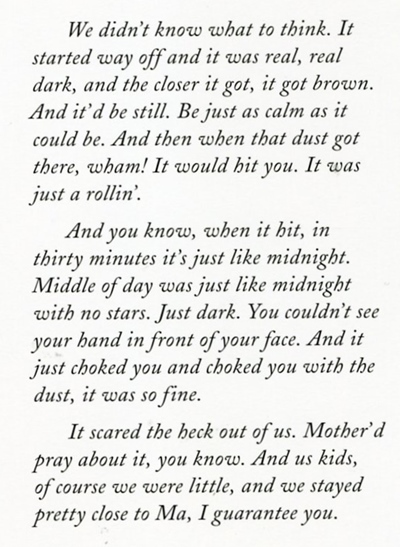
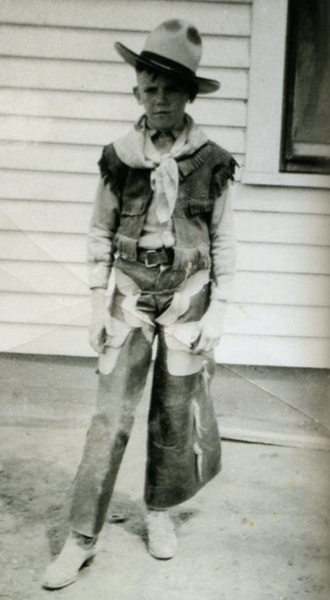
These were the words of young Robert “Boots” McCoy from an area near Boise City, Oklahoma in January 1932, as he huddled with his older sister Ruby Pauline and pregnant mother.
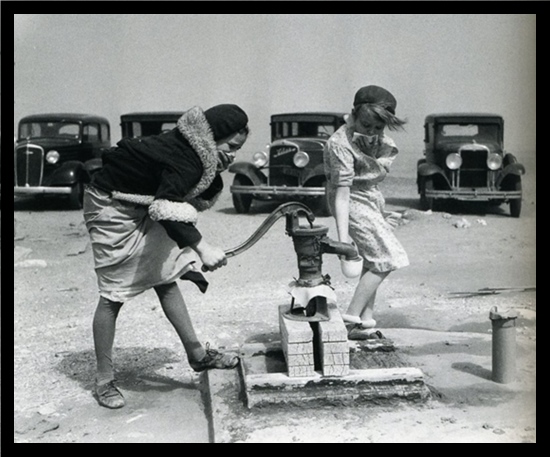
Two Baca County, Colorado girls cover their mouths while pumping water into a cup in March 1935.
The Dust Bowl by Duncan & Burns showcases images and stories from the five states affected by the “worst man-made ecological disaster in American history.” Below is what is considered the Dust Bowl during the 1930s.
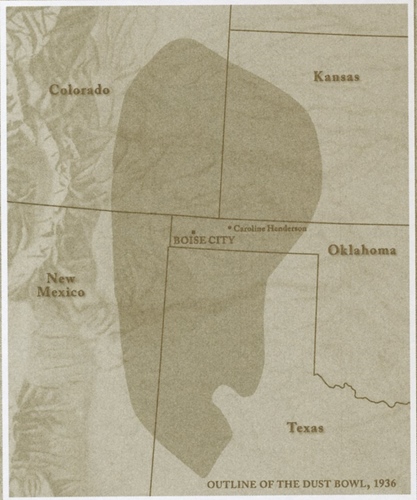
Wind, drought, and poor farming practices combined to create a perfect storm of “black blizzards” across millions of acres, lasting nearly a decade.
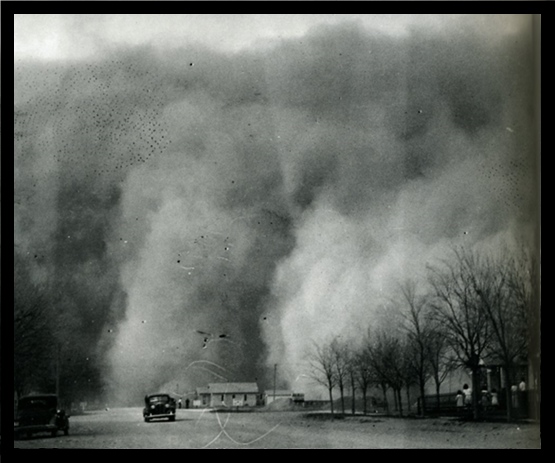
Imagine 14 million grasshoppers per square mile descending upon parched fields, while millions of tons of topsoil blew away each year, seeping into every crevice imaginable.
Syracuse, Kansas shopkeepers kept their arms strong by continually sweeping the dust from their sidewalks. 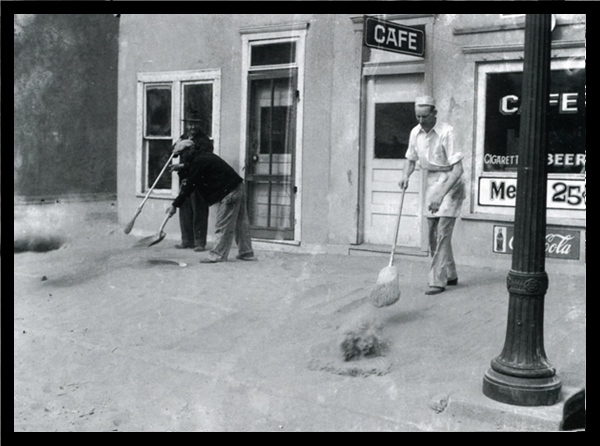
This paperboy in Ness City, KS donned a dust mask and goggles in order to complete his job. One imagines the headlines maintained Living in the Dust Bowl Stinks.


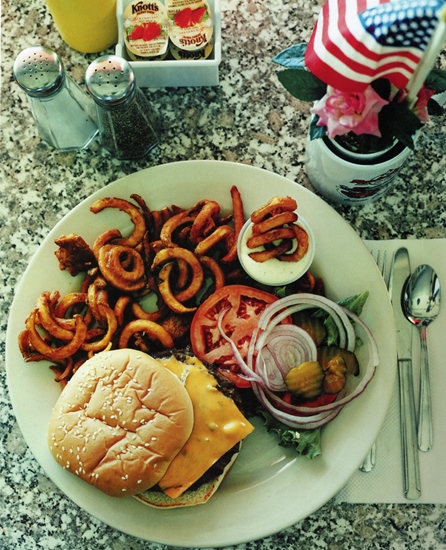
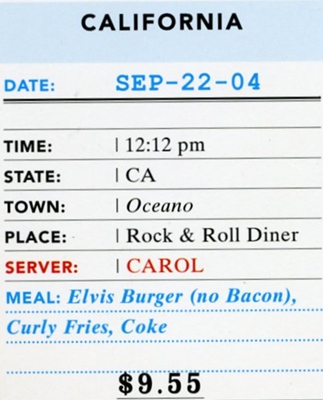
No bacon??

I just learned from Mark at markbialczak.com that our blogger friend, Paul Curran, just passed away. Ever the walking wikipedia, gentleman Paul, living in Ottawa, Canada, had recently survived some serious surgery and (seemingly) come out stronger. But today I learned that he was no longer with us. I went outside and looked at the sky and thought about him, never seeing any more sunsets, but maybe seeing something better than we could ever comprehend.
And if you never got to chat with Paul, here is one of his many tales and tidbits he shared over the years. This one was from last May 5th.
My Nan was born in 1900 (she passed away in 1992 after living in the same house all her life until the last week she spent in hospital). She always dressed in a floral print dress with low heels and a sweater – usually knitted. The dress she would have made herself until about 1960. Except for gifts, she always made all her sweaters up until the day she passed. Nan always had her knitting bag with her and she would sit and chat or listen to the radio while she knitted. She would not think about going out unless she had dressed carefully and put on her heels and make up and did her hair. And she absolutely loved going for drives in the car. You could load her up and go anywhere and she would be happy. We used to take her on vacation and she was awesome – we went to Virginia, New York, Boston (visiting each), Toronto, Montreal, etc. Just sit her in the back seat, give her the occasional cup of tea and she was content. When I was young, we had a station wagon and my parents had the front seats, Nan had the rear seat and my friend and I owned the rear of the station wagon. We pulled a travel trailer (and later rented motor homes)and all the luggage would be in there.
Perhaps you are riding in a station wagon with Nan right now. Here’s to you, my blogger friend.

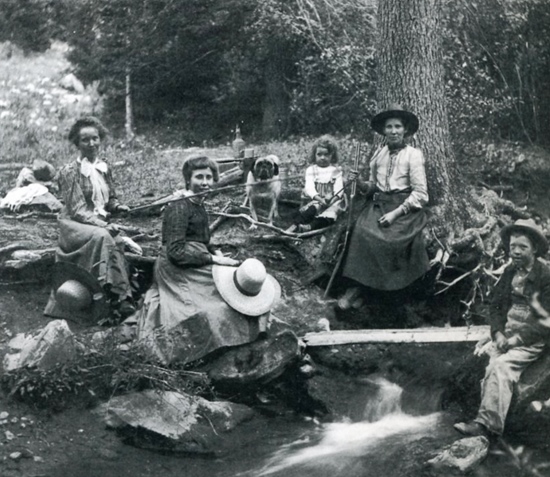
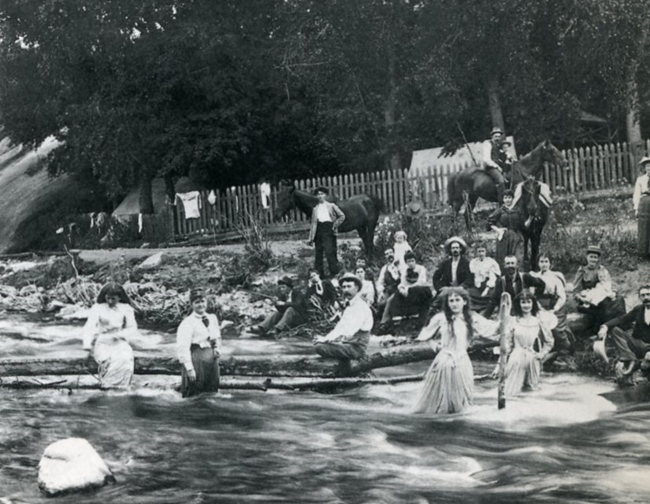


*All images taken from Women of the West by Luchetti & Olwell.

Happy new mama and gruff bodyguard at the Hoopa Indian Reservation in 1896.
For more information on Hoopa peeps, visit https://www.hoopa-nsn.gov/, whose site states: “Serving the people since time immemorial.” That’s a long time.

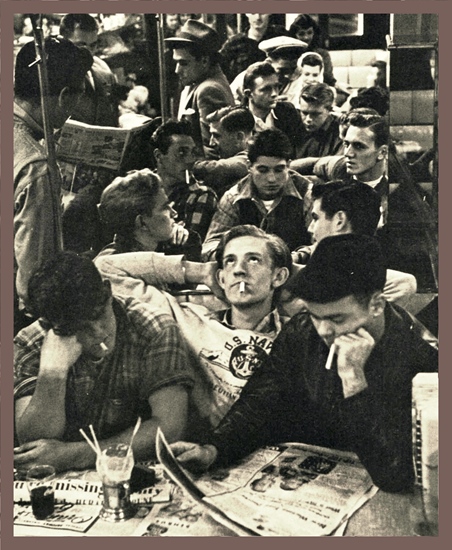
The lucky servicemen who returned home from WWII not in a box often brought home nicotine addictions, PTSD, and not a clue as to where to go from here. Within a year of the end of WWII, six million GIs had drawn an average of two months’ unemployment benefits, calling themselves members of the 52-20 Club, so named for the unemployment pay of $20 for 52 weeks granted discharged servicemen. Rather than quickly return to work, some men (like those in this Long Island soda shop) spent some downtime reading the paper, sipping malts, taking a drag, and sometimes–reassessing.
 I Don't Get It