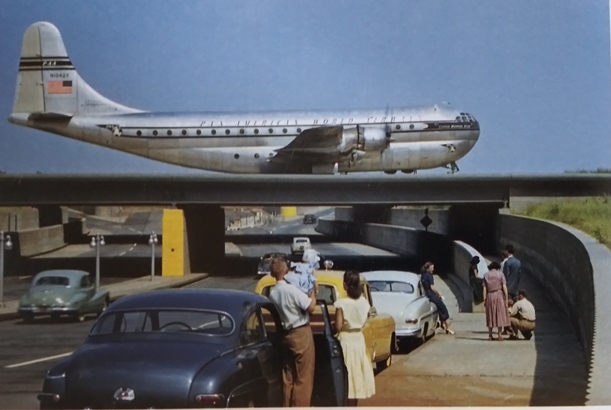
Van Wyck Expressway, Queens, NY, early 50s
Boeing 377 Stratocruiser: “A circular staircase led to a lower-deck beverage lounge, and flight attendants prepared hot meals for 50 to 100 people in a state-of-the-art gallery.”
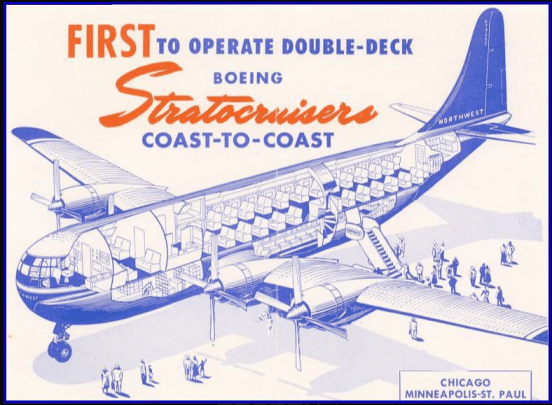
Van Wyck Expressway, Queens, NY, early 50s
Boeing 377 Stratocruiser: “A circular staircase led to a lower-deck beverage lounge, and flight attendants prepared hot meals for 50 to 100 people in a state-of-the-art gallery.”
Welcome back to more ways to be grateful that we live in the air-conditioned world of 2019. We have spent the week, diving into the classified ads of old Cyprus. Let’s cleanse our palate with ladies on looms or doing needlework.


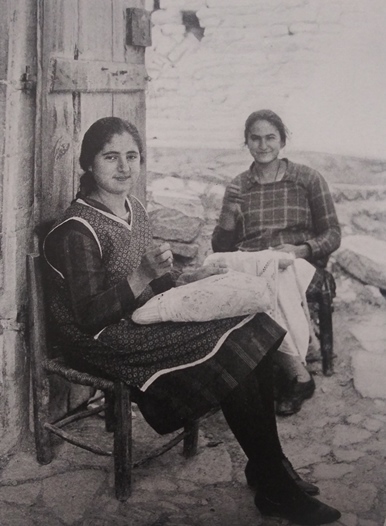
Clothes were important, especially for these deacons in the courtyard of Kykko Monastery, which had fancy new electric lights.

This fine figure was the prelate (not the pre-early) of the Myrtou monastery dedicated to Saint Panteleimon (not pantemime), where he presided as bishop. As to what he is holding, do not ask me.

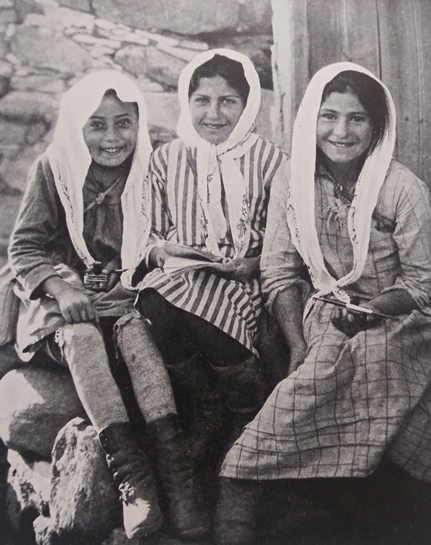
Less impressive garb was worn by the mountain maids of Platres, a popular summer resort.
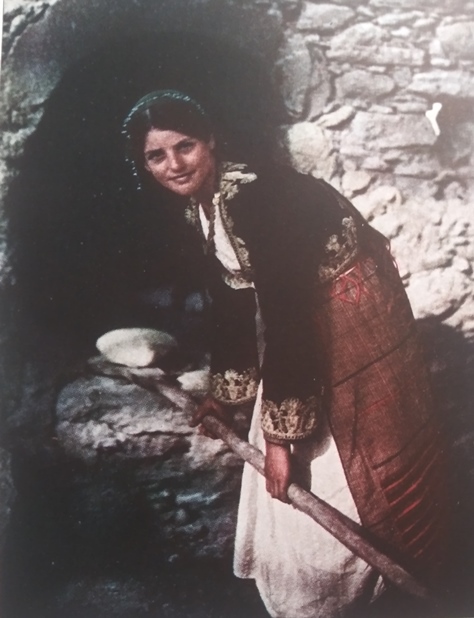
The clothes of this young girl working in the bakery seem festive and refined.
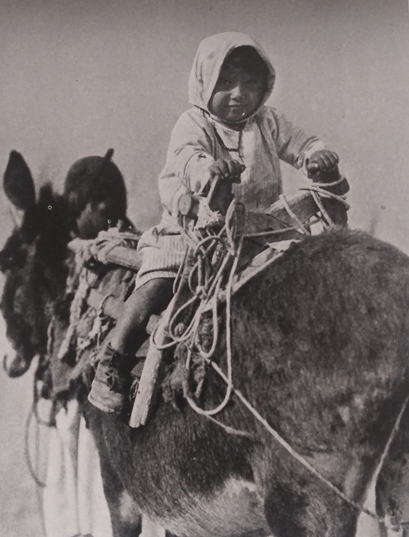
But this toddler had the best job of all, grabbing the rear saddle handlebars as she rode her donkey backwards. “Away from Cyprus, mule! Let us be gone!”
Yesterday, we got a taste of the laborious jobs on the island of Cyprus in 1928. But one post could not do the many jobs justice.
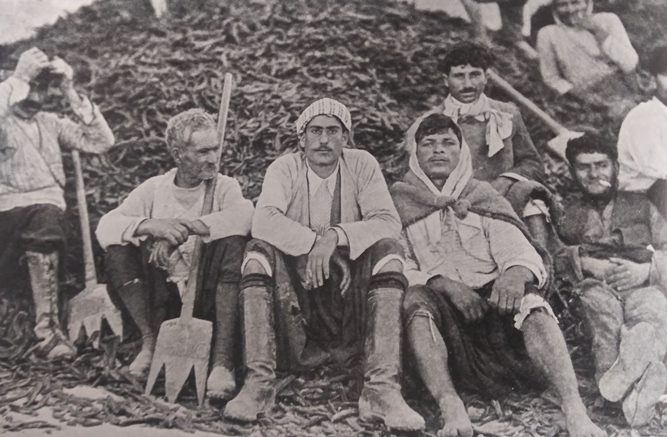
The men below are taking a reprieve from sacking, weighing, and carrying heavy bags of carob pods. Carob is the nasty chocolate substitute that my folks made me eat from Whole Foods. No wonder it was so expensive. Most of this crop went to England, France, Spain and Egypt to feed cattle. What? Yes, for energy-rich fiber. But some of it was made into sweets and syrup.
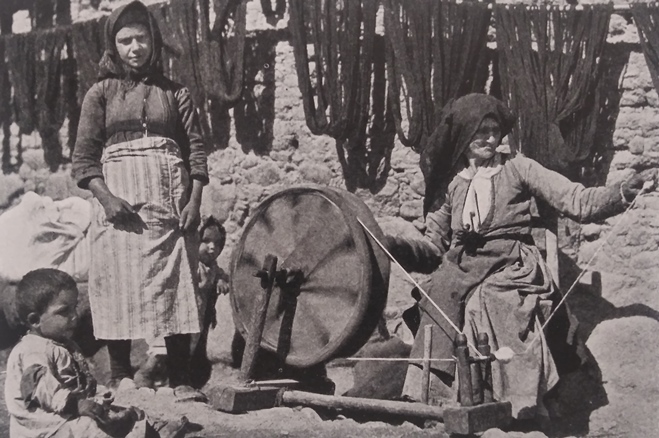
Understandably, men’s work differed from women’s work, though both wore them down. In front of this dyeshop hung with yarn dyed a deep blue for men’s trousers, this elderly woman spins yet more yarn. The trousers had full seats that were tucked into the belt for cross-country walking.
Speaking of walking, here we see another baker (similar to yesterday’s baker), carrying an entire bread counter on his shoulders.

If you didn’t like carrying, you could spend the day tossing, like this man and boy at a Famagusta pottery pile. The ones he neglected to catch would up in the dovecote.

The broken jars became shelters for doves, who made their way into lore in the tale of the Cypriote king who kept himself cool by causing doves to flutter around him. This was before boxed fans. 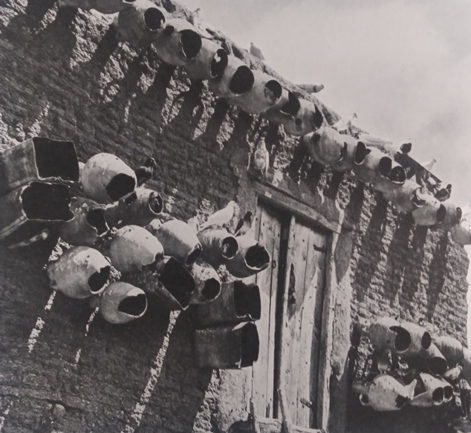
If you looked like a Mediterranean Charlie Chaplin, you might find yourself in this job, where another version of Chaplin scrunched down inside a kiln.

There they fired oil, wine, and water jars. I would suggest a pair of shoes.
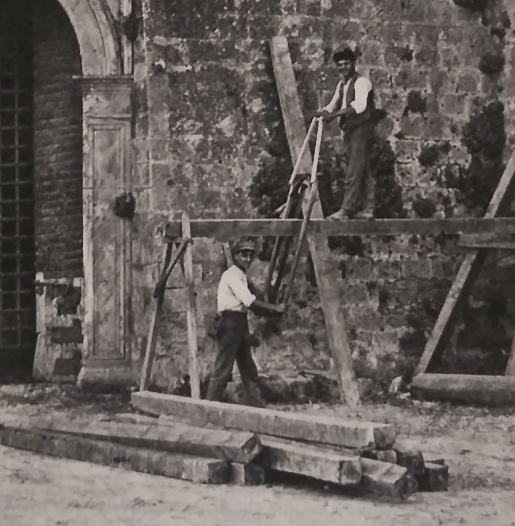
This might be hard to detect against the backdrop of the Sea Gate Tower, part of the city’s Venetian fortification, but here we see a two-man sawmill.

That kind of work calls for Gatorade. But that wouldn’t be invented till ’65.
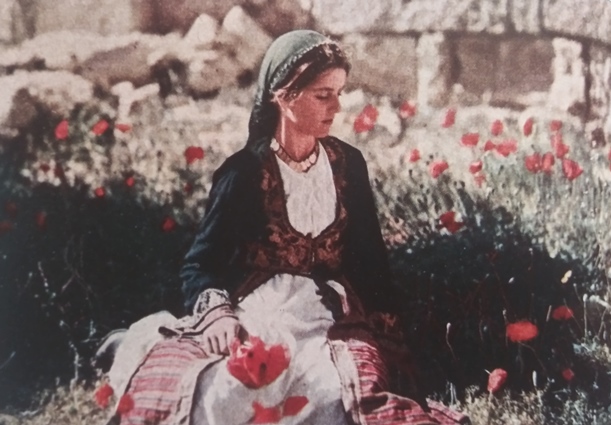
Join us tomorrow for yet more fun and fabulous career choices! I leave you with this image of a 12-year-old on her day off from breaking rocks, enjoying a day of rest.

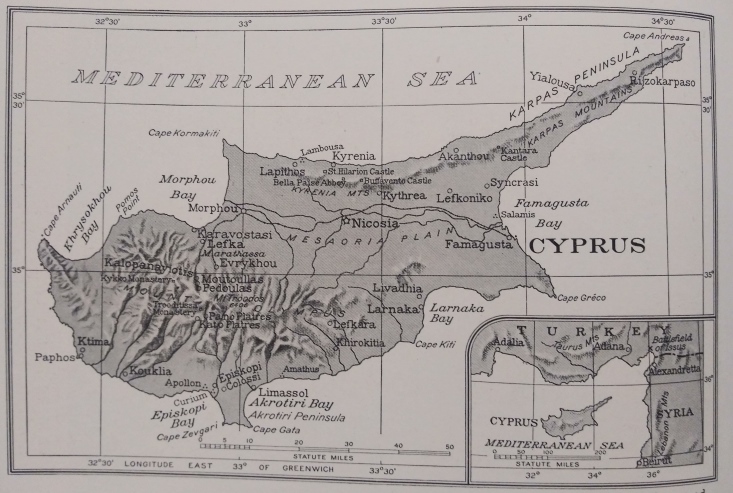
Imagine yourself in Famagusta, a city on the east coast of Cyprus, over 90 years ago. The tiny Mediterranean island of Cyprus currently has a population just over a million, or a scooch more than the capital of Texas. So you can imagine how sparsely populated it must have been in 1928. You could hit the open-air market early for coffee in the cafe on the left. Then you could purchase fresh fruit and grab a goat carcass to go.
Or if you were feeling especially fancy, you could travel 30 miles to dine at the restaurant in nearby Nicosia. There they would serve you a meal of nutty breads, ripe olives, sour cheese, roast goat, and you could wash it all down with a draft poured from a pink-clay pitcher.
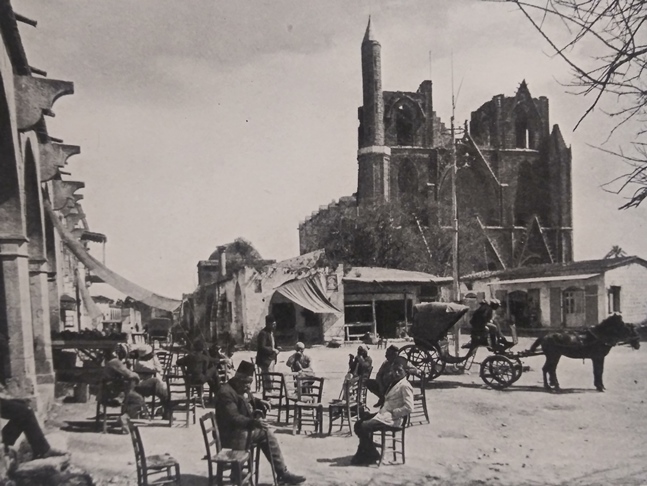
While gnawing on tough goat, you could enjoy the lovely view of the Ayia Sophia mosque, as it was known back then, meaning “Holy Wisdom” in Greek. Take in the scars of Turkish cannon balls hurled at her walls, the broken buttresses and ruined belfries, and the one Gothic turret elongated into a minaret. Today it is known as Selimiye Mosque. The foundation stone is from 1209, so yeah, it’s old.
Stop by tomorrow for more images and history from the little island of Cyprus!





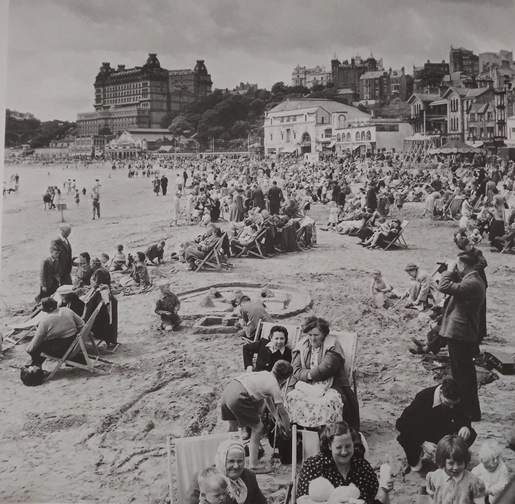
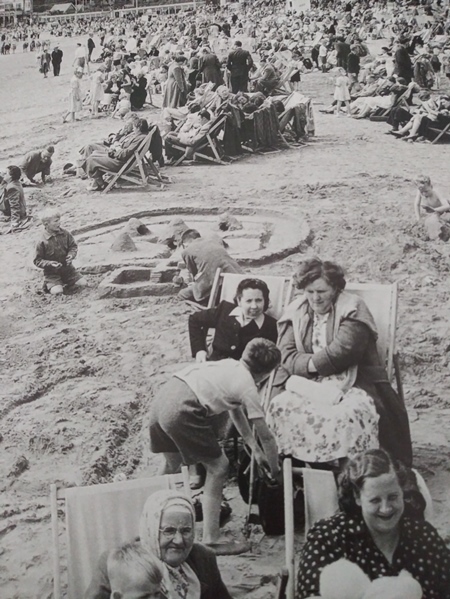
On The South Bay Beach, 1952, Thurston Hopkins
At this point, WWII was in the books, and the era of photography had changed as well. More formal portraiture had made way for commonplace settings, examining the ordinary, such as these folks at the beach.
I can’t say that personally, I’ve ever seen people wearing winter clothes to a beach, much less a business suit. Even the children building sandcastles are wearing long-sleeved, button-down shirts. I guess the day was made more for being outdoors than for a brisk swim. I love these expressive matronly faces, but I also wonder if it was hard to procure sunglasses at the time. Surely, they could have used some!
In the background lies the luxury hotel called The Grand. When it opened in 1867, it was the largest hotel and the largest brick structure in all of Europe! Now, to the Americans, that’s ancient. But over there, I suppose 1867 was just a couple blinks ago–and it certainly doesn’t conjure up memories of a post-Civil War era for them.
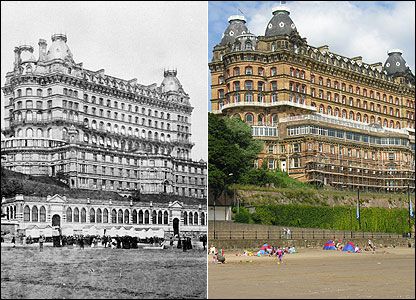
Myself, I don’t care for hotels–for the midnight slamming doors, kids running up and down halls, the thin walls, the questionable cleanliness (especially the bed quilts), the half-ply toilet paper, the items I have found on carpet, including both metal tacks and bullets at a certain Hyatt. But I can appreciate the architecture. And while this hotel has faced all kinds of health issues, from cases of gastroenteritis to Norwalk virus to dangerous levels of bleach in the water, the most interesting tidbit is as follows:
In September 2006, the management installed extra netting and spikes on the exterior of the building to deter nesting seagulls. The birds, which are regarded as a nuisance in parts of the town, had been disturbing guests with mating calls. Their droppings were also responsible for a significant proportion of the hotel’s cleaning expenses. (Scarborough Evening News)
 I Don't Get It