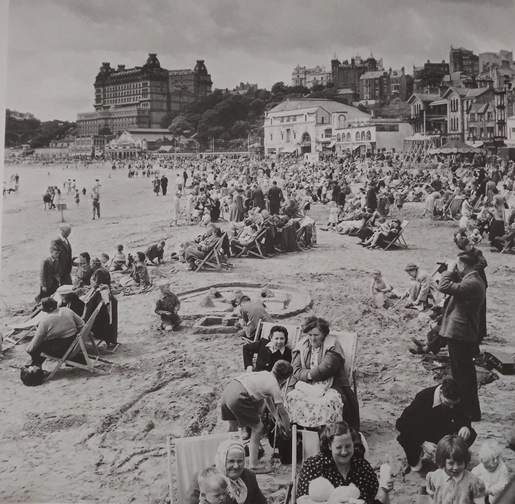
On The South Bay Beach, 1952, Thurston Hopkins
At this point, WWII was in the books, and the era of photography had changed as well. More formal portraiture had made way for commonplace settings, examining the ordinary, such as these folks at the beach.
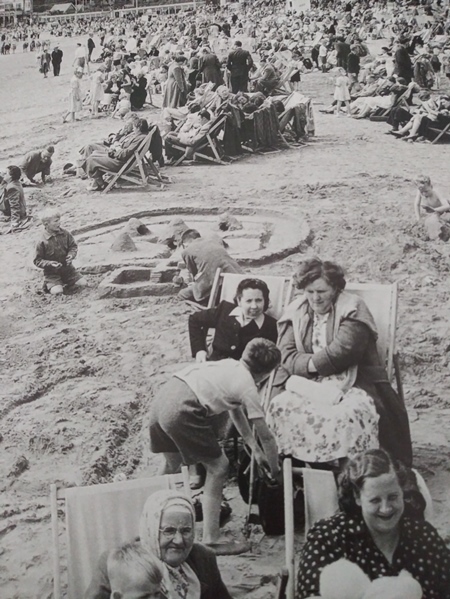
I can’t say that personally, I’ve ever seen people wearing winter clothes to a beach, much less a business suit. Even the children building sandcastles are wearing long-sleeved, button-down shirts. I guess the day was made more for being outdoors than for a brisk swim. I love these expressive matronly faces, but I also wonder if it was hard to procure sunglasses at the time. Surely, they could have used some!
In the background lies the luxury hotel called The Grand. When it opened in 1867, it was the largest hotel and the largest brick structure in all of Europe! Now, to the Americans, that’s ancient. But over there, I suppose 1867 was just a couple blinks ago–and it certainly doesn’t conjure up memories of a post-Civil War era for them.
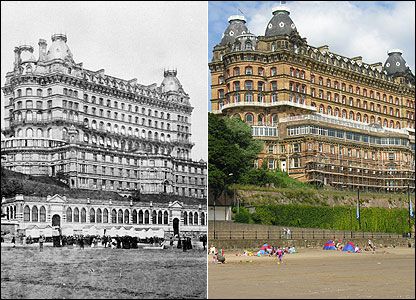
Myself, I don’t care for hotels–for the midnight slamming doors, kids running up and down halls, the thin walls, the questionable cleanliness (especially the bed quilts), the half-ply toilet paper, the items I have found on carpet, including both metal tacks and bullets at a certain Hyatt. But I can appreciate the architecture. And while this hotel has faced all kinds of health issues, from cases of gastroenteritis to Norwalk virus to dangerous levels of bleach in the water, the most interesting tidbit is as follows:
In September 2006, the management installed extra netting and spikes on the exterior of the building to deter nesting seagulls. The birds, which are regarded as a nuisance in parts of the town, had been disturbing guests with mating calls. Their droppings were also responsible for a significant proportion of the hotel’s cleaning expenses. (Scarborough Evening News)








 I Don't Get It