
As men left to fight in WWII, American factory jobs were taken over by women. The ladies above built B-24 Liberator bombers at the world’s largest assembly line in Ft. Worth, Texas.
Of course, they didn’t add the artwork to this Liberator. 
As men left to fight in WWII, American factory jobs were taken over by women. The ladies above built B-24 Liberator bombers at the world’s largest assembly line in Ft. Worth, Texas.
Of course, they didn’t add the artwork to this Liberator.
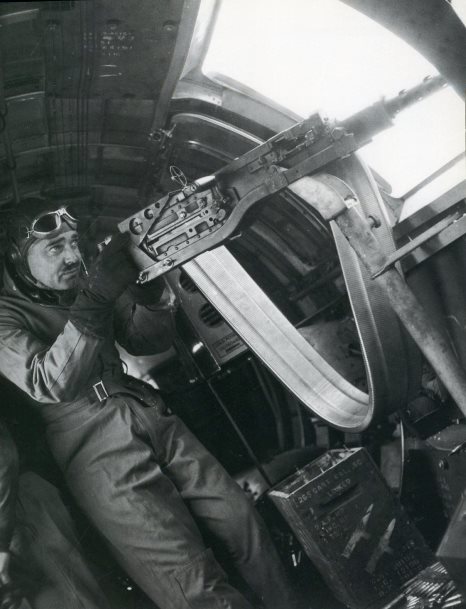
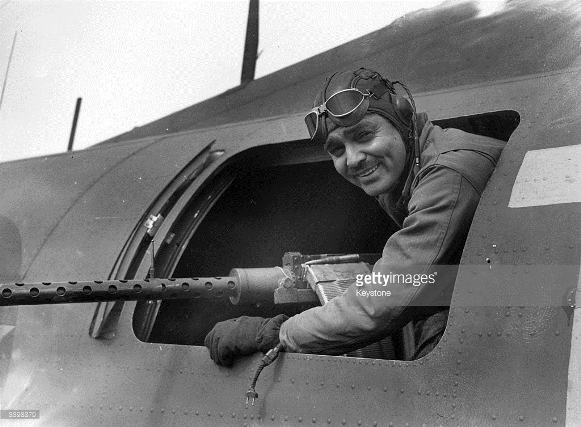
Gunnery instructor Clark Gable shows his skills with the US Army Air Force during 1943 in England.

What festive autumn colors! Sixteen-year-old Jacqueline LaVigne, aka Miss Vermont, took part in several 4-H canning projects, using tomatoes from her Essex Center garden. Check out that plastic apron!
This beauty had her hands full at the State Fair in Indianapolis. She was one of the 1,760,000 boys and girls taking part in 4-H Clubs in 1948. During WWII, 4-H club members canned 74 MILLION quarts of food. 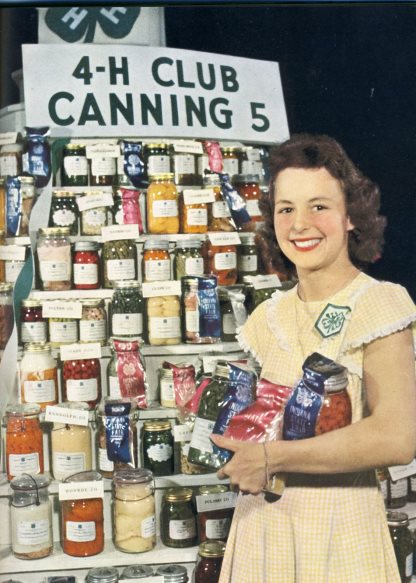
But it wasn’t only 4-H members canning. Home canning reached its peak in 1943, with over 4.1 billion jars canned in homes and community canning centers (Bentley, 1998). 
http://www.nal.usda.govwww.aliexpress.com


Soviet and American soldiers share a dance upon their meet-up at the River Elbe near Torgau. This contact between the Soviets, advancing from the East, and the Americans, advancing from the West, meant that the two powers had effectively cut Germany in two and would be commemorated as “Elbe Day”, the 25th of April 1945. Near Torgau, Saxony, Germany. 26 April 1945.
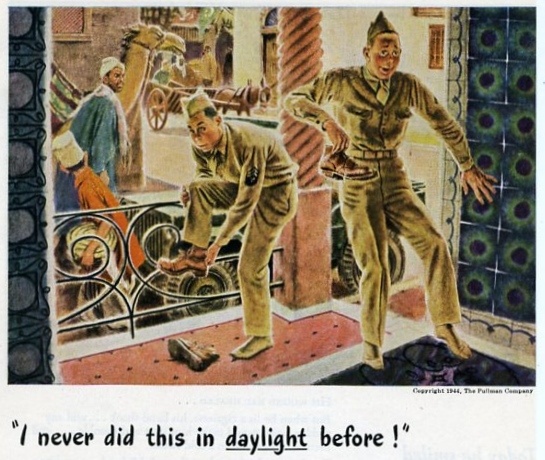

Pullman ad

STAFF SERGEANT GEORGE TALBERT OF 3RD BATTALION, 18TH INFANTRY REGIMENT, 1ST INFANTRY DIVISION, ON THE LOOKOUT FOR GERMAN TROOPS IN A FOREST NEAR SOURBRODT, BELGIUM DURING THE BATTLE OF THE BULGE – 19 DECEMBER 1944
Histomil is a great site full of thousands of WWII images, capturing both victorious and horrific moments alike. Some are captioned like the one above, and some leave you with dozens of questions.
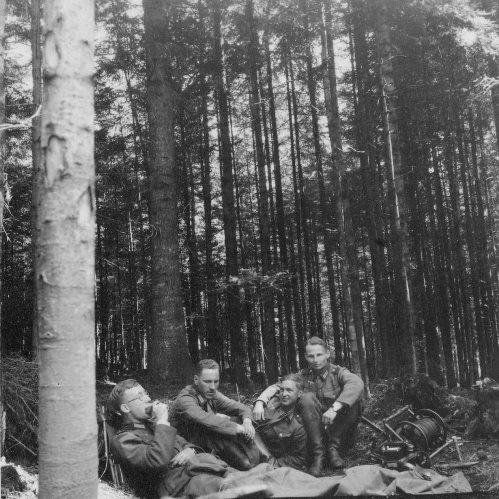
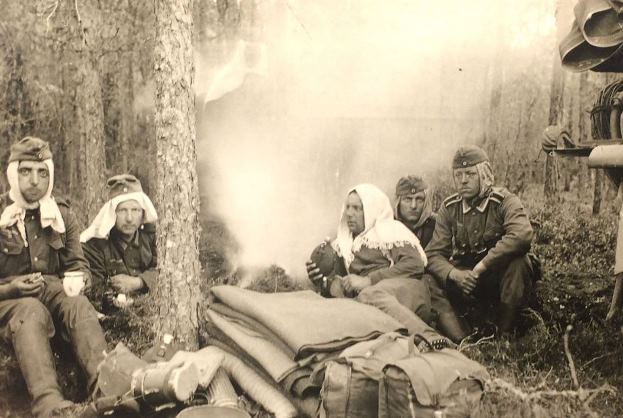
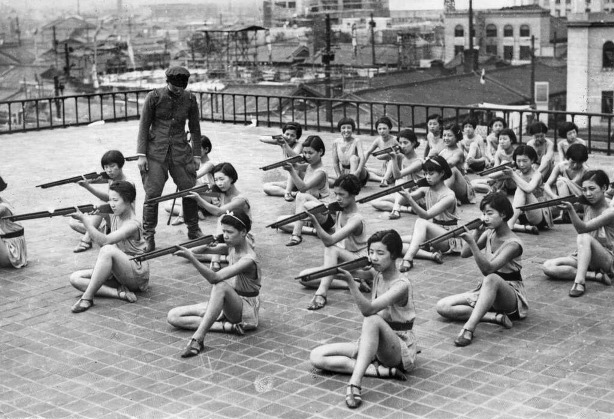
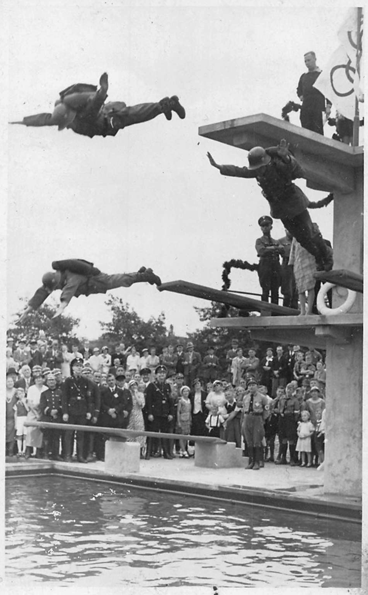
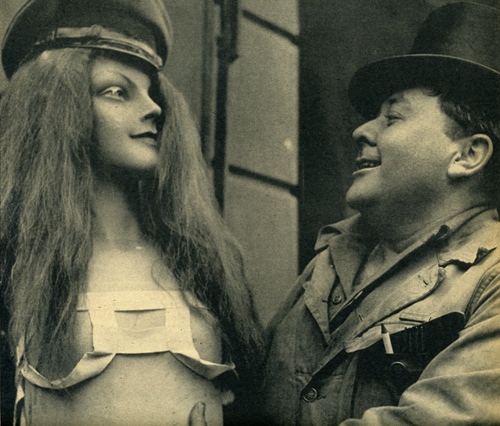
During WWII, American soldiers were forbidden from fraternizing with German girls, no matter how comely or eager. Corporal Harold Goodden could hardly resist this mannequin, replete with German officer’s cap and lustrous locks. Surely she was not harboring Nazi tendencies.
But rulebooks be damned. By 1949 (four years later) over 20,000 German war brides had emigrated to the United States to join their charming US serviceman (and to get the H out of Europe).
Italy was also the enemy, but no matter to stationed soldiers. No less than 412 brides were all aboard the liner Algonquin in this shot. Clearly there was more than “fraternization” going on.
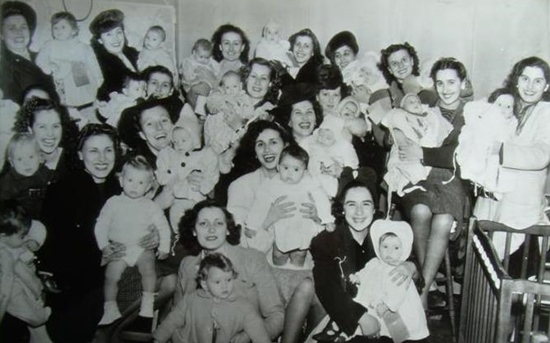
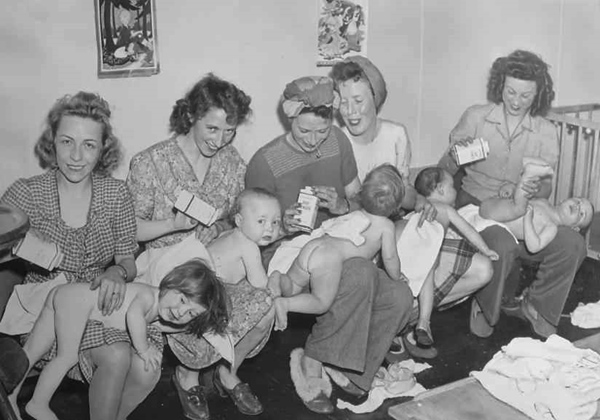
Women from many nations soon found the US to be home. An estimated 100, 000 UK women, 1,500 hundred New Zealand women, and 15,000 Australian women married American soldiers and moved to the US as well.
Ireland was neutral during WWII, and evidently Irish lasses were not immune to the charms of American soldiers. Exactly one year after the above picture was printed, these Irish war brides set sail for a new life in New York, where their babies would be introduced to their American fathers.


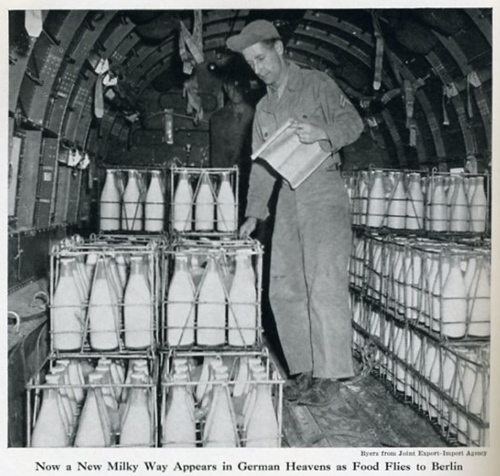
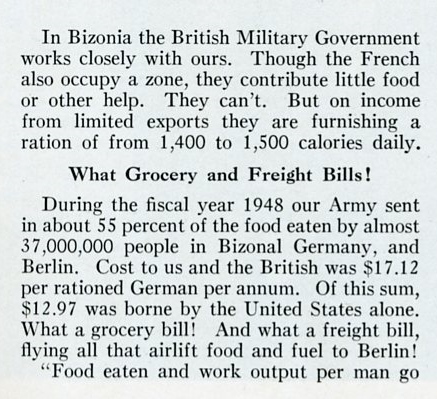
In January of 1949, National Geographic profiled the status of American taxpayer money sent as aid to war-torn Germany, and more specifically “Bizonia,” the American and British-occupied areas. By 1947, it had become clear that the Soviet Union would not allow free, multiparty elections throughout Germany, so the Americans and British forces united to foster economic recovery. Millions of American dollars went to implement the Marshall Plan, under the general name of European Recovery Program (ERP).
Below is Corp. Arthur Campbell, checking fresh Denmark milk being flown from Wiesbaden to the old German capital of “cold, sick, and hungry Berlin.”


A member of the Finnish Red Cross hands Helsinki housewife Sirkka Michelsson a package, including a sweater knit by the Nashville American Red Cross chapter, pajamas for her children from Connecticut, a dress, and more. Michelsson, weeping tears of gratitude, was one of thousands of people helped by American generosity in the post-WWII years.

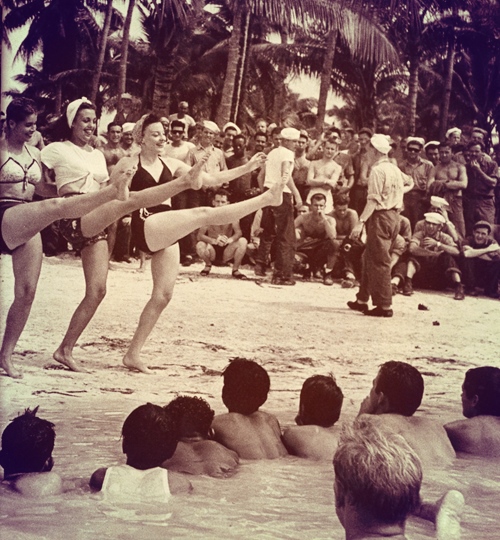
After the victory in WWII, there weren’t enough planes, trains, and ships to carry all the men home as quickly as they would have preferred. Families back home chanted, “Bring the boys home, bring the boys home!” Dozens of USO shows were dispatched to distract the servicemen with bare legs and pretty smiles. It didn’t work. The new chant became, “No boats, no votes!” And with that, Congress brought three million servicemen back home by November. One million were promised to soon be on their way. Sometimes you want eye candy: sometimes you just want to be back in your own warm bed again.
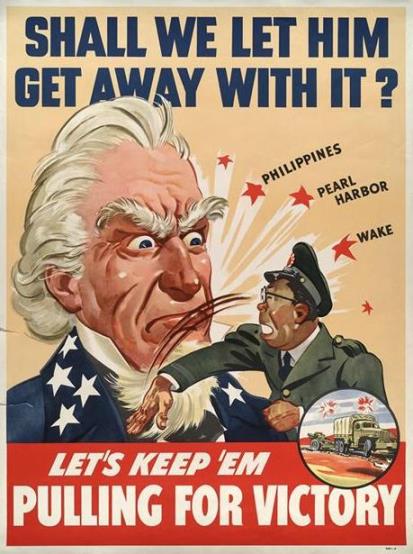
Today marks the 75th anniversary of Pearl Harbor.

 I Don't Get It