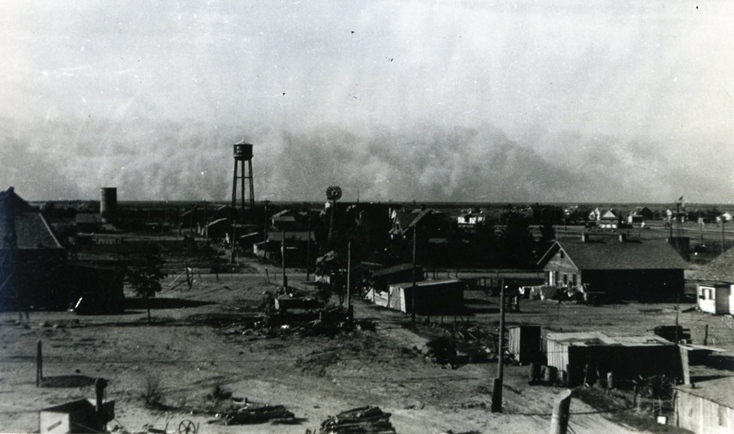
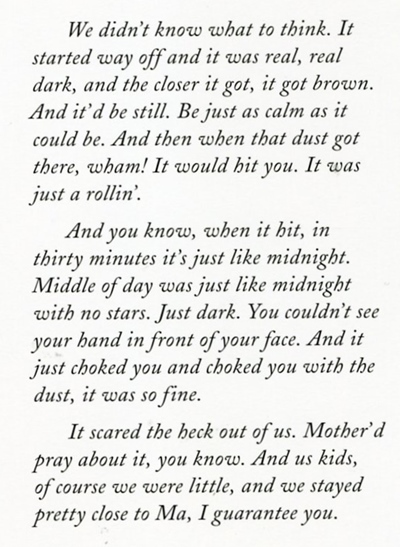
These were the words of young Robert “Boots” McCoy from an area near Boise City, Oklahoma in January 1932, as he huddled with his older sister Ruby Pauline and pregnant mother.
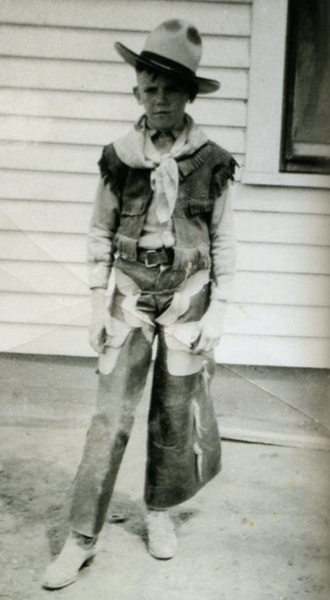
These were the words of young Robert “Boots” McCoy from an area near Boise City, Oklahoma in January 1932, as he huddled with his older sister Ruby Pauline and pregnant mother.
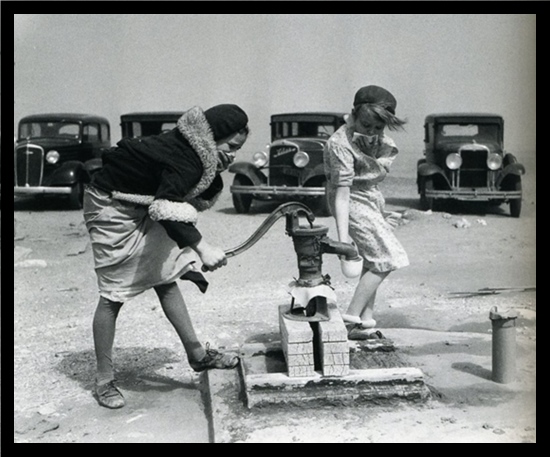
Two Baca County, Colorado girls cover their mouths while pumping water into a cup in March 1935.
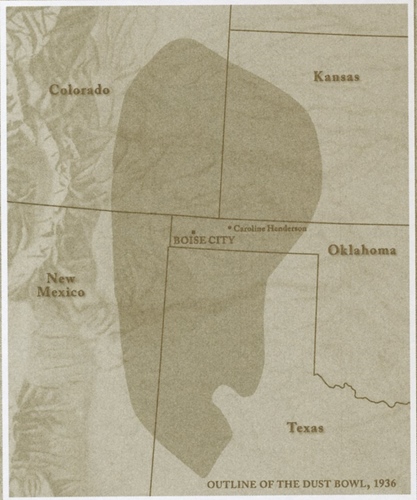
The Dust Bowl by Duncan & Burns showcases images and stories from the five states affected by the “worst man-made ecological disaster in American history.” Below is what is considered the Dust Bowl during the 1930s.
Wind, drought, and poor farming practices combined to create a perfect storm of “black blizzards” across millions of acres, lasting nearly a decade.
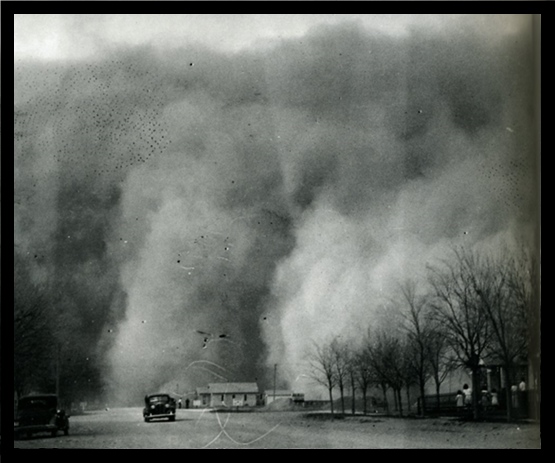
Imagine 14 million grasshoppers per square mile descending upon parched fields, while millions of tons of topsoil blew away each year, seeping into every crevice imaginable.
Syracuse, Kansas shopkeepers kept their arms strong by continually sweeping the dust from their sidewalks. 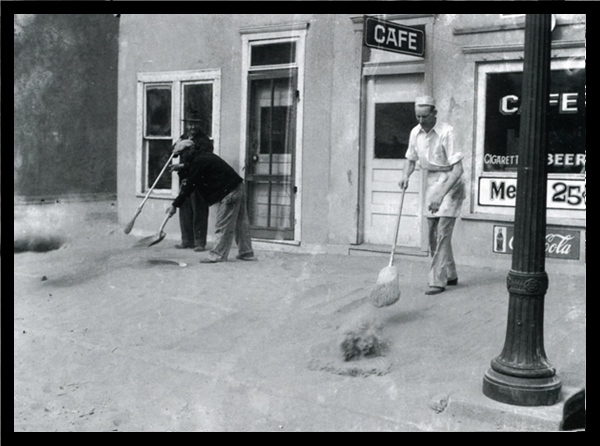
This paperboy in Ness City, KS donned a dust mask and goggles in order to complete his job. One imagines the headlines maintained Living in the Dust Bowl Stinks.

 I Don't Get It